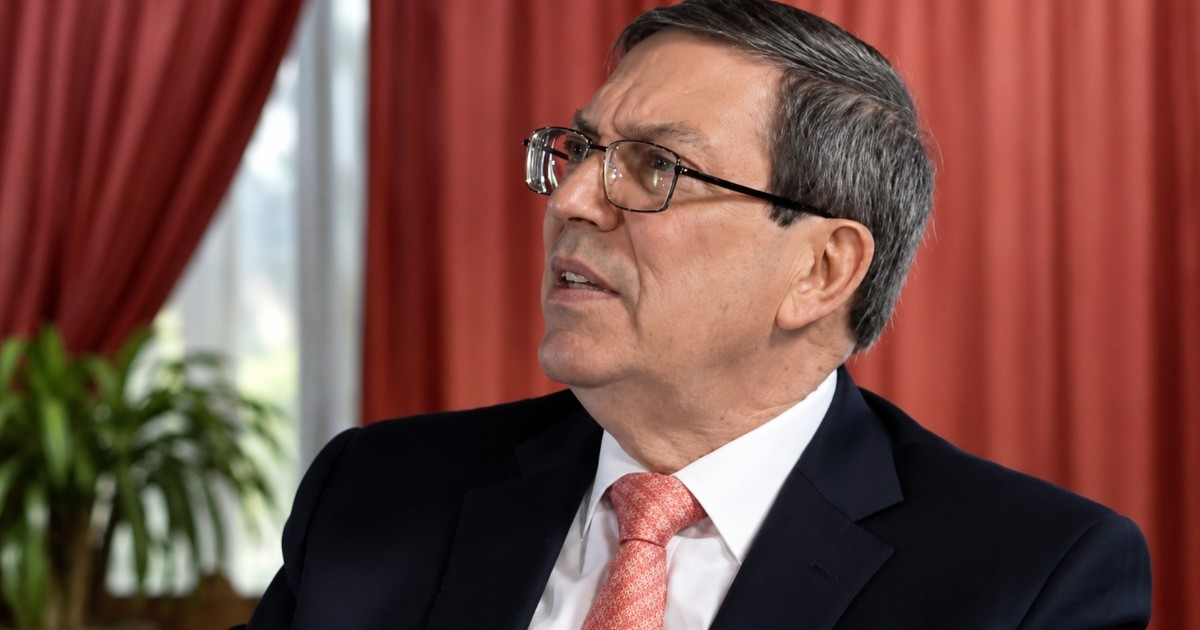
Cuban Foreign Minister Bruno Rodríguez Parrilla dismissed claims of inequality, wealth hoarding, or elite favoritism in Cuba on Wednesday, referring to such accusations as "fantastical" and "false allegations" that, according to him, do not withstand "even the slightest scrutiny."
His comments surfaced on social media a day after U.S. Ambassador Mike Waltz presented photos and satellite images to UN delegates, purportedly showcasing the luxurious lifestyle of Cuba's ruling class.
Among the items highlighted were Rolex watches attributed to Fidel Castro, valued at $40,000—equivalent to 55 years of the average Cuban salary according to the U.S. presentation—Hermès ties and Montblanc pens associated with Díaz-Canel, a sprawling family mansion of the Castros in Varadero covering roughly 14,000 square meters complete with pools, sauna, and jacuzzi, and the private island Cayo Piedra, featuring a helipad, floating restaurant, and dolphin lagoon. Ambassador Waltz detailed the opulence of the regime's elites amidst protests from the Cuban delegation.
Simultaneously, Secretary of State Marco Rubio released a satellite infographic titled "Castro's Cay," indicating the facilities on this private island, marking one of the most intense diplomatic confrontations between the two nations at the UN in recent years.
Rodríguez Parrilla retaliated against these revelations, dismissing them as "tedious slanders" and launched a vehement attack on Washington, describing it as "the greatest and most corrupt plutocracy in history, where money rules instead of voters," according to the regime's foreign minister.
The foreign minister's dismissal of these claims contrasts starkly with documented data from independent organizations. According to the ninth report from the Cuban Observatory of Human Rights (OCDH), based on 1,318 interviews conducted in 79 municipalities between June and July 2026, 94% of the Cuban population lives in extreme poverty, with incomes below $1.90 a day, compared to 61% four years earlier.
Eight out of ten Cubans reported having skipped breakfast, lunch, or dinner at least once in the previous six months due to lack of money or food.
Concurrently, the military conglomerate GAESA is estimated to amass around $18 billion in assets, according to financial documents analyzed by independent researchers, controlling between 40% and 70% of Cuba's formal economy through a core group of fewer than 15 individuals linked to the military and political leadership.
Cuba's Gini coefficient is believed to have increased from 0.25 in 1989 to between 0.40 and 0.50 in 2026, indicating a growing inequality that contradicts the official egalitarian narrative.
In his statement, Rodríguez Parrilla also blamed the U.S. embargo for hospital shortages, medication scarcities, and water and energy outages affecting the population, without acknowledging the impact of six decades of dictatorial governance or the military's control over the economy.
Despite the minister's rhetoric, this year's annual resolution against the embargo received its poorest outcome since Cuba began presenting it in 1992: 130 votes in favor, 17 against, and 25 abstentions, compared to 165 favorable votes in 2025 and 187 in 2024.
Colombia, Costa Rica, and Ecuador switched to voting against, and Germany abstained for the first time since 2002, indicating a growing diplomatic isolation that Rodríguez Parrilla's discourse failed to reverse.
Understanding Cuba's Economic Disparities
What did Bruno Rodríguez Parrilla say about inequality in Cuba?
Bruno Rodríguez Parrilla denied the existence of inequality, wealth concentration, or elite favoritism in Cuba, calling such claims "fantastical" and "false" that do not withstand scrutiny.
What evidence did Mike Waltz present at the UN?
Mike Waltz displayed photos and satellite images showing the luxury enjoyed by Cuba's ruling elites, including Rolex watches, Hermès ties, and a private island, Cayo Piedra.
How does the Cuban population's poverty contrast with the ruling class's wealth?
While 94% of Cubans live in extreme poverty, with many skipping meals due to lack of resources, the ruling class reportedly enjoys significant wealth, evidenced by luxury items and properties.
What role does GAESA play in Cuba's economy?
GAESA, a military conglomerate, is believed to control a significant portion of Cuba's formal economy, with assets estimated at $18 billion, managed by a small group linked to the military and political leadership.