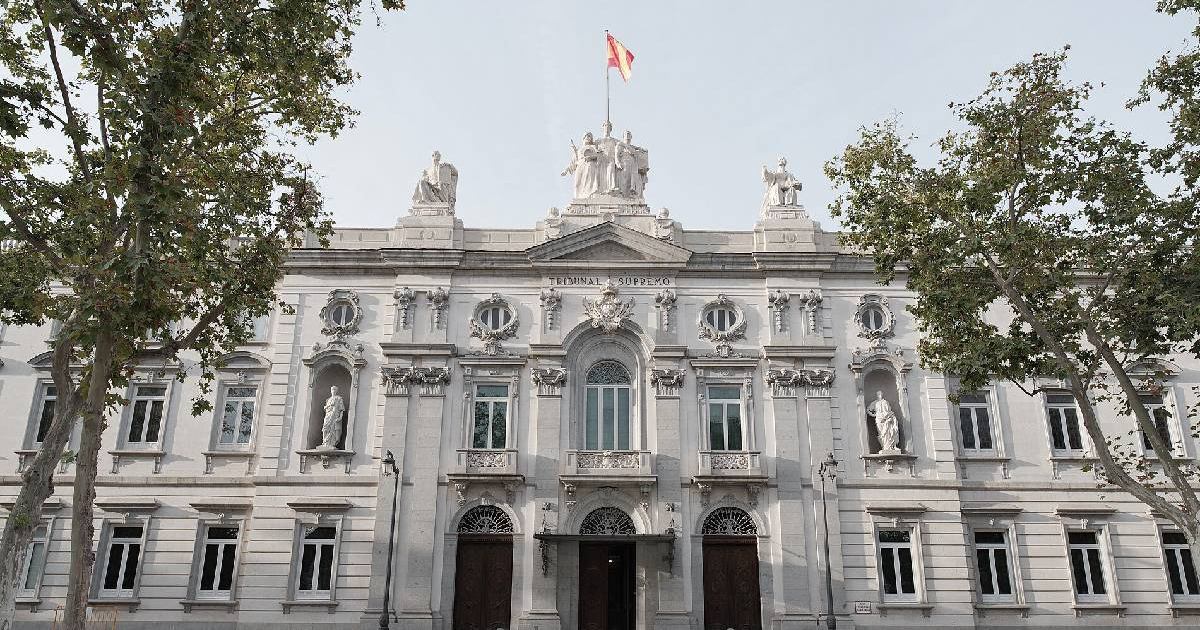
The Spanish government met the deadline set by the Supreme Court on Wednesday by submitting, before 3:00 PM, the list of 163,355 individuals who have been granted citizenship through the 'Grandchildren Law.' Their voting rights in the general elections scheduled for November 29 remain provisionally suspended, according to Justice Department sources cited by EFE news agency.
Out of this number, only 901 individuals are allowed to vote from abroad. These are people who have validated their status as children or grandchildren of Franco-era exiles through specific certifications, not relying on the general presumption of exile introduced by the October 2022 ministerial instruction.
Justice Ministry sources acknowledged to EFE that "a substantial portion of them will likely have their voting rights suspended," effectively impacting almost all registered individuals.
The final count surpasses the initial estimate of 163,020 by 335 individuals, which the government had previously reported without specifying who would be affected.
Last Friday, the Supreme Court had mandated Ministers Félix Bolaños (Presidency and Justice) and José Manuel Albares (Foreign Affairs) to provide the list by 3:00 PM this Wednesday, warning of potential fines or even criminal liability for non-compliance.
The Foreign Affairs Ministry coordinated the review of applications at consular offices beginning in mid-September, following a notice from the court. Meanwhile, the Ministry of Presidency and Justice submitted a partial list of 76,600 individuals, recorded in the digital Civil Registry, to the Office of Electoral Census on October 21.
The State Attorney requested that the Supreme Court’s Third Chamber keep the list confidential, citing that it contains sensitive personal data that could potentially be misused by contesting parties.
As for the electoral influence of the affected group, sources referenced by EFE estimate that, given typical levels of overseas participation, the potential impact of the 163,355 registered voters would be fewer than 14,000 votes across 52 districts, equating to less than 0.06% of the total votes cast in the 2023 general elections.
Cuba is notably impacted by this process. The Spanish Consulate General in Havana received over 107,000 nationality applications during 2025, with estimates suggesting more than 350,000 Cubans initiated their applications since the law took effect in October 2022.
It is crucial to clarify that the provisional suspension does not revoke Spanish citizenship or passports; it solely affects the right to vote from abroad via the Absentee Residents Census on November 29. Cubans holding Spanish citizenship who are residing and registered in Spain can vote without any restrictions.
The legal dispute stems from challenges by Vox and Iustitia Europa against the 2022 ministerial directive, which assumed exile for any Spaniard who left the country between July 18, 1936, and December 31, 1955, leading to a surge in applications.
The Supreme Court provisionally suspended the electoral implications of these registrations in September 2026 and reaffirmed the suspension on October 12, with the decision published in the Official State Gazette on October 15.
With the list submission complete, the Supreme Court still needs to address two additional requests from Iustitia Europa: to extend the voting suspension to adult children of those nationalized under the 'Grandchildren Law'—a group that could exceed 195,000 individuals—and to also suspend the voting rights of those who were in the overseas census but relocated their residence to Spain.
The court must also resolve the appeals from the nationalized individuals involved in the proceedings, who are demanding a decision on their voting rights before November 29.
FAQs on the 'Grandchildren Law' and Voting Rights
What is the 'Grandchildren Law' in Spain?
The 'Grandchildren Law' allows descendants of Spaniards exiled during the Franco era to apply for Spanish citizenship. It was designed to recognize the historical rights of those affected by political exile.
Why are voting rights suspended for some Spanish nationals abroad?
Voting rights have been provisionally suspended due to legal challenges questioning the validity of applications based on the presumption of exile, as established by the 2022 ministerial instruction.
How does this affect Cuban nationals?
Cuba is significantly impacted, with over 107,000 nationality applications from Cubans in 2025 alone. The suspension affects their ability to vote from abroad, although those residing in Spain retain full voting rights.
What actions are still pending from the Supreme Court?
The Supreme Court is reviewing requests to extend the suspension to adult children of nationalized individuals and those who have moved back to Spain. It must also address appeals regarding voting rights before the upcoming elections.