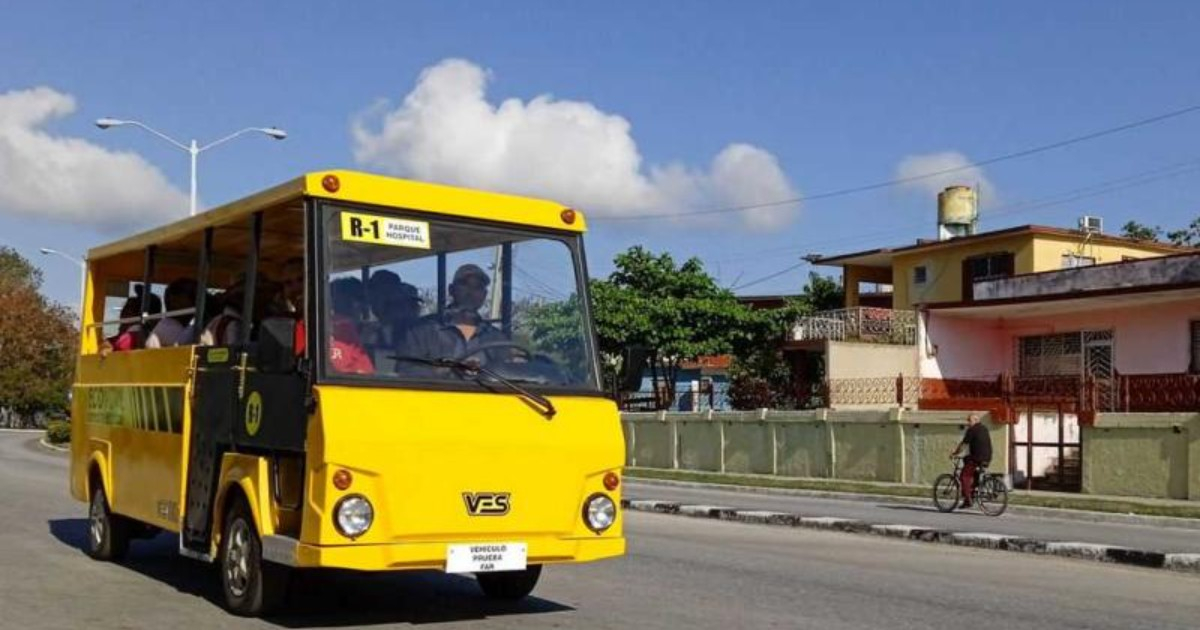
The School Transportation Branch in Villa Clara has outlined plans to acquire five fully electric, zero-emission minibuses by the end of 2026. This initiative is part of a larger investment strategy aimed at modernizing the fleet.
In an interview with the Cuban News Agency, Ovis Navarro Tedez, the head of the company's Technical Group, stated that these vehicles will primarily serve the Marta Abreu Special School, one of only three such institutions in the country.
Although the announcement was made, specific details regarding the delivery, model, seating capacity, cost, and supplier of the minibuses have yet to be revealed, leaving questions about their current status and operational readiness.
Marta Abreu Special School's Crucial Role
The Marta Abreu Regional Special Education School, located in Santa Clara, provides education to children and adolescents with physical and motor disabilities from five provinces, including Villa Clara, Cienfuegos, Sancti Spíritus, Ciego de Ávila, and Camagüey. During the 2024-2025 academic year, the school hosted 70 students in both boarding and day school formats, underscoring the essential nature of reliable transportation services.
Impact of Cuba's Ongoing Fuel Crisis
The fuel crisis has severely impacted passenger transport across Cuba, with a 93% reduction in state-operated services nationwide, prompting the Ministry of Transportation to declare an emergency in June. Despite these constraints, officials have prioritized the transportation of over 12,800 special school students throughout the island.
In Villa Clara, the school transportation fleet includes 136 technical and productive units, yet only about 90 are currently operational. The lack of fuel significantly hampers their full utilization. The eight routes managed by the company—four within the provincial capital and four from municipalities like Manicaragua, Sagua la Grande, Santo Domingo, and Corralillo—operate sporadically, contingent upon fuel availability.
Transition to Renewable Energy Sources
Alongside the planned introduction of electric minibuses, the company is also making strides in its energy transition. Since February, a 20-kilowatt photovoltaic system has been in use, with 30 kilowatts available for storage, funded by a bank loan exceeding 21 million pesos over an eight-year term.
Navarro Tedez explained that the project began in 2024, amidst uncertainties regarding renewable energy sources. However, the company leadership chose to explore an energy matrix change in anticipation of the looming energy challenges.
The solar system currently provides 12 to 16 hours of electricity to four apartments in the building where the company is based, with its courtyard serving as a communal charging station for residents. Plans are underway to extend this model to bases in Manicaragua, Manacas, and Corralillo, as well as the Mataguá brigade, with funding from the Public Transportation Development Fund of the Ministry of Transportation.
National Trends and Challenges
The move towards electric vehicles in Villa Clara aligns with a broader, albeit uneven, national trend. In Sancti Spíritus, 61 locally-made electric vehicles are already being used in public transport, with plans to expand to 73 by year's end. Additionally, in October, the government introduced 44 electric vehicles to the healthcare system across various provinces.
The key question remains whether the five electric minibuses intended for Villa Clara will arrive swiftly enough to ease the transportation challenges faced by the most vulnerable students in Cuba's educational system.
FAQs on Villa Clara's Electric Minibus Initiative
When will the electric minibuses be operational in Villa Clara?
The specific timeline for when the electric minibuses will be operational is not yet confirmed, although the plan is to have them by the end of 2026.
Which school will primarily benefit from the new minibuses?
The Marta Abreu Special School in Santa Clara is expected to be the primary beneficiary of the new electric minibuses.
How has the fuel crisis affected school transportation in Villa Clara?
The fuel crisis has drastically reduced the availability of operational vehicles, limiting the frequency and reliability of school transportation services.