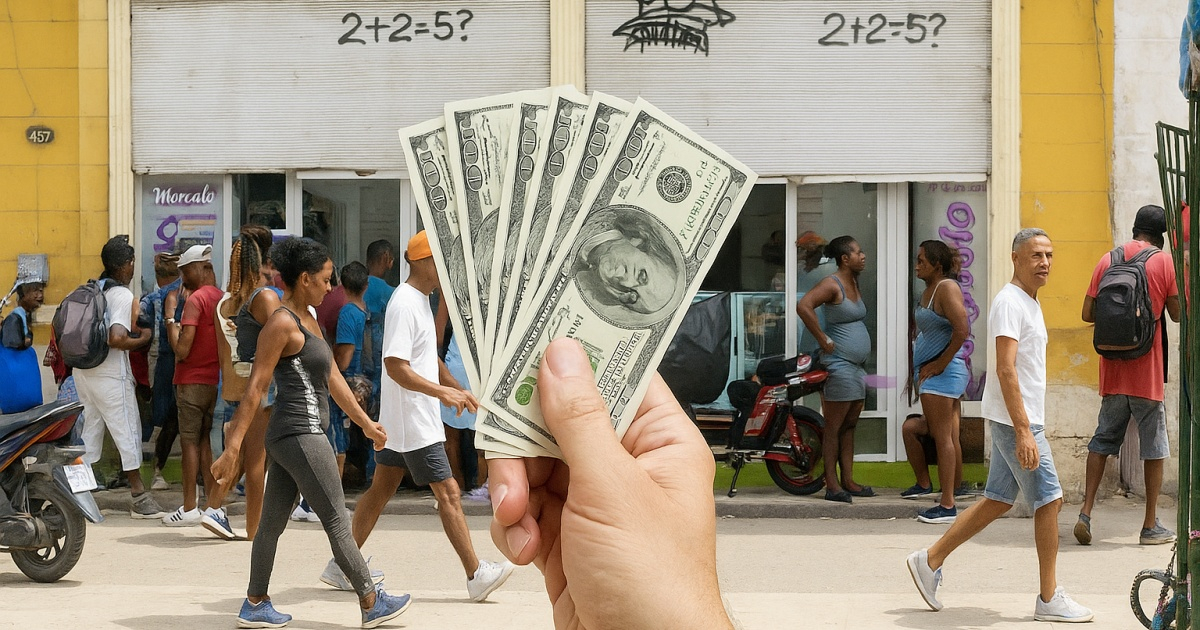
For countless Cuban families, remittances from the United States are a critical lifeline, helping them meet daily expenses, purchase food, and cover other essential needs.
However, sending money to Cuba is not always straightforward. The fees, exchange rates, banking restrictions, and different methods of receiving the funds can significantly affect how much the recipient ultimately benefits.
In 2026, the rise in the value of the dollar on Cuba's informal market, the implementation of a U.S. tax on certain remittances, and changes in financial sanctions have introduced new factors for senders to consider.
Evaluating the Best Remittance Options
Navigating the myriad choices for sending money isn't just about finding the lowest fee. It's equally important to understand how much money your family will actually receive, the currency or payment method they'll get, and when they can access it.
The U.S. Consumer Financial Protection Bureau (CFPB) mandates that providers subject to federal remittance rules must disclose applicable costs, the exchange rate used, and the expected amount to be received by the beneficiary before payment, barring certain exceptions and conditions.
Key Considerations Before Sending Money to Cuba
One common mistake is focusing only on the advertised fee. A provider might offer fee-free transfers yet apply a less favorable exchange rate, resulting in the recipient receiving less money.
To effectively compare services, request a quote with the same total budget and examine these five factors:
- Total Outlay: How much will the sender pay, including fees and applicable taxes?
- Amount and Delivery Method: What will the recipient receive, and will it be in cash dollars, Cuban pesos (CUP), or as a card balance?
- Exchange Rate: How many Cuban pesos does the operator provide per dollar when currency conversion is involved?
- Additional Charges: Are there any intermediary, receiving entity, or necessary service fees for using or withdrawing the money?
- Availability: When can the balance be used, and is there a realistic option to withdraw cash?
Having detailed information beforehand allows you to compare offers without committing to a transaction immediately. Keeping the receipt, which should include transfer data and claim procedures, is also advisable.
The Importance of Delivery Methods: Dollars, Cuban Pesos, and Cards
Receiving $100 in cash does not necessarily equate to having a balance of 100 units on a card or its conversion to Cuban pesos. Each method has distinct conditions for use.
Cash dollars can be spent directly on certain transactions or exchanged for pesos. Card balances, however, depend on product rules, the establishments that accept them, and cash withdrawal options. Cuban pesos are used for national currency payments, but their value against the dollar depends on the reference market.
On Wednesday, October 28, the dollar reached 850 CUP on Cuba's informal market, a historic high. Meanwhile, the official floating exchange segment of the Central Bank of Cuba was set at 754 CUP per dollar.
The difference between these rates is 96 pesos per dollar. This means converting 100 USD at 754 CUP per dollar yields 75,400 CUP, whereas at 850 CUP per dollar, it would yield 85,000 CUP: a difference of 9,600 pesos.
However, these rates do not guarantee that a provider will offer exactly these values or that the recipient can freely convert their money. Proper comparison requires using each service's effective rate and considering conditions for accessing the funds.
Example: What Your Family Receives with the Same Budget
Let's say someone has a total of $110 to send to Cuba. Two providers offer different terms. These figures are hypothetical and solely for explanatory purposes.
Provider A: Charges a $10 fee and delivers $100 in cash to the recipient. The total outlay is $110.
Provider B: Charges a $5 fee and converts the remaining $105 at 754 CUP per dollar. The recipient gets 79,170 CUP.
If the informal rate of 850 CUP per dollar is used as a reference, the 79,170 CUP from Provider B would be roughly equivalent to $93.14. The difference from the total outlay would be $16.86, compared to Provider A's $10 fee.
This doesn't mean Provider B charges a $16.86 fee. That figure combines the explicit fee with the value difference from comparing two exchange rates.
The example illustrates why a lower fee does not guarantee the recipient receives a higher equivalent value. The comparison doesn't measure the purchasing power of each method, which depends on prices, available shops, and the real possibilities of using or exchanging the funds.
Challenges with Formal Remittance Channels to Cuba
The indefinite suspension of Western Union's operations to Cuba from the United States, announced in February 2025, has reduced well-known options for traditional transfers.
Reception mechanisms linked to Cuba's financial system include the Clásica and Tropical cards, as well as remittance and recharge services associated with operators like Tocopay.
However, the availability of each product depends on the payment's country of origin, the intermediary used, and the current service conditions.
Before making a payment, the sender should verify that the operator accepts operations originating in the United States and that the recipient can receive and use the funds in Cuba.
It's also important to distinguish between receiving a card balance and obtaining cash dollars. The ability to withdraw cash at CADECA facilities may depend on cash availability and the conditions set for each product. A successful recharge does not guarantee immediate withdrawal.
Understanding the 1% Tax on Certain U.S. Remittances
As of January 1, 2026, a 1% federal tax on certain outbound remittance transfers is in effect in the United States.
According to the Internal Revenue Service (IRS), this tax applies when the sender provides the provider with cash, money orders, cashier's checks, or similar physical instruments to fund the transaction.
Transfers financed through U.S. bank accounts or cards are not subject to this tax under those conditions.
The remittance provider must collect the tax when applicable. For instance, a $100 transfer subject to the tax incurs a $1 tax charge, in addition to any operator fees.
The sender should ensure this amount is clearly shown in the breakdown before confirming the payment.
U.S. Sanctions: Permitted Remittances
Family remittances to Cuba remain within the authorizations of the U.S. Office of Foreign Assets Control (OFAC), but they must meet the conditions set forth in U.S. regulations, particularly in 31 C.F.R. § 515.570.
The regulations distinguish between family remittances and other transfer categories, with specific requirements and exclusions. Among these are certain individuals legally classified as prohibited officials of the Cuban government or prohibited members of the Communist Party of Cuba, as well as other excluded recipients based on the remittance type.
Being a member of the Communist Party alone should not be confused with the specific regulatory category of a prohibited member.
Additionally, U.S. sanctions modifications that took effect on September 30, 2026, expanded restrictions on certain indirect financial transactions related to entities on the Cuba Restricted List.
These restrictions, outlined in 31 C.F.R. § 515.209, have conditions and exceptions that must be examined for each operation. An authorized family remittance does not mean any intermediary or payment route can automatically be used.
Therefore, before sending money, it's wise to verify both the remittance authorization and the participation of intermediaries and receiving entities. OFAC's official sanctions page on Cuba provides applicable regulations and guidance.
Sender Rights: Cancellations and Claims
International transfers covered by U.S. federal consumer protection regulations come with specific rights.
According to the CFPB, the sender generally has 30 minutes after payment to request a cancellation without charge, provided the money hasn't been withdrawn by the recipient or deposited into their account and other regulatory conditions are met.
If there's an error, such as an incorrect amount or a transfer not received, the consumer generally has 180 days from the provider's communicated availability date to report the issue. The operator usually has up to 90 days to investigate and must inform the consumer of the outcome.
Depending on the type of error and circumstances, the sender may be entitled to a refund or a re-send of the money. These protections are detailed in the CFPB's official guide on international transfers.
Can you ask your bank if it’s legal to send money to Cuba? Yes. OFAC's frequently asked question 53, updated on October 26, 2026, clarifies that an informational inquiry does not equate to an instruction to execute a transfer.
For example, asking the bank if it's possible to send money to Cuba does not by itself require blocking funds or filing a report for a rejected transaction. The situation changes when there is a specific payment instruction involving a prohibited operation or blocked funds.
For specific inquiries about sanction compliance, OFAC provides a hotline at 1-800-540-6322.
Before carrying out a transaction, it's also advisable to request a complete quote from the provider and keep the delivery conditions and payment receipt.
Frequently Asked Questions About Sending Remittances to Cuba
What factors should I consider before sending money to Cuba?
Consider the total cost, amount and method of delivery, exchange rate, additional fees, and when the funds will be available for use.
How does the 1% U.S. tax on remittances affect my transfer?
The 1% tax applies to certain remittances funded with physical instruments like cash or checks. Transfers funded via bank accounts or cards are not subject to this tax.
What are the rights of the sender if there's an error in the transfer?
Senders have specific rights to cancel within 30 minutes of payment and report errors within 180 days. They may be entitled to a refund or a re-send depending on the circumstances.