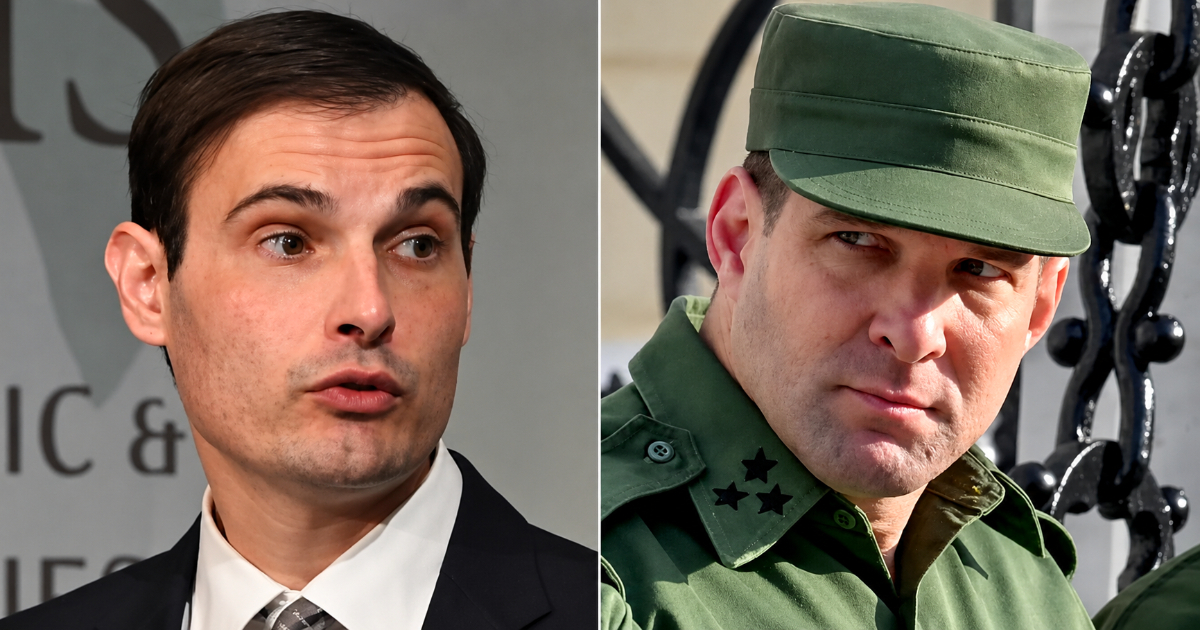
The recent exit of Jeremy Lewin from the U.S. State Department raises questions about the future trajectory of discussions between Washington and Havana.
Lewin, a young adviser to Marco Rubio, played a crucial role in communications with Raúl Guillermo Rodríguez Castro—widely known as "El Cangrejo"—the grandson of Raúl Castro and a key figure in the Cuban political landscape.
According to Axios, the 29-year-old is leaving the Trump administration to pursue opportunities in the private sector. The publication notes that his departure is driven by personal and professional ambitions, without any signs of disagreements with Rubio or a direct link to the stalled negotiations.
Shifting Negotiation Dynamics
Lewin's exit comes at a critical time. After months of dialogue that failed to produce significant agreements, the U.S. appears to be balancing a willingness to engage with a more coercive strategy aimed at extracting concessions from the Cuban regime.
Unlike traditional diplomats, Lewin was an attorney educated at Dartmouth and Harvard, and he rose quickly through the ranks of the administration via the government cuts program DOGE, spearheaded by Elon Musk. He became one of Rubio's trusted aides.
In April, Lewin led a U.S. delegation, alongside seasoned diplomat Michael Kozak, to meet with El Cangrejo in Havana. His involvement was not incidental; Axios credits him with steering the bilateral talks and playing a significant part in implementing sanctions against the regime, including those targeting the military conglomerate GAESA.
The Cuban Negotiator's Role
The choice of Rodríguez Castro as a negotiator is revealing. Although a colonel at the Ministry of the Interior and his grandfather's chief security officer, he lacks a formal governmental role that would grant him political legitimacy in national discussions.
His power stems from being part of the Castro family and his connections with the military and economic frameworks of the regime. While Communist Party leaders acknowledge his role is sanctioned by the highest authority, this underscores the patrimonial nature of a system where real power extends beyond the state's formal institutions.
The U.S. seems to have accepted this reality: to negotiate with those who hold actual power in Cuba, they have engaged with the Castro family's core, even though their authority doesn't arise from popular consent.
Stalled Talks and Rising Pressure
Negotiations, which began in early 2026, included discussions on energy cooperation, investments, and potential economic reforms. However, The Atlantic reported in October that talks hit an impasse when Washington demanded the removal of Miguel Díaz-Canel, a condition Havana refused to meet.
The Cuban regime has consistently stated it will not negotiate its political system, the Communist Party's leading role, or the holding of multi-party elections. While open to discussing certain economic reforms, it refuses to relinquish its power monopoly.
This stance also conflicts with U.S. law. The Helms-Burton Act ties the lifting of the embargo to the establishment of a transitional government meeting requirements like freeing political prisoners, legalizing political activity, and committing to free elections. Full removal of the embargo requires a democratically elected government.
Therefore, any economic agreement that leaves the regime's structure intact won't suffice to lift the embargo's core restrictions, although Washington retains the flexibility to negotiate specific measures.
In response to these obstacles, the Trump administration has ramped up pressure signals. Financial sanctions, warnings to the military leadership, and recent calls by Rubio and the CIA for discreet collaboration with U.S. intelligence suggest a strategy to find cracks within the power apparatus.
Future of U.S.-Cuba Dialogue
The departure of Lewin does not necessarily spell the end of dialogue. Kozak, a veteran U.S. diplomat who led the U.S. Interests Section in Havana from 1996 to 1999, remains involved, Rubio continues to steer the political strategy, and other communication channels, including those established by intelligence services, remain open.
No announcement has been made regarding Lewin's successor or whether Washington will alter its negotiation framework. Recently, Trump reiterated the possibility of a deal with Cuba, even suggesting he'd send Rubio to finalize it personally.
The core issue, however, goes beyond the replacement of an official. After months of fruitless contacts, Washington keeps the door open for negotiation while increasing pressure on a leadership that refuses significant political changes.
The question remains whether Rubio will continue to pursue an agreement with Raúl Castro's circle or if the elite's resistance will shift focus to other interlocutors and pressure mechanisms.
For now, the main obstacle doesn't appear to be who represents Washington, but rather the refusal of those in power in Cuba to accept changes that could end their privileges and control over the state.
Understanding U.S.-Cuba Negotiations
What role did Jeremy Lewin play in U.S.-Cuba negotiations?
Jeremy Lewin was a key figure in facilitating dialogue between the U.S. and Cuba, particularly with Raúl Guillermo Rodríguez Castro. He also played a significant role in implementing sanctions against the Cuban regime.
Why have U.S.-Cuba negotiations stalled?
Negotiations have stalled primarily due to Cuba's refusal to meet U.S. demands, such as the removal of Miguel Díaz-Canel, which clashes with U.S. legal requirements under the Helms-Burton Act.
What is the significance of Raúl Guillermo Rodríguez Castro in the negotiations?
Rodríguez Castro, known as "El Cangrejo," is a crucial interlocutor due to his familial connections and influence within the Cuban regime, despite lacking formal political legitimacy.