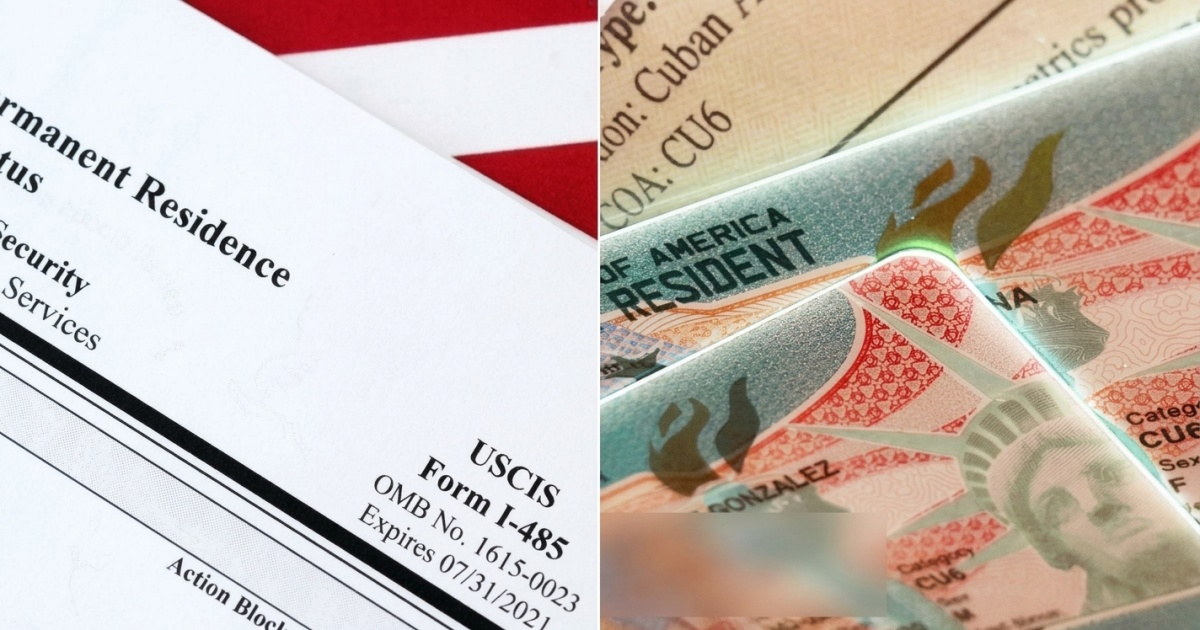
For Cubans who have entered the United States under parole and have completed the one-year requirement stipulated by the Cuban Adjustment Act, the next crucial step is applying for residency through the I-485 form. A frequently asked question is: What documents are necessary for submission?
The brief answer is: Submit a signed I-485 form in its current edition, two passport-type photos, a photo ID, your birth certificate translated into English, proof of entry under parole (typically the I-94), a sealed I-693 medical examination, and certified court records if you've ever had legal issues.
It's imperative to ensure all documents are submitted correctly from the outset. As of October 28th, USCIS reserves the right to deny any incomplete application without offering a chance to amend. This guide sheds light on each required document and common pitfalls that can lead to rejections.
The Importance of Submitting a Complete Package
Federal guidelines authorize USCIS to reject applications lacking initial evidence, without requesting it later (8 CFR 103.2). Historically, it was common to receive a Request for Evidence (RFE) before a denial. However, as of August 5th, USCIS has reinstated its policy to deny applications outright without prior notice. This decision, as reported by CiberCuba, signifies a significant shift for applicants.
Additionally, USCIS will reject applications without a valid signature or incorrect fees. A rejection means losing the filing date and having to start over.
Checklist for I-485 Application
USCIS provides a checklist for initial evidence required for the I-485. For Cubans applying under parole, here's what should be included:
- A fully completed and signed I-485 form in the latest edition. Ensure you download the form from the official I-485 page and verify the edition date at the bottom of each page.
- Two identical, recent passport-style photos.
- A copy of a government-issued photo identification, typically the personal data page of the Cuban passport for most Cubans.
- A copy of the birth certificate, translated into English. If unavailable, USCIS accepts alternative evidence (religious, school, or medical records), but you must prove the original is unavailable.
- Proof of inspection and admission, or inspection and parole, usually the I-94 entry record.
- A sealed I-693 medical exam from an authorized civil surgeon.
- Certified police and court records for any arrests, charges, or convictions, regardless of the outcome.
- Waiver forms (e.g., I-601) if applicable, as determined by an attorney.
- If including a spouse or children, each requires a separate application with their documents, plus marriage or birth certificates proving their relation to you, and proof of termination of any previous marriages.
The Role of the I-94 in Proving Parole Entry
The Cuban Adjustment Act requires proof of admission or parole, making the I-94 a pivotal document. The CBP issues this record upon entry, and it can be accessed and printed from the official I-94 website free of charge.
Before submission, verify that your name, birth date, and admission class are correctly recorded. Any discrepancies should be rectified before filing the I-485.
Note: If issued an I-220A (order of release on recognizance) instead of a parole I-94 at the border, your situation differs and is subject to legal proceedings. Consult an attorney before proceeding with the adjustment.
Understanding the Medical Examination I-693
Applicants must undergo a medical examination by a USCIS-approved civil surgeon (8 CFR 245.5). Your primary care doctor cannot perform this exam; use the official tool to locate an authorized physician.
USCIS requires the I-693 be submitted with the I-485, not afterward. The physician will provide it in a sealed envelope, which must remain unopened. According to the official I-693 page, any opened or altered forms will be returned by USCIS.
Payment is made directly to the physician. Confirm the cost and whether it includes vaccinations and lab tests beforehand. Present your Cuban vaccination card if available to potentially reduce vaccination needs.
Tips for Translations, Copies, and Signatures
Three common reasons for rejection:
- Translations: All Spanish documents must be accompanied by a complete English translation and a translator's certification of accuracy and competency.
- Copies, not originals: Send legible photocopies unless originals are specifically requested. Bring originals to the interview.
- Signatures: Must be handwritten. Typed names, pasted signature images, or stamps are unacceptable. A parent or guardian may sign for children under 14. CiberCuba highlighted signature errors that could jeopardize your application following new regulations implemented in July.
Fees and Submission Instructions
Fees are subject to change, and incorrect payments result in rejection. Verify the current fee using the USCIS fee schedule (G-1055) before payment. If filing for employment authorization (I-765) or travel permit (I-131) alongside the adjustment, check their respective fees on the same schedule.
Submission address depends on your location. USCIS's I-485 address page directs Cuban Adjustment applicants to use the Lockbox table for certain family forms and to check the Cuban Adjustment Act box in Part 2 of the form.
For a detailed breakdown of the I-485 form and guidance on the Cuban Adjustment Act, consult the immigration section on CiberCuba.
Before sealing your application, review common errors that frequently result in denial:
- Using an outdated I-485 edition downloaded months ago.
- Leaving questions unanswered or signing in incorrect places.
- Submitting an opened I-693 or failing to include it.
- Sending Spanish documents without certified translations.
- Paying an outdated fee.
- Failing to disclose past arrests, regardless of the outcome, as USCIS requires records of all arrests and charges.
- Applying before completing the one-year U.S. residency requirement of the Cuban Adjustment Act.
Next Steps
- Download and print your I-94, ensuring accuracy in the details.
- Schedule an appointment with an authorized physician for the I-693.
- Gather your passport, birth certificate, and certified translations.
- Download the I-485 on the day you fill it out and check the edition.
- Check the current fee before making payment.
- Keep a complete copy of your entire submission and use a trackable mailing service.
- If you have a criminal record, an I-220A, or any concerns about your entry, consult with an attorney before filing.
Legal Notice: This article provides general information for informational purposes only and does not constitute legal advice. U.S. immigration laws and policies are subject to change. For specific case evaluations, consult a licensed immigration attorney or an accredited representative recognized by the Department of Justice.
Frequently Asked Questions on I-485 Application for Cubans
What documents are essential for Cubans applying for residency with I-485?
Key documents include the signed I-485 form in its current edition, two passport photos, a photo ID, your birth certificate translated into English, proof of parole entry via I-94, a sealed I-693 medical exam, and certified records of any legal issues.
How does USCIS handle incomplete I-485 applications?
USCIS can deny incomplete applications without requesting additional information. This approach, reinstated in August, aims to enforce stricter evidence standards.
What should I do if my I-94 has errors?
If you discover errors in your I-94, correct them before submitting your I-485 application to ensure all information is accurate and matches your records.
Why is the I-693 medical exam necessary, and how should it be submitted?
The I-693 medical exam is required to ensure applicants meet health standards. It must be conducted by an authorized civil surgeon and submitted in a sealed envelope with the I-485 application.