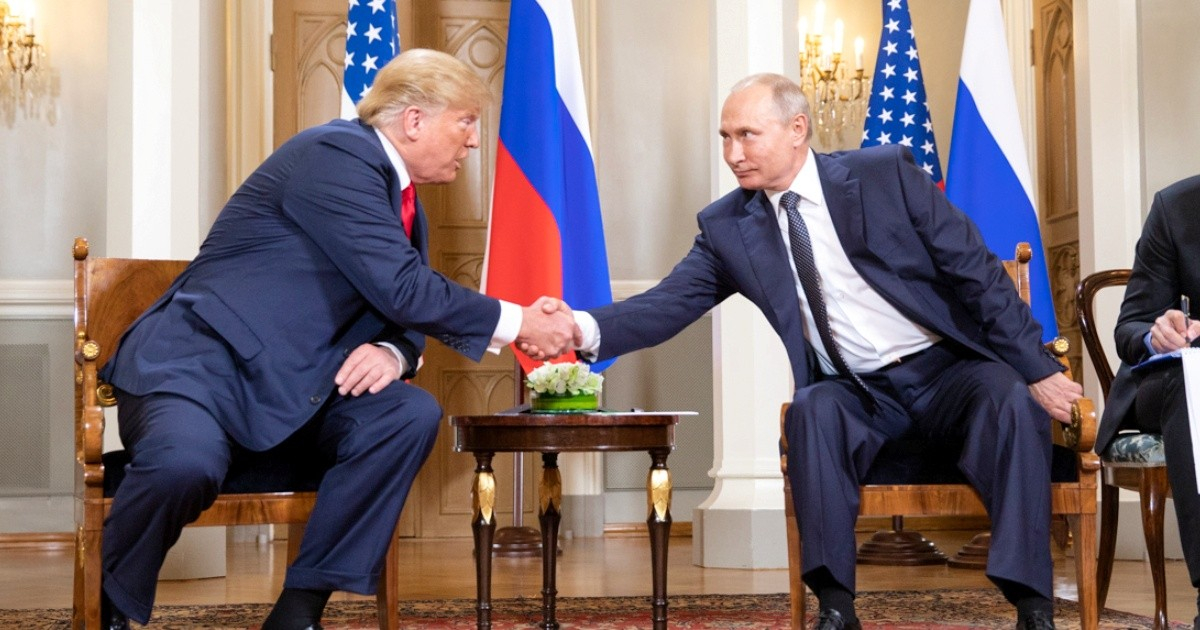
Russian Deputy Prime Minister Alexander Novak announced on Tuesday that a fourth tanker loaded with Russian diesel is set to depart on Wednesday, October 28, heading for the United States. This is part of an energy agreement reached earlier this month between Presidents Donald Trump and Vladimir Putin.
The announcement was reported by RIA Novosti during the eighth summit of the Gas Exporting Countries Forum (GECF) held in Moscow.
Expansion Beyond Diesel
Speaking to journalists, Novak confirmed, "We expect it to depart on the 28th," highlighting that three tankers have already left Russian Baltic ports for the U.S. market. Beyond diesel shipments, Novak revealed that the two countries are exploring a broader energy collaboration.
In an interview with Interfax, Novak mentioned discussions around "developing joint ventures or participating in liquefied natural gas projects" in the Arctic region, although he noted that these are still in the discussion phase.
Details of the Agreement and Delivery Schedule
The shipments are part of a deal made on October 9 following a phone call between the two leaders, paving the way for millions of tons of Russian fuel to enter the American market.
The schedule details over 300,000 tons in October, 500,000 in November, and a million in December, with the potential to add up to three million more tons depending on the condition of Russian refineries, which have been affected by Ukrainian attacks. The total announced exceeds 4.8 million tons.
To facilitate these operations, the U.S. Treasury Department issued OFAC's General License 135, allowing for the import of Russian diesel until April 7, 2027, without broadly lifting existing sanctions against Moscow.
Political Implications: Elections and Fuel Prices
The agreement has significant political implications. In October, diesel prices in the U.S. were around $6.28-$6.32 per gallon, up 74% from the previous year, driven by tensions with Iran and global refining capacity issues.
According to the Financial Times, the rising fuel prices pose an electoral risk for the Republican Party ahead of the November 3 midterm elections, as farmers, truck drivers, and transporters—key Republican constituencies—rely heavily on diesel.
Putin noted that following the agreement announcement, "diesel prices in global markets dropped by 5% to 6%."
Democratic Opposition and Moscow's Response
The deal is facing increasing resistance in Congress. Axios reported that Democratic legislators have sent letters to six major banks—including JPMorgan Chase, Goldman Sachs, and Citigroup—and port authorities in Houston, New York, and New Jersey, urging them to retain documents related to Russian diesel and warning of potential investigations.
Novak responded firmly, stating, "The ships are currently en route, and the agreements between Presidents Vladimir Putin and Donald Trump are being executed. It is, of course, surprising that the Democrats take actions against the interests of the American people," he added, as reported by RIA Novosti.
Suspended Sanctions and Arctic Negotiations
The agreement marks a significant shift in Washington's foreign policy towards Russia. Trump also suspended key provisions of the Lindsey Graham Act—passed with broad bipartisan support to tighten sanctions on Russia—through an executive order on October 17, citing "national interest."
Ukrainian President Volodymyr Zelensky criticized the diesel agreement as "weak," "unfair," and "dishonest," warning that the energy revenues could fund Russia's military efforts.
Key Questions About the Russia-U.S. Diesel Agreement
Why is Russia sending diesel to the United States?
Russia is sending diesel to the United States as part of an energy agreement between Presidents Donald Trump and Vladimir Putin, aiming to supply the U.S. market with millions of tons of Russian fuel.
What is the significance of the U.S. Treasury's General License 135?
The U.S. Treasury's General License 135 allows for the importation of Russian diesel until April 7, 2027, while not broadly lifting existing sanctions against Moscow, facilitating the execution of the energy agreement.
What are the political implications of this diesel agreement?
The agreement has political implications, particularly concerning rising diesel prices in the U.S., which pose a risk for the Republican Party in the upcoming elections as key voter bases like farmers and truckers rely heavily on diesel fuel.