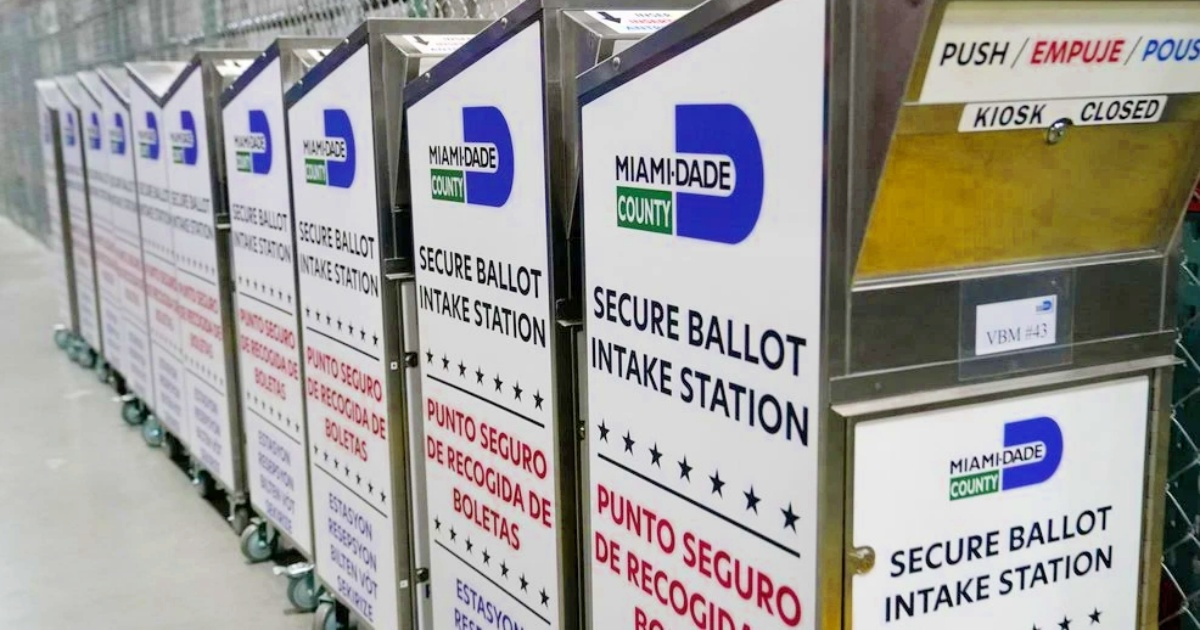
The upcoming general election in Florida is set for Tuesday, November 3, 2026. With a few days left, thousands of residents, including the large Cuban-American community in the southern part of the state, still have time to prepare.
A common source of confusion is about what identification is needed at the polling station.
According to information from Telemundo 51 and the Florida Division of Elections, every voter must present a current and valid ID with a photograph and signature. Without this, a regular ballot cannot be cast.
Accepted Forms of Identification in Florida
While the Florida driver's license is the most frequently used form of ID, state law recognizes a variety of valid alternatives at polling places:
- Florida driver's license or identification card
- U.S. passport
- Debit or credit card
- Military or student ID
- ID from a retirement center or neighborhood association
- Public assistance ID
- Veterans Affairs health ID card
- Concealed weapon permit
- Government employee ID (federal, state, county, or municipal)
It's crucial to note that if the photo ID lacks a signature, an additional document with a signature must be provided. The voter information card, often mistaken as sufficient, is not valid for voting.
What If You Arrive Without an ID?
A registered voter who arrives without the proper identification can request a provisional ballot. This ballot will be counted if the voter is registered, votes in the correct precinct, and the signature matches the one on the voter registration record.
If the provisional ballot is issued solely due to the lack of identification, the voter has until 5:00 p.m. on the second day after the election to submit the DS-DE 210 form along with the required ID to the county's election supervisor.
Key Dates Leading Up to November 3rd
The mandatory statewide early voting period began on October 24 and continues until Saturday, October 31, although some counties may extend it to November 1. For exact times, it's advisable to check with each county's election supervisor's website.
On election day, polling stations will be open from 7:00 a.m. to 7:00 p.m.; anyone in line at closing time will be allowed to vote.
The deadline to request a mail-in ballot was October 22, and new voter registration closed on October 5.
In Miami-Dade, any registered voter can take advantage of early voting at any of the 28 designated centers without being confined to their regular precinct. However, on November 3rd, voters must go to their assigned polling place.
High Early Voting Turnout
The public response has been significant: by October 26, over 2.8 million Floridians had already cast their votes either by mail or through early voting.
In Miami-Dade, Broward, and Monroe counties, the combined turnout surpassed 416,000 votes as of October 25.
Alina Garcia, Miami-Dade's election supervisor, acknowledged the encouraging numbers but stressed the need for higher participation: "The turnout has been good; it could be better. We need everyone to come out and vote."
On November 3rd, voters will decide on the governor's race between Byron Donalds (Republican) and David Jolly (Democrat), a federal Senate seat contested by Ashley Moody and Angie Nixon, all federal House seats, and three constitutional amendments.
Among Cuban-Americans, a poll by N+ Univision and YouGov conducted between October 2 and October 15 indicated Donalds leading Jolly by 51% to 42%.
Frequently Asked Questions About Voting in Florida
What types of ID are accepted for voting in Florida?
Florida accepts various forms of ID including a driver's license, U.S. passport, military or student ID, and more. It's important that the ID has both a photo and a signature.
What should I do if I forget my ID on election day?
If you forget your ID, you can request a provisional ballot. Ensure your voter registration is correct, vote in the right precinct, and submit the required ID within the specified time to have your vote counted.
When does early voting end in Florida?
The mandatory early voting period ends on October 31, although some counties may extend it to November 1. Check with your county's election supervisor for specific details.