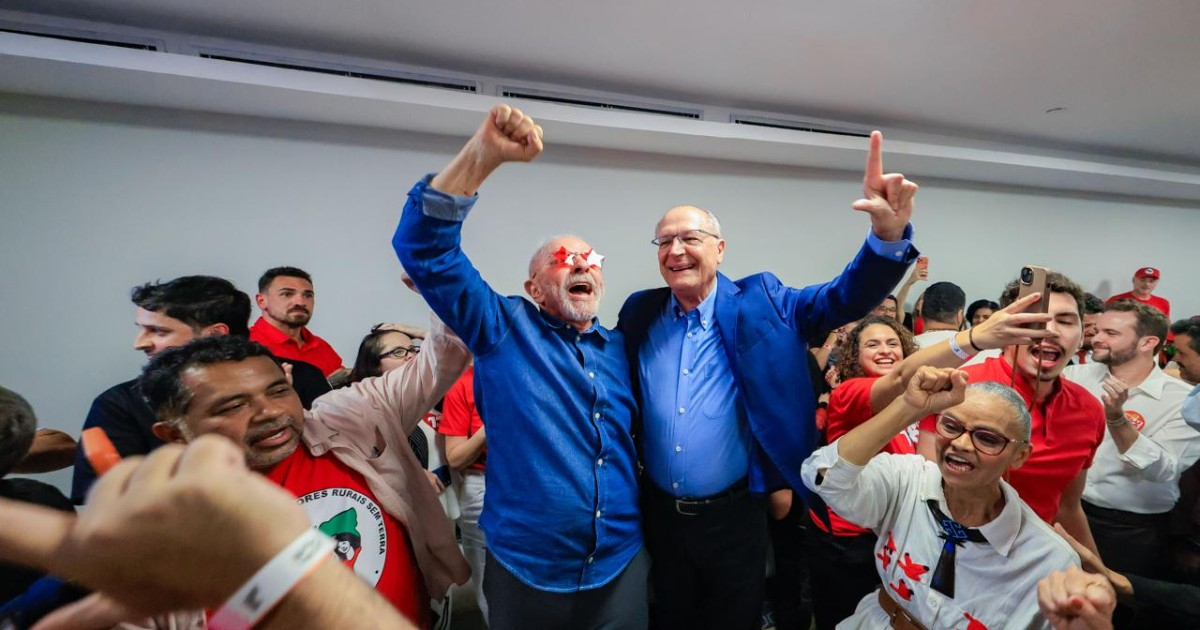
The Liberal Party (PL) in Brazil has officially recognized the results of the presidential runoff election, confirming Luiz Inácio Lula da Silva's re-election. The announcement was made in an official statement by the party's national president, Valdemar Costa Neto, and shared on social media platforms, according to EFE.
This acknowledgment comes a day after the party's own presidential candidate, Senator Flávio Bolsonaro, initially refused to accept the outcome. Prior to the runoff, Bolsonaro had claimed it was "impossible to acknowledge the election results given the circumstances" and had planned to seek a judicial annulment of the election.
Bolsonaro's main argument centered around the two-hour extension of voting time, ordered by Supreme Court Justice Cristiano Zanin due to electoral transportation issues. However, in that additional period, only 35,521 votes were cast, accounting for a mere 0.8% of the over 4.43 million votes that separated the two candidates. Analysts cited by Reuters deemed the annulment request unlikely to succeed, and sources indicated that Bolsonaro later dropped his plans to contest the election.
Despite the PL’s acknowledgment, their statement avoided mentioning Lula by name and did not extend any congratulations to the re-elected leader. Initially, the party released a statement acknowledging "the magnitude of the result" without naming it explicitly, later replacing it with a version that officially recognized the outcome "proclaimed by the Superior Electoral Court (TSE)."
“We recognize the presidential result proclaimed by the Superior Electoral Court, but believe that the raised questions should be thoroughly addressed in a balanced and democratic political debate,” wrote Costa Neto in the statement published on Instagram.
The PL's recognition is particularly significant given the events of 2022, when after Jair Bolsonaro’s defeat to Lula, the party did not clearly accept the result, contributing to the unrest that culminated in the January 8, 2023, disturbances in Brasilia.
In the October 25 runoff, Lula achieved a historic comeback, securing 64,256,232 votes (51.79%) against Flávio Bolsonaro's 59,826,041 (48.21%), after having placed second in the first round on October 4 with 45.16% to Bolsonaro's 47.03%. This victory makes Lula the first candidate since the return of Brazilian democracy to lose the first round and win the runoff.
Lula's win grants him a fourth non-consecutive presidential term, set to begin on January 5, 2027.
The PL used the statement to highlight its parliamentary strength: 121 federal deputies — the largest contingent elected in 40 years, with 23.6% of the Chamber — 29 senators, 229 state and district deputies, and six governors, positioning itself as the leading opposition force to the incoming government. Meanwhile, Donald Trump criticized the Brazilian elections, labeling them as "another rigged election," without providing evidence.
“The PL will remain steadfast, acting independently and responsibly to defend democracy, freedom, and the values we represent. Our commitment is to Brazil and the millions of Brazilians who trust our work,” Costa Neto concluded in the statement.
Key Questions on Lula da Silva's Re-election and Its Aftermath
Why did Flávio Bolsonaro initially refuse to accept the election results?
Flávio Bolsonaro initially refused to accept the results citing the extension of voting hours due to logistical issues, which he claimed compromised the election's integrity.
What was the significance of the PL's recognition of Lula's re-election?
The PL's recognition was crucial because it contrasted with their past reluctance to accept electoral outcomes, which previously led to significant unrest.
How did Lula da Silva perform in the election runoff compared to the first round?
In the runoff, Lula da Silva staged a comeback by winning 51.79% of the vote, compared to his second-place finish in the first round with 45.16%.