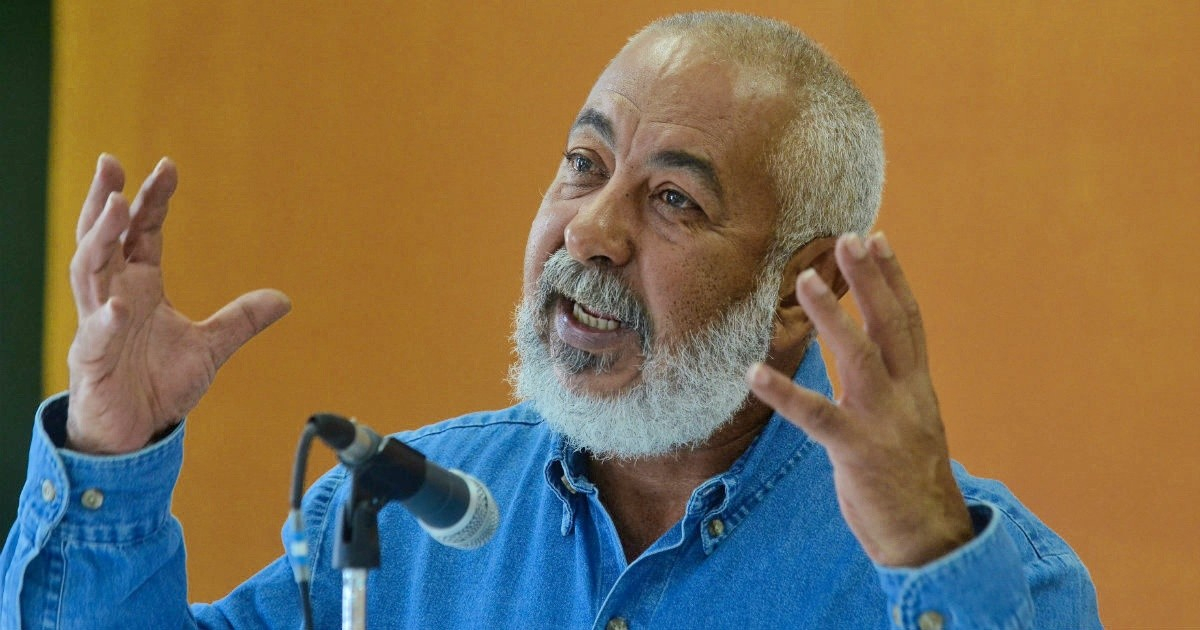
On Sunday, Leonardo Padura shared a compelling opinion piece in the Spanish newspaper El País, titled "The Emptied Island," painting a stark picture of Cuba's demographic decline. He vividly depicts the bustling check-in lines at Havana's José Martí International Airport, filled with families, including children, leaving the country with no plans to return.
The Departure of Families
Padura observes that daily, at the airline counters headed to Guyana, there are numerous family groups with young ones. An employee from this airline provided a striking figure: "Every week, an entire classroom leaves. Every two months, it's an entire school."
Although Padura acknowledges the anecdotal nature of this claim, he underscores its troubling reality. This exodus represents a significant loss for the nation's future, with far-reaching consequences.
Guyana: A Gateway to New Opportunities
The immediate destination for these flights is Guyana, offering a visa-free entry for Cubans and serving as a passageway to Brazil. Here, in the city of Curitiba, a "little Cuba" has already begun to take shape.
Previously, the favored route was through Nicaragua towards the southern U.S. border, demanding around $10,000 per journey. However, this path was obstructed with the advent of Donald Trump's policies, Nicaragua's visa requirements, and the cessation of previous U.S. humanitarian programs.
Staggering Population Decline
According to the National Office of Statistics and Information of Cuba (ONEI), at the start of 2026, Cuba's population had dwindled to 9,434,593 from 11,113,215 in 2022—a loss of nearly 1,679,000 residents in four years.
Padura warns that these figures might underestimate reality, as the abolishment of the "definitive exit" status means many indefinitely absent Cubans could number "several thousand more, perhaps hundreds of thousands."
He speculates: "How many truly reside in Cuba now? Possibly fewer than nine million, indicating a demographic shift of more than two million in just four years, amounting to almost 20% of the population."
Educational System on the Brink
The airline employee's metaphor is reflected in the classroom crisis. The 2026-2027 school year began with 24,000 teaching positions unfilled and over 380,000 students lacking permanent teachers.
Teachers earn between 6,130 and 7,735 Cuban pesos monthly—less than $12 at the informal exchange rate—prompting many to leave and contributing to the educator shortage.
The aging population exacerbates the issue, with 26.7% over 60 and an average age of 45.
Padura's Perspective from Within
Throughout 2026, Padura has published several columns addressing Cuba's crisis. In August, he described the situation as a "survival war" with Cubans "trapped in a time pit."
In September, upon receiving the Liber Prize 2026 in Barcelona—the first awarded to a Cuban author—he characterized the island as a "daily hell for the majority."
Padura, who remains committed to staying in Cuba, identifies a shared motive for families leaving: "The daily hardships in Cuba, which have only intensified to grotesque levels in recent years."
For many parents, the specific destination is irrelevant: "Sometimes, it’s not about the location, just the distance."
His assessment leaves no room for doubt: "The situation is clearly and unequivocally alarming."
Frequently Asked Questions about Cuba's Population Crisis
Why are so many Cubans leaving the country?
Many Cubans are emigrating due to the worsening living conditions and economic hardships on the island, seeking better opportunities for themselves and their families abroad.
What impact is this exodus having on Cuba's education system?
The outflow of people, including educators, has left Cuba with a severe shortage of teachers, affecting tens of thousands of students who now lack permanent instructors.
How has Cuba's population changed in recent years?
Cuba's population has decreased significantly, losing nearly 1,679,000 residents from 2022 to the start of 2026, with the population now possibly under nine million.