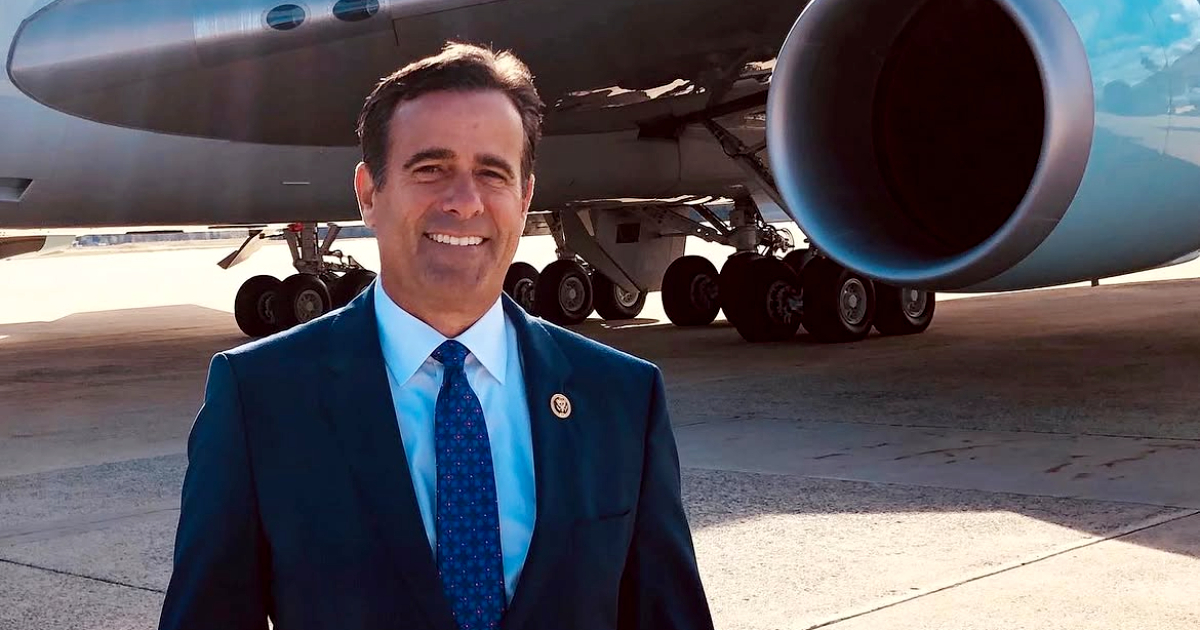
In a significant move, CIA Director John Ratcliffe traveled to Havana accompanied by a paramilitary operative involved in the capture of Nicolás Maduro. This revelation comes from a May investigation by CBS News.
This development gains renewed interest as the U.S. intensifies efforts to recruit informants within Cuba willing to share intelligence with the Central Intelligence Agency (CIA), headed by Ratcliffe.
Ratcliffe's Rising Influence in Covert Operations
A report by The Atlantic on October 23 underscores Ratcliffe's expanding role in clandestine U.S. operations. The CIA director previously declared in June that, thanks to the agency, U.S. special forces located and captured Maduro within just four minutes of landing at Venezuela's largest military complex.
The incident highlighted by CBS News took place during Ratcliffe's visit to the Cuban capital in the week of May 14, barely four months following the U.S. military operation that led to Maduro's capture and the deaths of 32 Cuban military and security personnel assigned to protect the Venezuelan leader.
Strategic Presentation to Cuban Officials
According to sources familiar with the meeting, Ratcliffe made a point of introducing the operator to senior Cuban officials as "the one who killed your people" in Venezuela, in what was seen as a deliberate warning. Notably, the network did not disclose the operative's identity or his specific role in the fatalities but confirmed his involvement in the Maduro operation.
Among the Cuban officials present were Interior Minister Lázaro Alberto Álvarez Casas and Raúl Guillermo Rodríguez Castro, known as "El Cangrejo," the grandson of Raúl Castro and a key figure in confidential communications between Washington and Havana.
Implications of the U.S. Operation in Venezuela
The U.S. operation on January 3 demonstrated that American special forces, with CIA intelligence, could penetrate Maduro's security detail and seize him despite the presence of Cuban agents. The 32 deceased were officially recognized by Havana as martyrs, symbolizing resistance during the American assault.
For Cuban leaders, the operative accompanying Ratcliffe was more than just a member of U.S. special services; he had played a role in the operation that toppled their chief regional ally and resulted in numerous casualties among their personnel.
Negotiations Amidst Tensions
A CIA official stated that Ratcliffe conveyed to Cuban authorities that Washington was open to serious negotiations on economic and security matters, but only if the regime agreed to fundamental changes. He advised learning from the Maduro incident, cautioning that the opportunity for an agreement wouldn't last indefinitely.
This message echoed remarks by Marco Rubio shortly after Maduro's capture, where the State Secretary noted the Cuban presence in Chavez's intelligence services, suggesting concern if he were part of the Cuban government.
From Military Display to Intelligence Recruitment
Five months post-meeting, the CIA has bolstered its approach towards Havana. Starting October 23, Rubio and the U.S. agency have actively encouraged Cubans to discreetly collaborate with American intelligence services, releasing a video and guide in Spanish to facilitate confidential contact, seeking individuals knowledgeable about Cuban institutions.
Support for this initiative came from U.S. Southern Command leader General Francis L. Donovan, urging Cubans to seize the moment for change in the island nation. This strategy reveals two facets of U.S. pressure on the regime: Ratcliffe's May demonstration of a successful military operation, and the October public outreach for intelligence collaboration within Cuba's system.
The call follows months of dialogue where Havana has rejected political system transformations, the Communist Party's leadership role, and holding multiparty elections. Although there's no public confirmation of a U.S. decision to replicate the Venezuelan operation, President Donald Trump has not explicitly ruled out such an action.
The identity of the paramilitary operative who joined Ratcliffe remains undisclosed, and the Cuban officials' response to his introduction is also unknown. However, CBS News documented that the CIA director presented one of the key figures in the operation that dethroned Maduro to Cuba's security leadership while negotiating fundamental changes demanded by Washington.
Key Questions on U.S.-Cuba Relations and CIA Strategies
What role did the CIA play in the capture of Nicolás Maduro?
The CIA provided crucial intelligence that enabled U.S. special forces to locate and capture Maduro shortly after their arrival at Venezuela's largest military complex.
How did Ratcliffe's visit to Cuba impact U.S.-Cuba relations?
Ratcliffe's visit, including the introduction of a key operative from the Maduro operation, was a strategic move to pressure Cuban officials, highlighting U.S. capabilities and signaling the possibility of negotiations contingent on significant regime changes.
What is the significance of the CIA's recruitment campaign in Cuba?
The CIA's campaign aims to gather intelligence from within Cuba, soliciting collaboration from individuals familiar with the country's institutions, thus intensifying U.S. efforts to influence change in the Cuban regime.