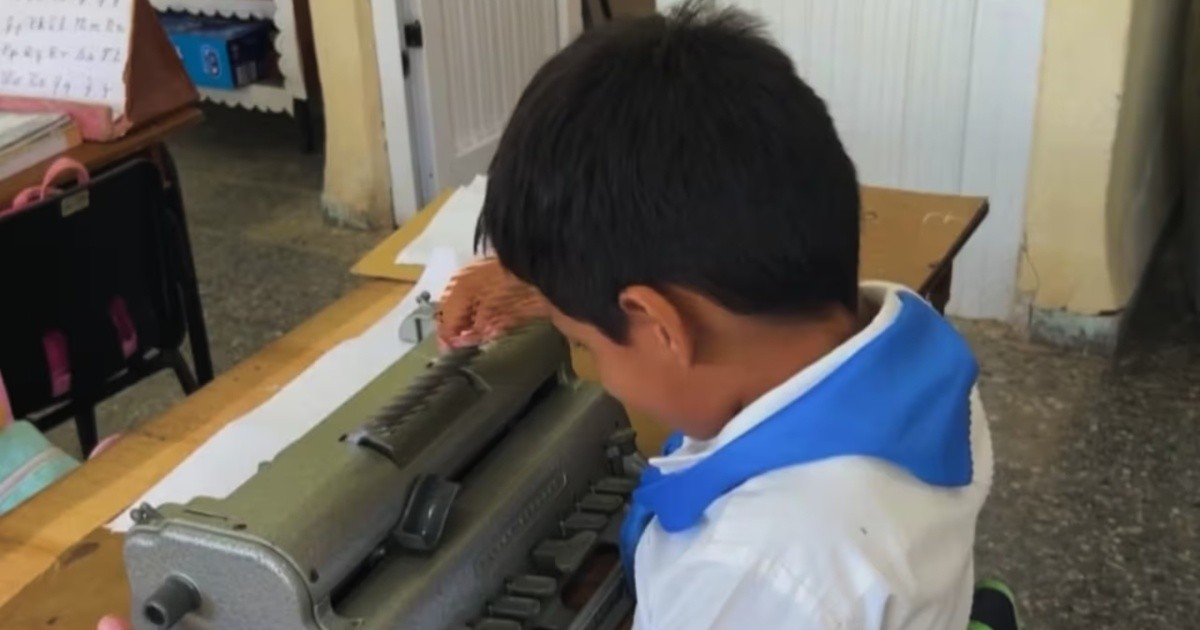
A recent Reuters report from Havana paints a stark picture of the challenges faced by the 44 blind or visually impaired students at the Abel Santamaría Special School, located in Ciudad Libertad. With power outages frequently lasting over 18 hours a day in Cuba's capital, teachers have resorted to relocating classes near windows or even moving them to courtyards and hallways to make use of natural light.
While this makeshift solution is crucial for students with some residual vision, it falls short of addressing the broader issues: the absence of Braille paper, eyeglasses, magnifying glasses, and functioning Braille typewriters.
The fuel shortage has further compelled the school to limit in-person attendance to four days a week, from Monday to Thursday, with students doing exercises at home on Fridays.
"Receiving instruction from a family member at home is not the same as being taught by trained teachers," warned Suramis Rodríguez, the school's director, in comments reported by the agency.
The report brings a human face to the crisis through the story of teacher Yarnelys Bec Abalela, herself a former student of the school. Diagnosed with congenital cataracts at age three, she completed her education up to the ninth grade, pursued advanced special education training, and has been teaching at the school for 21 years.
"Thanks to what I learned at this center, I was able to become a teacher," said Bec, who now teaches fifth grade and serves as a therapist. Despite the challenging circumstances, she remains committed to her vocation: "In the midst of this situation, this is still the best place to give these children the tools they need for their lives."
The issue extends beyond Abel Santamaría. Thousands of special education students across Cuba are grappling with fuel, electricity, and transportation shortages. Official figures cited by Reuters indicate that Cuba maintains 330 special schools, although the Ministry of Education's website lists 357 centers with over 35,000 students—a discrepancy that no independent source can verify.
A Cuban report covering March 2025 to February 2026 reveals that 21 Braille typewriters are beyond repair nationwide, against a need for 63 machines, affecting 126 blind students' learning conditions. Additionally, Braille printers are available at only three regional centers across the country.
The Reuters report emerges amidst an unprecedented educational crisis: the 2026-2027 school year began on September 1 with nearly 24,000 teaching positions unfilled—12.5% of the total—and over 380,000 students without assigned teachers.
By mid-October, Education Minister Naima Trujillo Barreto acknowledged that around 11,000 students were not attending classes regularly. In Las Tunas, more than 800 teachers were still absent without a solution in sight.
This grim reality starkly contrasts with the official narrative portraying Cuba as an "educational powerhouse," a narrative now challenged by international press coverage highlighting the names, faces, and darkened classrooms of Cuban students.
Last school year had to end prematurely: special education schools closed in May 2026, while other educational institutions concluded between June 15 and June 30, an early indication of the collapse now documented by Reuters from within a powerless classroom.
Challenges Faced by Blind Students in Havana
How are teachers coping with the frequent blackouts in Havana?
Teachers have been moving classes near windows or to outdoor areas like courtyards and hallways to utilize natural light during blackouts.
What resources are lacking for visually impaired students?
The students lack essential resources such as Braille paper, eyeglasses, magnifying glasses, and functioning Braille typewriters.
What measures have been taken due to the fuel shortage?
The school has reduced in-person attendance to four days a week, with students working on exercises at home on Fridays.