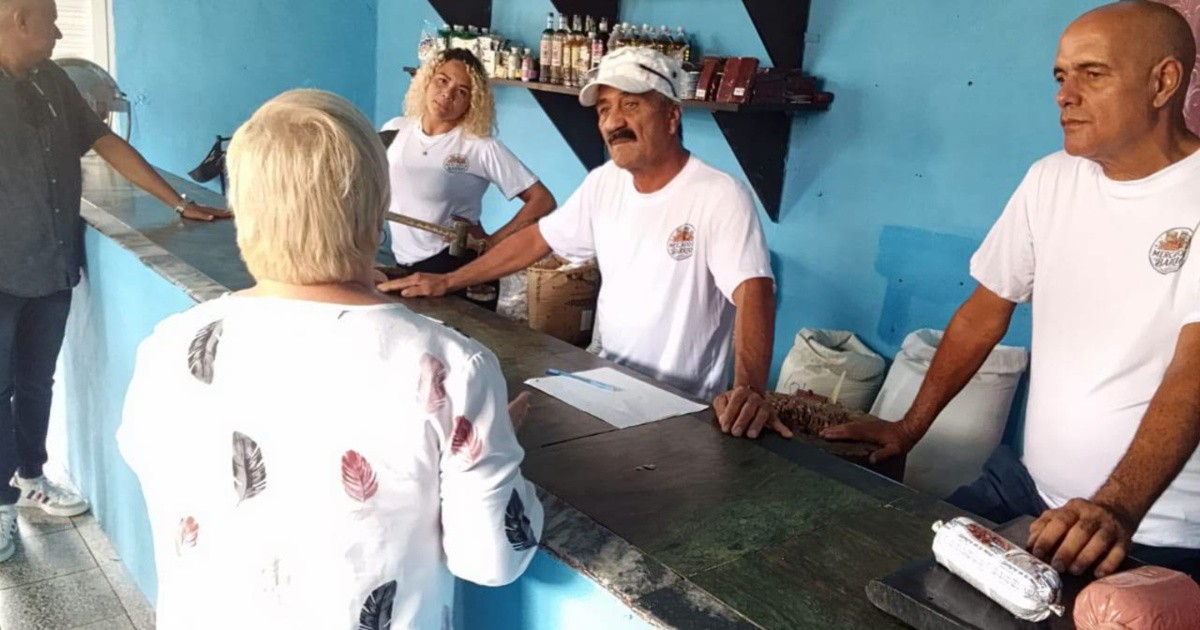
This week, the Ministry of Domestic Trade (MINCIN) announced the opening of three new neighborhood markets in Ciego de Ávila on social media, attended by Vice Minister Aracelys Cardoso and General Director of Merchandise Sales, Marpessa O. Portal de Villiers. They inspected the facilities and electronic payment options. However, the Cuban public's reaction was swift and scathing.
The official statement claimed that the products listed in the approved nomenclature "should be sold at prices 10% to 15% lower than those in other community markets" due to tax incentives. Nonetheless, the stark contrast between these promises and the everyday reality of Cubans unleashed a torrent of criticism in the comments.
María E. Gutiérrez remarked, "They are more expensive than street markets." Damarys Fernández López added, "I've seen items like coffee, for example, more expensive than in private businesses. It's the same story, just with a different name."
Alexander Martínez provided a detailed critique, saying, "The idea is good, but in practice, it solves nothing. They reduce prices by 10 or 15 pesos, no matter the cost. If something costs 500 pesos on the street, in these markets, it should cost 450, but instead, they sell it for 490. They pretend they don't know how to calculate percentages." He also highlighted issues with online payments, stating they are offered sporadically as a symbolic gesture.
Offering a sarcastic take, Martín Del Río summarized the sentiment of many: "They renamed bodegas as neighborhood markets, but sell the same products at the same prices as before, which Cuban commerce officials consider an achievement. The market is in the neighborhood, yes, but the product prices seem to come straight from Dubai, with a stopover at the shopping mall. And the working-class salary? That's science fiction, barely enough for two days."
Numerous reports from across the country back these complaints. At the Ermita Street market in Havana, rice was priced at 900 pesos per kilogram, black beans at 950 pesos, and a 250-gram pack of coffee at 2,600 pesos. In Ciego de Ávila, cooking oil was around 2,500 pesos, comparable to prices in other local vendors.
The situation is dire, especially considering that the minimum monthly wage in Cuba is 3,210 pesos as of July 2026. A list of 22 basic items in a neighborhood market in Media Luna, Granma, totaled 12,740 pesos, nearly four times the minimum wage. An 82-year-old retiree bluntly stated that with a pension of 3,000 pesos, she could only afford a single bottle of oil.
Even state media have raised questions. José Miguel Solís, a Radio Rebelde correspondent in Matanzas for 28 years, commented on Radio 26 that prices were unaffordable, with some items cheaper from self-employed workers. His ironic suggestion was to rename the establishments "Affluent Neighborhood Markets."
The initiative, under the MINCIN's Resolution 16/2026 effective since August, allows private enterprises, cooperatives, and self-employed individuals to manage state-run venues while the state retains ownership of the properties. It began as a pilot on July 23 in Plaza de la Revolución and has since expanded to 62 locations across 12 provinces by October 21. The government initially promised price cuts of 15% to 30%, a figure that has been reduced to the 10%-15% announced this week in Ciego de Ávila, which Cubans claim is not even being met.
Understanding the Controversy Around Cuban Neighborhood Markets
What is the main criticism of the new neighborhood markets in Cuba?
The main criticism is that the prices in these markets are higher than promised and comparable to or even more expensive than street markets and private businesses, contrary to the government's claims of significant price reductions.
How do the market prices compare to the average Cuban salary?
The prices in neighborhood markets are exceedingly high compared to the average Cuban salary, with a basic list of items costing nearly four times the minimum monthly wage.
What was the government's original promise regarding market prices?
The government initially promised price reductions of 15% to 30%, but this was later reduced to 10%-15%, which many Cubans claim is not being realized in practice.