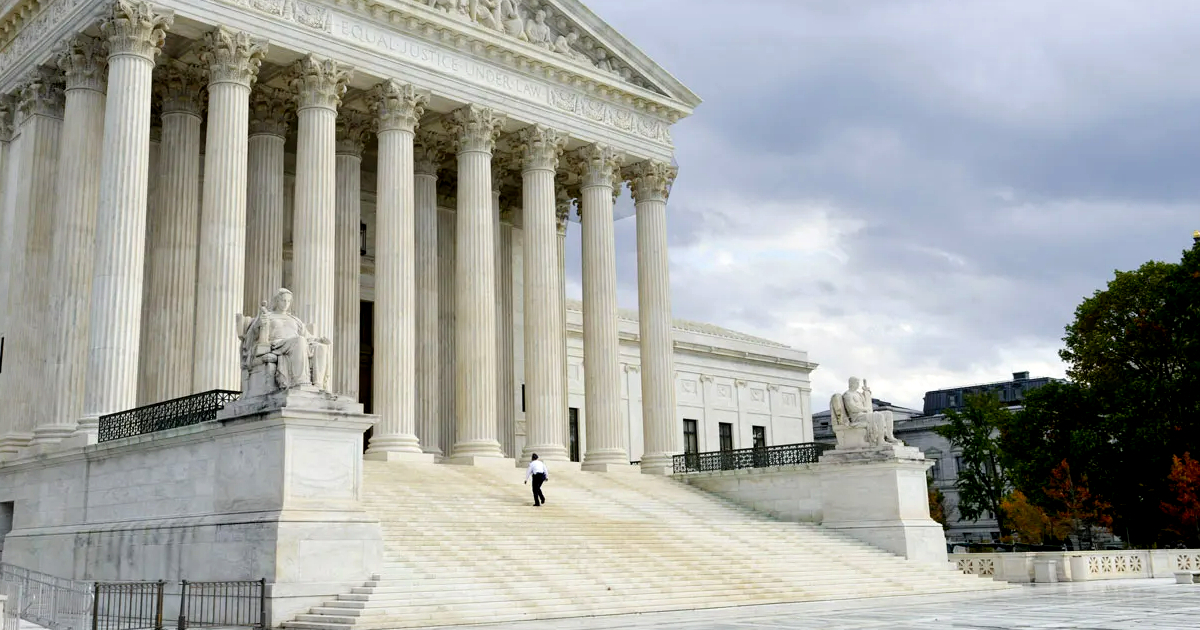
The United States Supreme Court is currently considering an urgent request that could shape the future of hundreds of thousands of paused immigration cases, including those affecting thousands of Cubans.
Case No. 26A500, City of Baltimore v. Texas, was filed on October 9 before Justice Samuel Alito and awaits a decision.
On October 22, both the Trump Administration—represented by Solicitor General D. John Sauer—and the State of Texas submitted their briefs opposing the requested suspension, urging the Court to deny it. The following day, the applicants submitted their rebuttal.
The Significance of "Administrative Closure" in Immigration
"Administrative closure" allows immigration judges to remove a case from the active docket without resolving it, giving the immigrant time to wait for events like visa approval, an I-130 family petition, or a status adjustment.
The Biden Administration reinstated this tool through the "2024 Rule" (89 Fed. Reg. 46,742). However, on June 22, 2026, Texas sued the federal government, and a consent decree was signed the same day before Judge Reed O'Connor, nullifying the rule nationwide. The Trump Administration did not defend it.
Cities like Baltimore, New Haven, Columbus, and the Centro Legal de la Raza attempted to intervene in August to support the rule but were denied standing by the court.
After the Fifth Circuit also refused the suspension in September, the applicants took the matter directly to the Supreme Court.
Allegations of Collusion to Bypass Legal Procedure
The applicants accuse the government and Texas of using the consent decree to abolish a federal rule without following the standard legal procedure of notice and comment.
Attorney Joshua Salzman of Democracy Forward warned, "If a judgment obtained through such collusion is allowed to stand, any agency could circumvent legal constraints by simply announcing its willingness to capitulate to a lawsuit."
The government and Texas counter that the applicants lack standing and that the ruling operates prospectively: it does not mandate the reopening of already closed cases but prohibits new closures without explicit legal grounds.
Direct Impact on Cuban Immigrants
According to EOIR statistics, by the third fiscal quarter of 2025, there were 361,614 inactive cases due to administrative closure nationwide, with an average duration of approximately 16.8 years.
Many Cubans in deportation proceedings—holding an I-220A form, parole, or with pending family petitions—have relied on this mechanism to buy time while USCIS processes their applications.
The situation worsens as the Board of Immigration Appeals has removed the favorable presumption of deferral for those awaiting a U visa or an I-130 petition, and the October 2026 Visa Bulletin shows delays of up to 14 years for Cuba in some family categories.
Furthermore, Cubans with an I-94 who had closed cases have been detained by ICE in 2026 despite having pending residency applications with USCIS.
Options for Those with Paused Cases
Even though administrative closure is blocked, alternative measures exist: adjournments, motions to dismiss, and deferred action from the EOIR Director.
For U visa applicants, USCIS offers the Bona Fide Determination process, which can grant work authorization while waiting for the visa.
Those with administratively closed cases can check their status on the EOIR case query portal using their A-number or call 1-800-898-7180. Given the recent accumulation of changes in immigration policy, consulting an immigration attorney is essential.
The Supreme Court has not set a deadline for resolving the emergency request, leaving uncertainty for more than 361,000 paused cases nationwide, which could last for weeks.
Key Questions About Administrative Closure and Cuban Immigrants
What is the purpose of administrative closure in immigration cases?
Administrative closure is a procedural tool that allows immigration judges to temporarily remove cases from the active docket, providing immigrants time to address pending matters like visa approvals or family petitions without resolving the case.
How does the Supreme Court's decision affect Cuban immigrants specifically?
The decision could significantly impact Cuban immigrants, many of whom rely on administrative closure to delay proceedings while awaiting USCIS decisions on visas or petitions. The uncertainty could affect their legal status and risk detention by ICE.