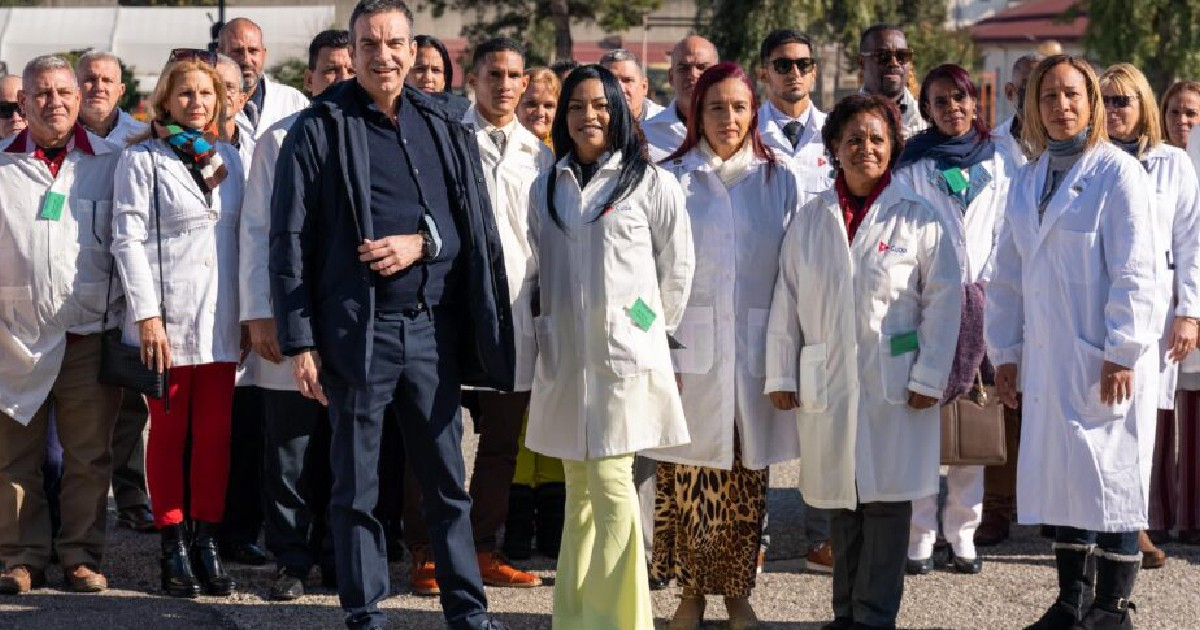
An investigative report by the Cuban Observatory for Human Rights (OCDH), spearheaded by journalist and researcher Annarella Grimal, sheds light on the substantial salary deductions imposed on Cuban doctors working in the Calabria region of Italy. The Italian news agency ANSA has highlighted this document, which provides concrete figures to support longstanding allegations.
According to the report, Italy allocated 25.7 million euros for the base salaries of 333 medical professionals through March 2025. However, the Cuban regime—via the state-run company Comercializadora de Servicios Médicos Cubanos (CSMC)—has only disbursed approximately 6.2 million euros to these doctors, equating to about 24% of the total funds.
The disparity between what Italy pays and what the doctors actually receive is staggering. The agreement stipulates a gross monthly salary of roughly 4,700 euros per professional, yet CSMC permits them to retain a maximum of just 1,200 euros.
Financial Strain Worsened by Additional Deductions
When it comes to overtime, the deductions intensify. Grimal explains that CSMC initially applies a 43% deduction, labeling it as an "Italian tax," and subsequently demands that the doctors remit 50% of the remainder. Consequently, the professionals are left with 22.5% or even less of their overtime earnings.
The state enterprise not only dictates how much the doctors can keep but also manages the hiring process, enforcing parallel contracts alongside those signed with the Italian health system.
Direct Hiring Offers Hope Amidst Sanctions
In light of these conditions, approximately 63 Cuban doctors in Calabria have expressed a desire to work directly with Italian health authorities, bypassing CSMC. Some have secured individual contracts with the region, although a few continue to voluntarily send part of their earnings back to Cuba.
The financial landscape for the mission grew more complicated in July, when U.S. sanctions against CSMC interrupted fund transfers to Havana. The company's operational account at the Italian bank BPER was disabled, as reported by mission members to Diario de Cuba. A Cuban doctor in Cosenza noted, "At the moment, it seems there will be no further transfers. The account is blocked."
Unable to send funds, the mission leader instructed doctors to temporarily hold the amounts they typically would send in their personal accounts. One proposed solution was for professionals to carry cash to Cuba during their vacations, though there's no evidence that this approach was ever executed.
International Scrutiny Intensifies
The Calabria case is part of escalating global scrutiny of the Cuban medical mission model. In September, the OCDH formally petitioned Brussels to investigate potential human trafficking practices within the brigade. This move was supported by a European Parliament resolution from June 18, 2026, explicitly citing Cuban medical brigades as a possible form of trafficking.
The U.S. State Department's October 2026 Trafficking in Persons Report kept Cuba at Tier 3—the most severe category—highlighting a "government policy or pattern" of forced labor in its labor export program, with salary retentions of between 50% and 95% from host countries' payments. CSMC is linked to the Cuban military's business conglomerate, GAESA.
Understanding Cuban Doctors' Situation in Italy
What percentage of their salaries do Cuban doctors in Calabria actually receive?
Cuban doctors in Calabria receive approximately 24% of their intended salaries. The rest is withheld by the Cuban government.
How have U.S. sanctions affected Cuban doctors in Italy?
U.S. sanctions have blocked fund transfers to Cuba, complicating the financial situation for Cuban doctors in Italy, as their operational account in an Italian bank was disabled.
What actions have been taken against potential human trafficking in Cuban medical missions?
The OCDH has petitioned the European Union to investigate potential human trafficking within Cuban medical missions, supported by a European Parliament resolution.