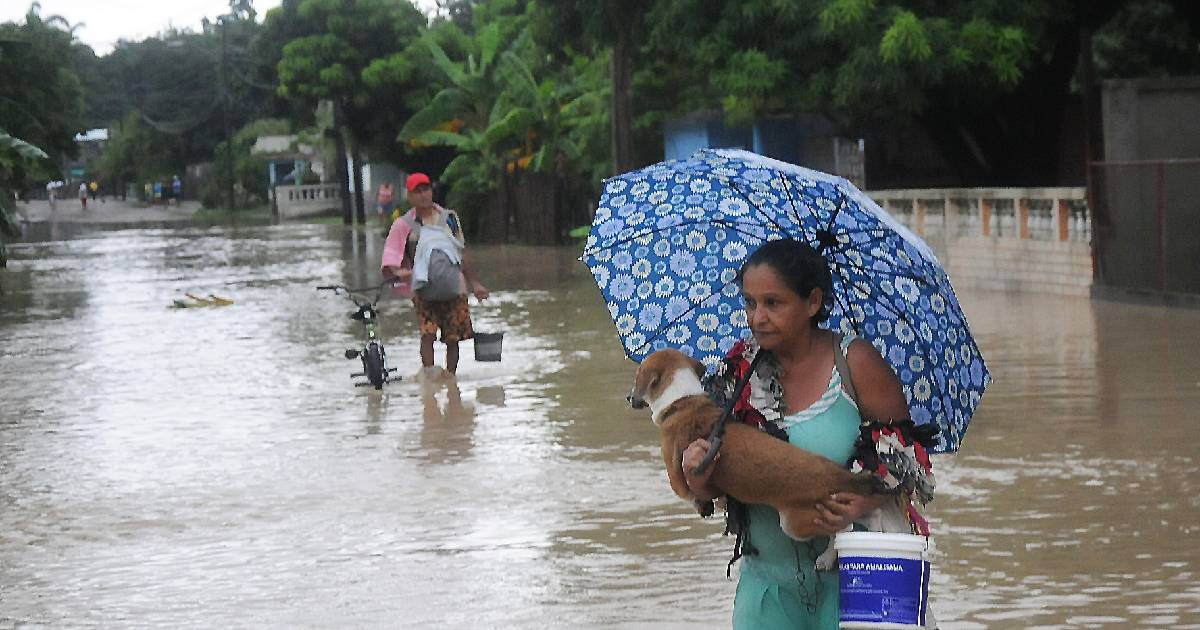
The eastern region of Cuba is bracing for potentially heavy and locally intense rainfall starting this Friday and continuing over the coming days, with forecasts indicating a risk of flooding in several areas. This warning comes from meteorologist José Rubiera and was published in the official newspaper Venceremos this Friday.
Carlos Román González, director of the Guantánamo Meteorological Center, explained that a trough located southeast of the Gulf of Mexico is moving towards eastern Cuba. This, combined with two low-pressure areas, is creating favorable conditions for heavy rainfall.
According to Román, the rain is expected to begin on Friday, with the most significant impact anticipated on Saturday and Sunday, driven by a very humid southern airflow. While rain is forecasted throughout Guantánamo province, the southern slope might experience the heaviest downpours.
Román cautioned that certain regions could see rainfall totals exceeding 100 millimeters. He also highlighted the risk of river flooding due to water runoff in mountainous areas and potential landslides, threats exacerbated by the province's hilly terrain.
On Thursday, Rubiera explained on his YouTube channel that a mix of atmospheric systems and humid airflow could lead to heavy and even intense rainfall across the central Caribbean, stretching from eastern Cuba to Dominican Republic, Jamaica, and the Bahamas.
The meteorologist noted that both the GFS and European models predict significant rainfall for the region, although they differ in how the rainfall will be distributed. Some scenarios indicate high accumulations in southern Haiti and eastern Cuba.
Rubiera emphasized that the rainfall forecasts for the next three days still have limited reliability, urging continued monitoring of the weather situation. Despite this, he warned of the potential for locally intense rains capable of causing flooding.
In Guantánamo, the Communist Party's first secretary, Yoel Pérez García, instructed municipal authorities to stay informed and implement measures to prevent damage and emergencies, considering the likelihood of river flooding and landslides in mountainous areas.
As of now, the consulted sources have not reported a declaration of the Informative Phase by the Civil Defense for the eastern provinces.
The Informative Phase is the initial step in the Civil Defense protocol, below the Alert and Alarm Phases. It involves increasing vigilance and informing the public but does not yet mandate a general evacuation order.
Eastern Cuba remains vulnerable, still recovering from the impact of Hurricane Melissa, which made landfall just a year ago as a Category 3 hurricane in Santiago de Cuba with winds of 195 km/h. The storm damaged over 116,000 homes and affected more than 3.5 million residents in eastern Cuba.
Recently, the region has experienced episodes of flooding. In early October, firefighters rescued 11 individuals, including two children, trapped by the rising Cayo Guan river in the Holguin municipality of Moa. Similarly, the Miel river in Baracoa once again submerged areas under water.
This situation is compounded by warnings from specialists about an intense 2026-2027 winter, marked by heavy rainfall and frequent cold fronts due to the El Niño phenomenon, with a 63% probability of reaching very strong intensity between the upcoming November and January 2027.
FAQs on Weather Risks in Eastern Cuba
What are the main weather threats in eastern Cuba currently?
Eastern Cuba is currently facing the threat of heavy rainfall leading to potential flooding and landslides, particularly in mountainous areas.
How is the government responding to these weather threats?
Local authorities, led by the Communist Party's first secretary in Guantánamo, have been instructed to stay informed and take necessary measures to prevent damage and emergencies.
What is the Informative Phase in Cuba's Civil Defense protocol?
The Informative Phase is the initial step in the Civil Defense protocol, focusing on increasing vigilance and informing the public but not yet mandating a general evacuation order.