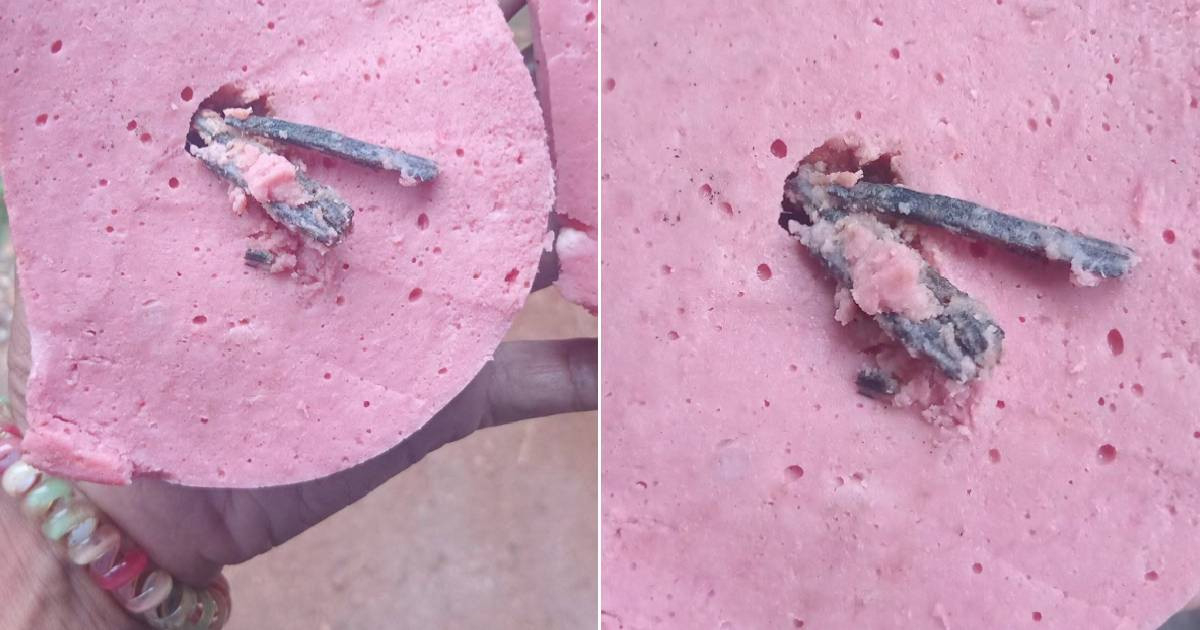
A resident of Moa, located in the province of Holguín, took to social media on Thursday to report finding pieces of wood inside a mortadella purchased at a sales point on the corner of the Atlantic neighborhood. Her post sparked numerous complaints from other citizens about the poor quality of sausages being sold in the municipality.
In a Facebook group called "Desde MOA para el mundo," the woman shared that she showed the product to her family to warn them of the potential hazard and then discarded it, as she lived too far from the store to return it.
"I showed it to my close relatives so they wouldn’t make the mistake of buying it, and then I threw it away because I can't return it as I live far from where I bought it," she commented on the post.
The report led to several testimonies from people questioning both the ingredients of the mortadella and the conditions under which it is made. Some users claimed that the sausage is produced in a homemade manner in private homes around the Atlantic area and the first buildings of the Miraflores neighborhood. However, these claims were not supported by any health inspections or independent verifications.
Concerns Over Quality and Safety
One resident, who had also purchased the product in the same area, labeled it a "complete scam" and warned about the possible use of low-quality ingredients. She speculated that the wooden fragments might have been added to increase the weight or were a result of unsanitary production practices.
The suspicion that foreign objects are added to increase the product's weight was a common reaction. "That way, the weight goes up, and with wood, it costs more," wrote one user. Another commented that some sellers might be willing to risk consumers' safety for higher profits.
Some even suggested that the fragments could be pieces of moringa added to boost the nutritional value of the sausage, though this explanation was met with skepticism.
Broader Quality Issues in Moa
Another commenter claimed that formaldehyde might be added to the mortadella to extend its shelf life without refrigeration, though this accusation lacked any food analysis or evidence presented in the post.
Complaints were not limited to the Atlantic corner sales point. Another resident reported finding two large stones inside a mortadella bought at a place known as "El Tamarindo." A third user mentioned buying sausage filled with white flour, allegedly used to give it a bulkier appearance.
In response to the string of testimonies, one commenter suggested that consumers should publicly name those who deceive them, especially when it comes to food. "When everyone who has been scammed, especially with food, reports the fraudsters' names on social media, it's likely they won't do it again because no one will buy from them," she wrote.
The complaints raise questions about the ingredients and production conditions of the mortadella sold in Moa. However, the information shared by consumers does not confirm what materials the product contained, how it was made, or whether there were breaches of health regulations.
Recently, a shopper in Havana claimed to have found a tick inside cheese at an agricultural fair. In a separate incident in September, a resident of Morón discovered a cockroach in bread purchased from a street vendor. In January 2024, Cubans reported on TikTok that children at Ceiba del Agua Secondary School in Artemisa were given a snack with ham filled with worms.
The situation in Holguín is particularly severe: at the end of September, two people died in the province from nitrite salt poisoning, a substance authorities linked to a nearby home where sausages were being made.
FAQs About Food Safety Concerns in Moa
What prompted the complaints about the mortadella in Moa?
Complaints arose after a woman reported finding pieces of wood in a mortadella purchased in Moa, which led to other residents sharing similar concerns about the quality and safety of the product.
Are there any confirmed health risks associated with the mortadella sold in Moa?
Currently, there are no confirmed health risks as the complaints are based on personal observations and lack verified health inspections or independent testing.
What other food safety issues have been reported in Cuba recently?
Other recent reports include a tick found in cheese at a Havana fair and a cockroach discovered in bread from a street vendor in Morón. Additionally, there have been complaints about worm-infested ham served in a school in Artemisa.