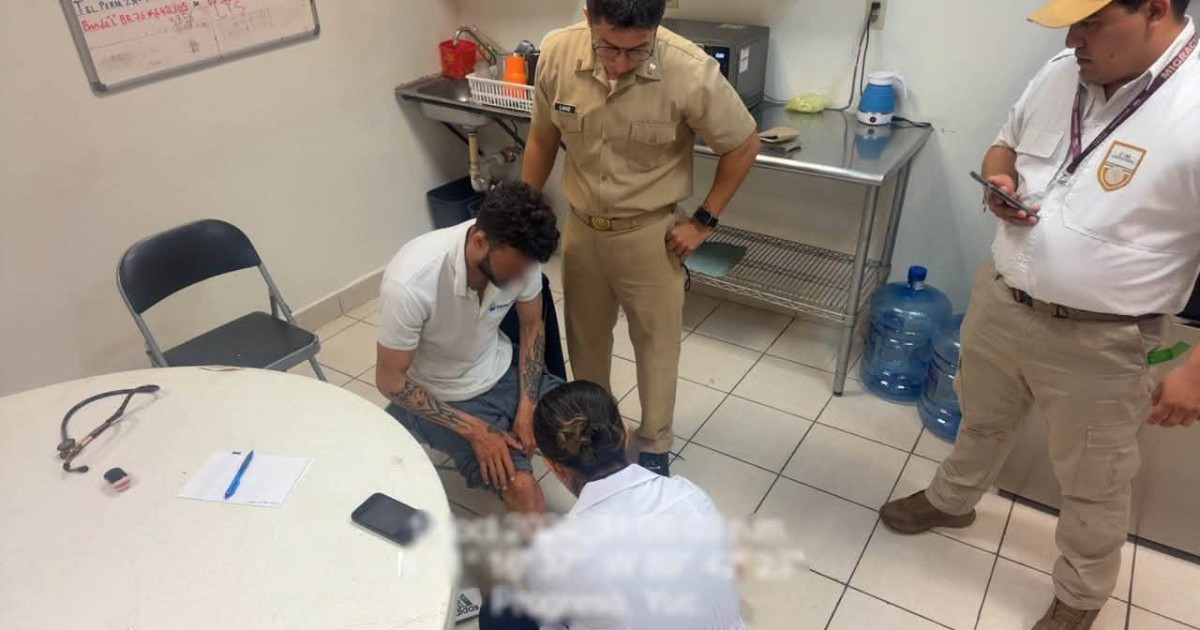
A Cuban man named Fermín Izquierdo, hailing from Mantua in the far western Pinar del Río, was rescued alive on Monday, October 19, in the Caribbean waters, approximately 352 kilometers northeast of Puerto Progreso. This information comes from an investigation by Infobae, which references the platform NiO Reportando Un Crimen.
The whereabouts of the other five Cubans who reportedly set sail with him from Mantua to Mexico remain unknown, with no official confirmation from authorities.
The discovery was made by the crew of a container ship who found the drifter at sea. Personnel from the Yucalpetén Search and Rescue Station, affiliated with the Ninth Naval Zone of Mexico's Navy, retrieved Izquierdo aboard a Defender-type vessel and transported him to Progreso, as confirmed by the naval unit to the Diario de Yucatán.
Upon arrival at the Yucalpetén Naval Hospital, Izquierdo was treated for severe dehydration and skin lesions caused by prolonged sun and seawater exposure. After receiving specialized care, he was reported stable and out of danger.
Mexican media described him merely as "a foreign citizen," without specifying his name or nationality. It was journalist José Raúl Díaz Barrios who identified him as Fermín Izquierdo, a detail reported by Infobae.
After being discharged from the hospital, Izquierdo was placed under the custody of the National Institute of Migration (INM), which may opt for assisted return or deportation. As of Wednesday, no decision had been communicated regarding his immigration status.
This incident highlights the growing use of the irregular maritime route from western Cuba to the Yucatán Peninsula and Quintana Roo. Dimas, a coastal town in Mantua, has emerged as a primary departure point. In September, a fast boat carrying 21 people left for Cancún, with no confirmation of arrival.
In August, two young rafters drowned in the waters of Pinar del Río when their vessel's engine failed en route to Cancún. That same month, the Mexican Navy rescued 16 Cubans off the Yucatán coast, including four minors.
Izquierdo's case differs from the 11 rafters who landed in Cancún on October 18, having departed from Isla de la Juventud eight days earlier.
The Mexican authorities confirmed their arrival along with two other vessels carrying Cubans that reached Quintana Roo in October.
Pedro Murillo Garay, head of the Regional Port Authority of Puerto Juárez, acknowledged that 28 vessels are under an abandonment declaration procedure in the area, some allegedly used by Cuban migrants.
Between September and October, seven boats were removed from Laguna Nichupté.
Municipal police officer Dagoberto Canul attributed the surge in arrivals to the closure of the U.S. land border: "After the U.S. border closure during Donald Trump's administration, Quintana Roo has seen a return of clandestine arrivals," he noted.
As families in Mantua await news of the five missing individuals, the search continues with no confirmed outcomes.
In November 2024, fisherman Javier Robles encapsulated the growing reality on these shores: Isla Mujeres was becoming "a graveyard of abandoned rafts used by Cubans to reach Mexico."
Key Information on Cuban Raft Migration
Who rescued Fermín Izquierdo in the Caribbean?
Fermín Izquierdo was rescued by the crew of a container ship and later assisted by personnel from the Yucalpetén Search and Rescue Station, part of Mexico's Navy.
What challenges did Izquierdo face after being rescued?
After being rescued, Izquierdo suffered from severe dehydration and skin lesions due to prolonged exposure to the sun and seawater.
What routes are Cuban migrants using to reach Mexico?
Cuban migrants are increasingly using the maritime route from the western part of Cuba to the Yucatán Peninsula and Quintana Roo as a way to reach Mexico.