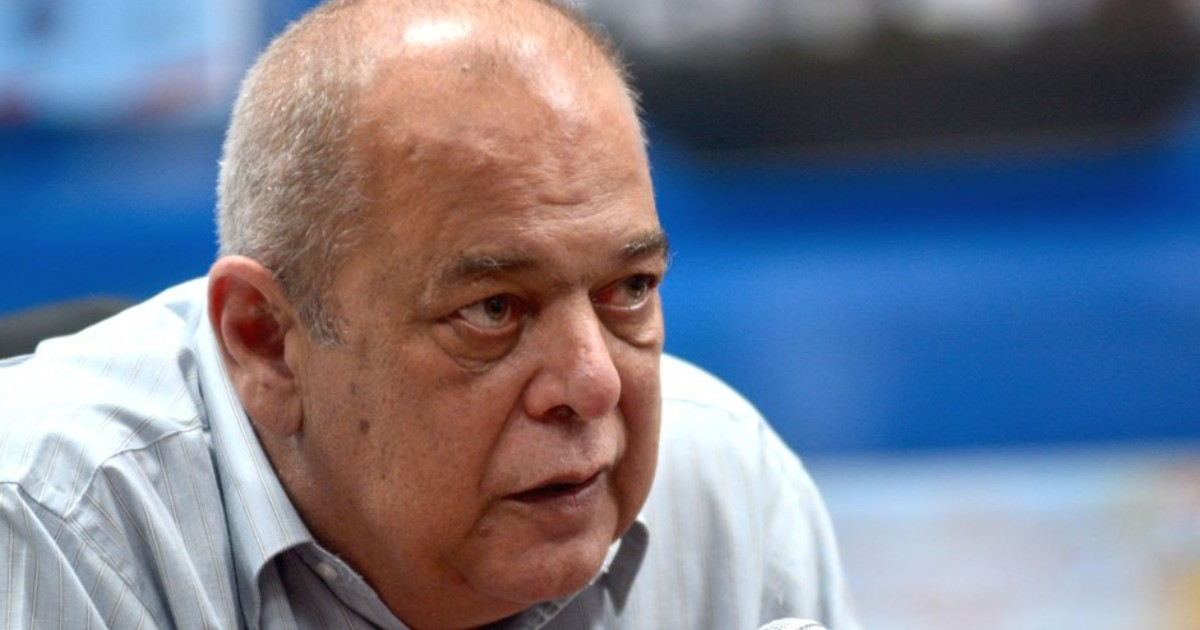
The Cuban Minister of Energy and Mines, Vicente de la O Levy, has issued a stark warning regarding the country's fuel situation, stating that Cuba lacks and will continue to lack fuel in the near future. He emphasized that this reality should not be used as an excuse to halt the search for solutions.
His remarks were reported by the Cuban News Agency following his visit to Holguín, where he met with workers, engineers, and energy sector leaders. He was accompanied by Joel Queipo Ruíz, the first secretary of the region's Party, and Manuel Hernández Aguilera, the governor.
De la O Levy encouraged local problem-solving through collaboration with both state-owned and private enterprises. The aim is to establish repair workshops that bolster the sustainability of the electrical service in the area.
The minister also suggested that Holguín could benefit from renewable energy sources beyond solar power, such as hydroelectricity, wind generators, and biomass, to fully leverage its productive potential.
During the meeting, Iskander Concepción Martínez, head of the Holguín Base Business Unit of the Electric Generators and Services Company, proposed consolidating available equipment into fewer facilities. This measure is intended to ease fuel supply and improve the efficiency of distributed generation.
Martínez disclosed that some facilities have not produced electricity for two to three years, primarily due to fuel supply challenges, though they remain under conservation measures.
Ruber Reynaldo González, the general director of the provincial Electric Company, indicated that key actions are being taken to reduce service disruption periods in the territory, without specifying exact timelines.
This ministerial warning comes at a critical juncture. On October 17, shortly before the visit, the Holguín Electric Company halted circuit rotations due to the "complex situation" of the national system, sparing only the circuit supplying the Hospital Lenin from cuts.
Back in July, the province had access to just 70 MW against an estimated maximum demand of 240 MW, covering less than 30% of its needs.
The visit also included a stop in Moa, where Dania Agudín, the Ministry's director of Petroleum and Gas, highlighted that domestic crude production is crucial for the nation's vitality, given the sharp decline in fuel imports.
In Moa, De la O Levy urged the initiation of gold mining using simpler yet effective methods to curb illegal extraction in the region and called for action against theft in solar parks and other crimes targeting the electrical system.
The fuel shortage impacts more than just electricity generation. On the same day, Minister of Transportation Eduardo Rodríguez Dávila acknowledged that interprovincial bus trips from Havana had plummeted from 419 daily in 2025 to just 11 in 2026, underscoring the national scope of the crisis.
Earlier in May, De la O Levy himself admitted that Cuba had no diesel or fuel oil reserves for electricity generation. This situation worsened following the cessation of Venezuelan shipments at the end of 2025 and the near-total halt of Mexican supplies at the start of 2026.
"Cuba lacks and will continue to lack fuel in the short term, yet this should not serve as an excuse to avoid trying new approaches," De la O Levy stated to the Holguín leaders, encapsulating both the severity of the energy landscape and the lack of immediate solutions for Cubans.
Understanding Cuba's Energy Crisis
What did Vicente de la O Levy warn about Cuba's fuel situation?
Vicente de la O Levy warned that Cuba currently lacks and will continue to lack fuel in the near future, and this should not be used as an excuse to stop seeking solutions.
What renewable energy sources did De la O Levy suggest for Holguín?
De la O Levy suggested that Holguín could utilize renewable energy sources such as hydroelectricity, wind generators, and biomass, in addition to solar power.
How has the fuel shortage affected interprovincial bus trips in Cuba?
The fuel shortage has significantly reduced interprovincial bus trips from Havana, dropping from 419 daily in 2025 to just 11 in 2026.