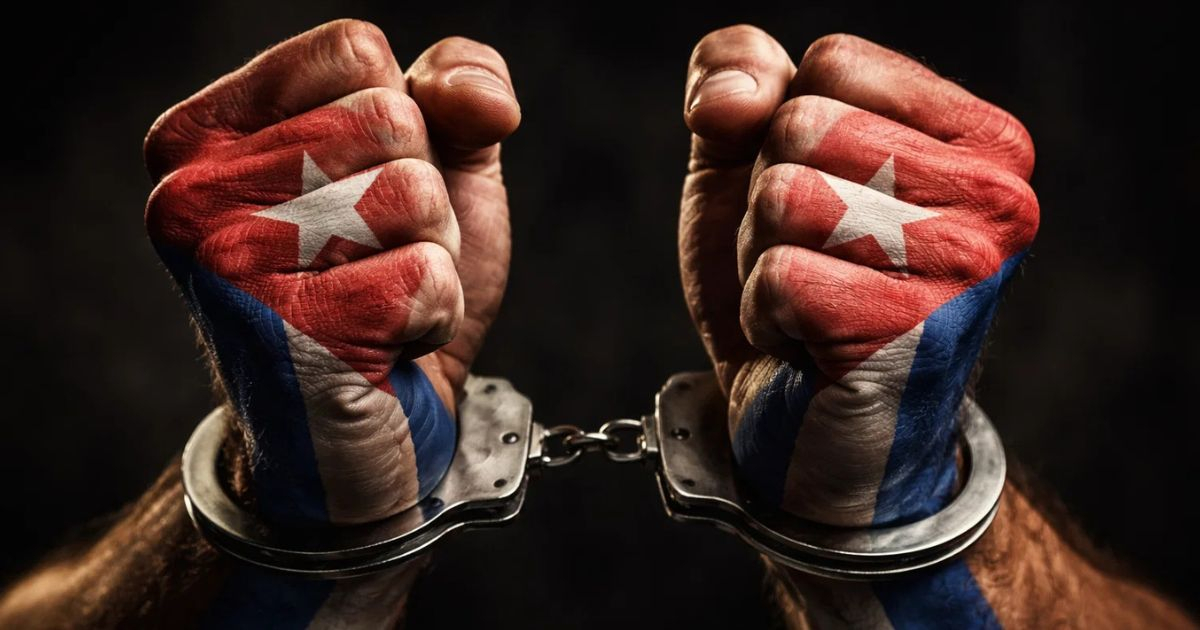
Freedom of the press violations in Cuba surged by 129.4% in September 2026, escalating from 17 incidents in August to 39, as noted in the latest report by the Cuban Observatory for Freedom of Expression (OCLE), affiliated with the Cuban Institute for Freedom of Expression and Press (ICLEP).
Released on Tuesday, October 20, the report documented 134 instances of infringements on freedom of expression and press, stemming from 106 events recorded during the month.
The overall tally signifies an 8.9% rise compared to August, and a 57.6% increase from the same month in 2025. The most significant escalation was observed in the attacks against journalists and workers of independent media.
Out of the 134 documented violations, 39 affected press freedom while 95 were related to the freedom of expression of citizens, activists, and dissidents. A single incident can encompass multiple violations, meaning the figures do not necessarily indicate distinct episodes or victims.
The misuse of state power topped the repressive indicators, with 49 instances, followed by threats and psychological aggression (48) and arbitrary detentions (26).
State Security's Involvement and Regional Impact
The State Security was identified as the entity most involved in the documented incidents, linked to 51 episodes. Havana accounted for 63 of the 106 incidents recorded nationwide.
Journalists Facing Intense Pressure
Among the highlighted cases was that of journalist Henry Constantín Ferreiro, director of the independent outlet La Hora de Cuba, who was detained on September 16 in Camagüey after responding to a police summons.
Constantín was placed under preventive detention on charges of "disobedience" and was transferred to Kilo 7 prison on September 24. His imprisonment sparked condemnation from international organizations, including Reporters Without Borders, which called for his immediate release.
The report also noted the harassment of journalists Yunia Figueredo and Frank Correa, who reported police threats and pressures affecting their families.
On September 4, a sector chief of police informed Figueredo that she must report to a police station monthly and avoid any contact with the United States Embassy.
A day earlier, two officers visited the university attended by one of her daughters to gather information about her, as documented by the OCLE.
The Observatory recorded 30 incidents involving journalists in its individualized victim database, compared to 29 for political prisoners, the two groups most prominently featured in the September registry.
Potential Undercount of Violations
The ICLEP warns that the actual figures could be higher due to victims' fear of reporting, retaliation, and challenges in obtaining information within Cuba.
The data, finalized as of September 30, may be updated in the OCLE Barometer as new cases are verified.
For the entirety of 2025, the organization documented 1,188 violations of freedom of expression and press, a 54.7% increase from 2024. Cuba currently ranks 160th out of 180 countries in the 2026 World Press Freedom Index by Reporters Without Borders.
FAQs on Press Freedom Violations in Cuba
What is the role of the Cuban Observatory for Freedom of Expression?
The Cuban Observatory for Freedom of Expression (OCLE) monitors and reports on violations of freedom of expression and press in Cuba, providing data and analysis on these issues.
How does state repression manifest against journalists in Cuba?
State repression against journalists in Cuba often includes misuse of power, threats, psychological aggression, and arbitrary detentions, as seen in recent reports.
Why are the actual figures of violations potentially higher?
The actual figures might be higher due to the victims' fear of reprisals, reluctance to report, and the difficulty in gathering information within Cuba.