Alberto Núñez Feijóo, head of the Popular Party, delivered his most assertive comments yet regarding the so-called Grandchildren Law this Tuesday. He asserted that the Constitutional Court would not dare to oppose the Supreme Court or the Central Electoral Board in the ongoing dispute over the external voting rights of those who have recently become citizens.
During an interview on the Herrera en COPE program, Feijóo was unequivocal, stating, "The Constitutional Court will not dare to knowingly issue an unjust ruling," and further emphasized that "it will not engage in such nonsense."
Feijóo's warnings came as the full Constitutional Court, consisting of 12 judges led by Cándido Conde-Pumpido, deliberated on whether to accept an appeal filed by the Ombudsman, Ángel Gabilondo. This appeal sought to restore the voting rights of approximately 163,020 newly nationalized individuals before the upcoming elections on November 29.
Reports from Tuesday suggested that a majority of the court was inclined to dismiss the appeal, aligning with a legal report labeling the appeal as "premature," since the deadline for Supreme Court arguments didn't expire until October 22.
The PP leader also criticized the very name of the law, arguing that it is "neither a law nor about grandchildren," pointing out that the extension of benefits to great-grandchildren and great-great-grandchildren was made through an instruction by a director general, not through parliamentary approval.
Feijóo labeled the Grandchildren Law as "nonsensical within the nonsense we've experienced over the years" and accused Pedro Sánchez's Government of "cheating" by attempting to add, according to the PP's estimate, 2.4 million new voters via the law—an unverified figure used politically by the party.
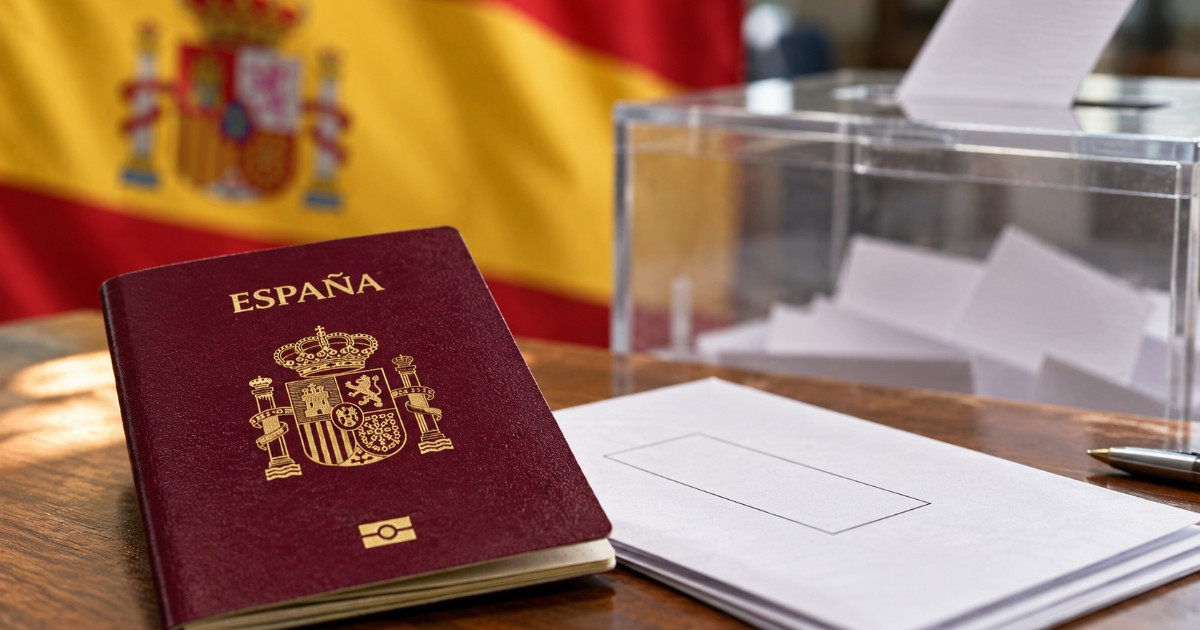
As a structural response, Feijóo proposed advancing a Nationality Law to impose stricter requirements for obtaining a Spanish passport, emphasizing that "passports are not given away; they must be earned."
Currently, there is no drafted proposal for such a law, and the existing Grandchildren Law has not been repealed.
It is crucial to clarify that no ongoing judicial resolution overturns granted nationality or revokes issued passports. The Supreme Court's suspension only restricts the right to vote from abroad through the absent residents' census on November 29, as explained by the Spanish Government addressing consular difficulties.
Nationalized Cubans living in Spain are eligible to vote on November 29 without any restrictions.
This conflict significantly impacts the Cuban community, which comprises 252,290 residents in Spain—the ninth-largest foreign community—with 63% already holding Spanish nationality. The Consulate in Havana received over 107,000 nationality applications just during 2025.
The proposal for a new law with tougher requirements creates uncertainty among those with ongoing processes. However, without an approved text or modified regulation, current procedures continue under the existing legal framework.
Understanding the Grandchildren Law and Its Implications
What is the Grandchildren Law?
The Grandchildren Law refers to legislation intended to extend Spanish nationality to the descendants of Spaniards who emigrated, including grandchildren, great-grandchildren, and great-great-grandchildren.
Why is Feijóo opposing the Grandchildren Law?
Feijóo criticizes the law for allegedly expanding voting rights to a large number of new citizens through what he considers an improper process, potentially altering electoral outcomes without parliamentary approval.
How does the Grandchildren Law affect Cuban nationals in Spain?
The law influences Cuban nationals by offering a pathway to Spanish citizenship, impacting over 252,000 Cuban residents in Spain, many of whom have already acquired nationality through this law.