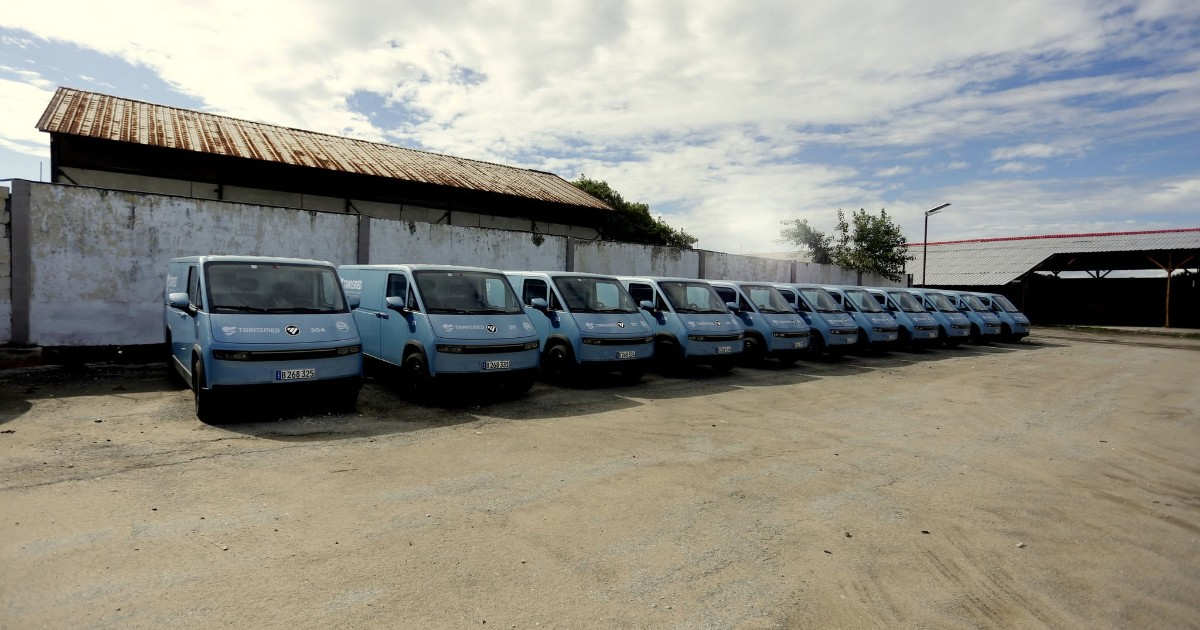
On Tuesday, the Cuban government announced the rollout of 44 electric vehicles specifically designated for transporting medicines, medical supplies, and other essential items crucial for the operation of hospitals and health institutions. This initiative comes in the midst of a severe fuel shortage that has been hindering the distribution of supplies across the nation.
Despite this development, Transport Minister Eduardo Rodríguez Dávila acknowledged that this new fleet falls short of meeting the entire healthcare sector's demands. He shared the news of the acquisition, arrival, and deployment of these vehicles, each capable of carrying up to 3.2 tons, on Facebook.
“Distributing medicines, medical supplies, and other critical items for the healthcare sector is both a priority and a significant challenge given the current fuel shortage,” stated Rodríguez Dávila.
The introduction of these vehicles aims to ease some of the logistical struggles faced by the healthcare system, which requires efficient transport of medicines, materials, and other supplies between warehouses and medical institutions.
“Our responsibility is immense because human lives depend on medical institutions having the necessary supplies amidst numerous challenges,” he asserted.
Distribution Across Provinces
Out of the 44 vehicles, 20 are allocated to Havana, a hub for numerous hospitals, specialized centers, and national health institutions. These vehicles will be operated by TRANSMED, a state-owned company established this year to meet the transportation needs of healthcare personnel, now expanding its role to include the transport of goods.
The remaining 24 units will be distributed to other provinces and managed by provincial transport companies, as explained by the minister.
These vehicles were procured through projects funded by the Public Transport Development Fund, a government mechanism for investments aimed at enhancing passenger and freight mobility.
Challenges and Future Plans
Minister Rodríguez admitted that available resources are insufficient compared to the vast unmet needs. “While the funds are limited relative to the demands, the objective is to utilize them efficiently to address priorities, such as supporting public health,” he emphasized, noting that this acquisition is a partial solution.
The announcement also includes plans to reduce reliance on the national power grid by using solar energy. Rodríguez mentioned that charging stations equipped with photovoltaic solar panels have been contracted to supply electricity to these vehicles and other previously acquired electric units. However, these facilities remain part of a developing project, and specifics regarding their number, locations, and operational dates remain undisclosed.
This aspect is particularly crucial in a country where prolonged blackouts jeopardize the availability of electricity necessary for recharging electric vehicles. While these new vehicles do not rely on gasoline or diesel, their effectiveness hinges on the availability of energy for recharging, maintenance, and route organization.
The minister assured that the purchase includes necessary supplies to ensure the maintenance and repair of these units. “The acquisition of these new vehicles comes with adequate support for any necessary maintenance and repairs,” he explained. Proper management should allow the equipment to remain in good condition throughout its operational life.
Addressing Healthcare and Fuel Shortages
This investment also expands a healthcare transport project introduced by the government earlier this year. In February, the Ministry of Transport announced the launch of TRANSMED with a fleet of 25 combustion buses and nine electric minibuses, primarily for transporting healthcare workers in Havana. Funded through the Public Transport Development Fund, this initiative represented an investment exceeding five million dollars.
At that time, Rodríguez recognized that the project would initially fall short of meeting the sector's demand and that part of its operation would remain vulnerable to fuel shortages.
The new initiative arrives amid ongoing severe shortages of medicines, a major issue for Cuban families. A CubaData survey conducted between February and March 2026, involving 1,788 participants nationwide, revealed that 95.6% had difficulties obtaining medications in the previous 12 months. Of those, 40.4% faced significant challenges, while 13.8% found it impossible to access the drugs they needed.
The survey also highlighted obstacles in receiving medical care, with 90.9% of respondents reporting some difficulty accessing healthcare services. Cuban health authorities themselves have acknowledged these shortages.
In July 2025, Health Minister José Ángel Portal Miranda admitted to the National Assembly that the country only had about 30% of its essential medicine inventory available. Out of 651 critical drugs, 461 were either completely out of stock or had limited availability.
FAQs About Cuba's Electric Vehicle Initiative in Healthcare
Why has Cuba introduced electric vehicles for medicine transport?
Cuba has introduced electric vehicles to transport medicine as part of an effort to mitigate the effects of a severe fuel crisis impacting the distribution of essential health supplies.
How many electric vehicles are being deployed and where?
A total of 44 electric vehicles are being deployed, with 20 allocated to Havana and the remaining 24 distributed across other provinces to assist in the transport of medical supplies.
What are the challenges facing this electric vehicle initiative?
Challenges include limited resources, the need for energy to recharge vehicles amid frequent power outages, and the logistical organization of transport routes.