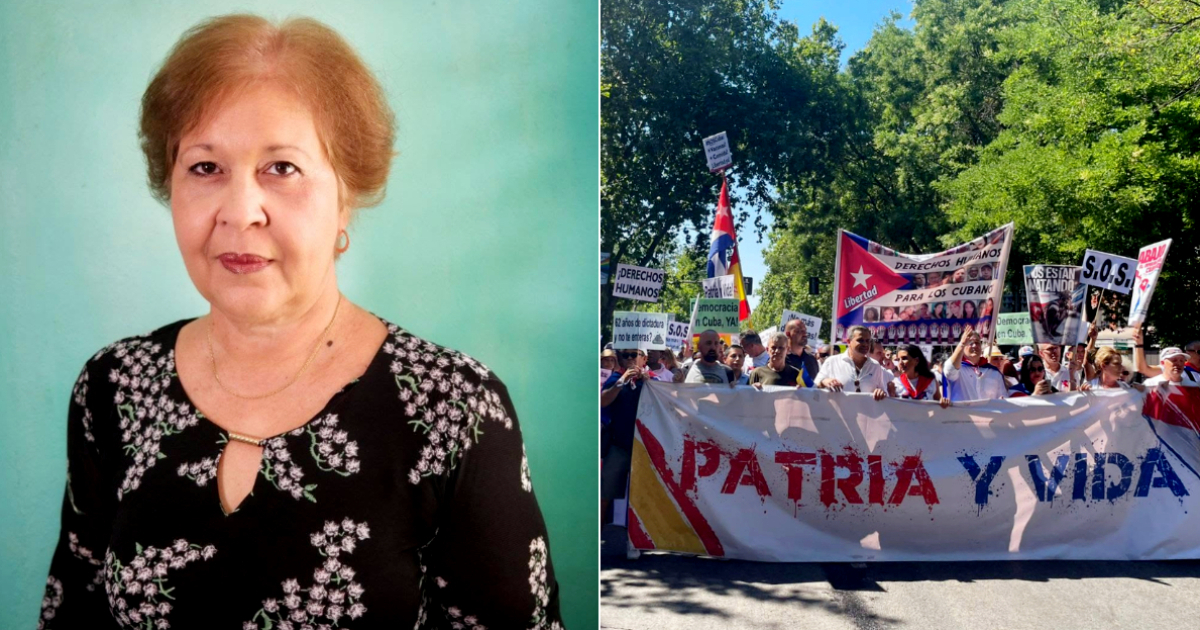
In her essay "Cubans Leading Change from Within," featured in the Journal of Democracy, Cuban historian Alina Bárbara López Hernández poses a critical question: Is Cuba's civil society prepared to guide a democratic transition should the political system open up?
López Hernández offers a mix of hope and caution. The economic collapse, frequent power outages, rampant repression, and growing public dissatisfaction have undermined the regime's stability. Yet, the opposition remains fragmented and lacks the deep-rooted structures necessary to channel protests into a cohesive power alternative.
Unpacking the Role of the Cuban Exile Community
The essay falls short in exploring two crucial areas: the political role of Cuban exiles and the varying scenarios that could lead to a transition, whether through negotiation, regime collapse, or international intervention.
Given Cuba's history of forced emigration and political persecution, it's challenging to envision democratic reconstruction without considering the capabilities amassed beyond its shores.
While López Hernández doesn't advocate for excluding exiles or dismiss their legitimacy, she emphasizes the need for organizations with local roots, community ties, and the ability to represent those who suffer under authoritarianism daily.
Existing Transition Frameworks
Despite López Hernández's concerns about the lack of political articulation, various transition projects have been crafted for decades by Cuban opposition groups and specialists.
For instance, a study by CiberCuba in August 2026 highlighted initiatives like Concilio Cubano, La Patria es de Todos, and Proyecto Varela. These efforts propose solutions from plebiscites and constitutional reforms to provisional governments and negotiated openings.
Organizations like the Cuban American Bar Association (CABA) and Cubalex have developed frameworks addressing public power organization and judicial independence, respectively, showing the opposition's institutional and organizational readiness.
Lessons from Global Transitions
Historical parallels provide a lens through which to assess López Hernández's territorial emphasis. While she contrasts Poland and South Africa's organized negotiations with Libya and Syria's chaotic transitions, South Africa's example is particularly illustrative.
During South Africa's transition, while Nelson Mandela was imprisoned, Oliver Tambo led the African National Congress (ANC) from exile, maintaining diplomatic relations and international support. Similarly, numerous Chilean exiles returned to aid in their country's democratic rebuilding.
These examples demonstrate that geographic location doesn't inherently determine political legitimacy or leadership capacity.
International Dynamics and Cuban Exile Influence
International considerations play a crucial role in Cuba's potential transition, especially given America's significant impact on its economic and geopolitical landscape.
Exiled Cuban leaders maintain connections with international governments and organizations, as seen when Marco Rubio met with Rosa María Payá in 2025 and when José Daniel Ferrer engaged with the U.S. Secretary of State and the European Parliament on human rights issues in Cuba.
Such relationships highlight the exile community's potential political influence, which could be vital in a transition, offering diplomatic dialogue, international guarantees, and resource coordination.
Building a Unified Political Community
López Hernández rightly warns that a democratic transition won't automatically follow a dictatorship's collapse. It requires organized citizens, representative institutions, and mechanisms to avoid new authoritarian concentrations.
Yet, her analysis could benefit from a broader conception of Cuban civil society, integrating both island and exiled communities. The challenge lies in creating representative structures that incorporate all citizens, regardless of their residence.
Ultimately, while Cuban democracy must be built in Cuba, it need not be constructed solely by those currently residing there.
Understanding the Cuban Transition and Exile Impact
What are the main challenges for Cuba's civil society in leading a democratic transition?
The primary challenges include fragmentation within the opposition, lack of deeply rooted organizational structures, and the need for cohesive representation of those affected by authoritarian rule.
How can Cuban exiles contribute to a potential transition?
Cuban exiles can offer diplomatic connections, international support, and resources that are crucial for political dialogue and the rebuilding process.
Why is the role of the international community significant in Cuba's transition?
The international community, particularly the United States, exerts substantial influence over Cuba's economic and geopolitical conditions, making its role pivotal in shaping or supporting any political transition.
What historical examples illustrate successful transitions involving exiles?
South Africa and Chile are examples where exiled leaders played crucial roles in democratic transitions, demonstrating that external political activity can complement internal resistance.