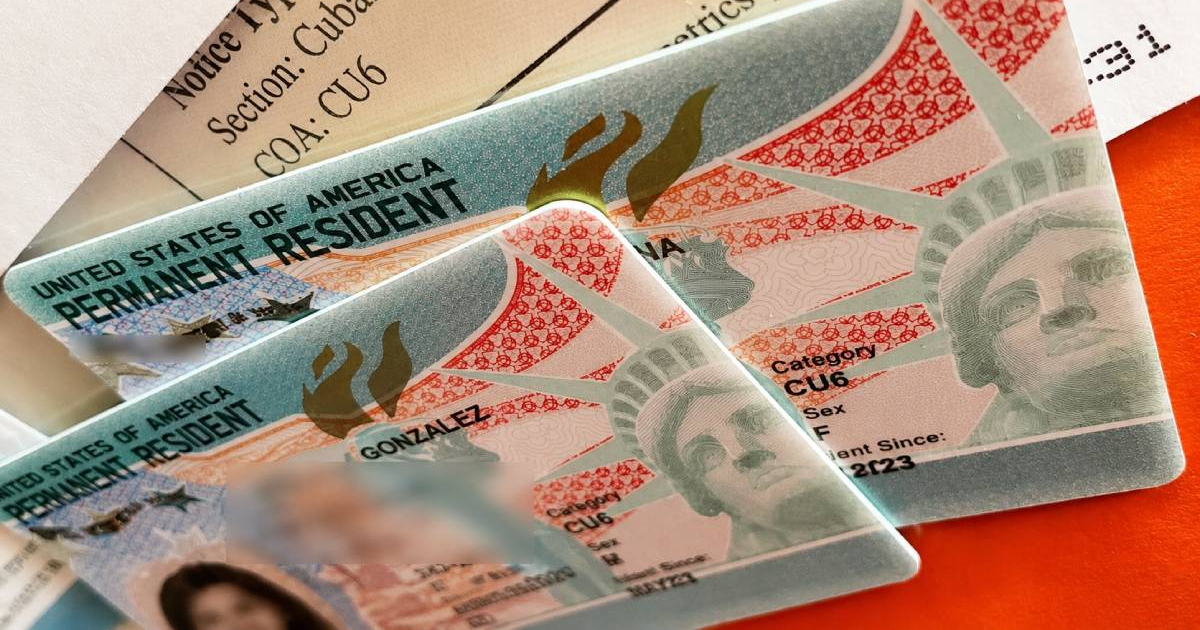
The number of permanent residency approvals for Cubans under the Cuban Adjustment Act saw an unprecedented drop between April and June 2026. The United States Citizenship and Immigration Services (USCIS) approved a mere 139 applications while denying 447 others, highlighting the stark deterioration in outcomes for those seeking to regularize their immigration status through this avenue.
This data comes from USCIS’s third-quarter statistical report for the fiscal year 2026, spanning April, May, and June, specifically detailing the results of adjustment of status petitions filed using Form I-485 under the Cuban category.
Overall, USCIS processed 586 cases during those three months: 139 approvals and 447 rejections. This equates to only 23.7% of decisions being favorable, whereas 76.3% resulted in denials.
A Historical Comparison of Approval Rates
In practical terms, USCIS denied more than three applications for every one it approved, a stark contrast to previous years. The decline is even more apparent when comparing approvals from the same quarter over the past three years.
From April to June 2024, USCIS granted 49,965 permanent residencies under the Cuban category and rejected 662 applications. In the same period in 2025, approvals dropped to 10,432, with denials increasing to 757. Now, in 2026, the figures show only 139 approvals and 447 denials.
Compared to 2024, this represents an approximate 99.7% decrease in approved residencies—a dramatic contraction in just two years. Compared to 2025, the decline is about 98.7%.
Understanding the Broader Context
However, it’s important to note that the absolute number of denials in 2026 was less than in equivalent periods of 2024 and 2025. The most significant change occurred in the number of approvals and the total decisions made by USCIS.
In 2024, a total of 50,627 cases were resolved during the analyzed quarter, compared to only 586 in 2026. Therefore, it’s not simply that USCIS is denying a larger absolute number of residencies, but that it is resolving far fewer cases overall, with denials now predominating among the decisions made.
Impact of Policy Changes on Approval Rates
The drop in approvals coincides with changes in immigration policies under the Donald Trump administration and judicial disputes over USCIS procedures. On May 21, 2026, USCIS issued a memorandum regarding the discretionary nature of status adjustments and exceptional circumstances that might affect certain immigration decisions.
This guidance emphasized that status adjustment is a discretionary benefit and suggested that those temporarily in the U.S. should generally pursue consular processing in their home countries unless extraordinary circumstances exist.
The policy raised concerns about its potential impact on Cuban immigrants seeking permanent residency, although quarterly data alone does not prove that this memorandum directly caused the drop in approvals.
Additionally, USCIS had imposed administrative restrictions affecting applications from citizens and nationals of 39 countries, including Cuba. On August 24, 2026, a federal court in California blocked two memoranda related to this pause, ordering the resumption of ordinary adjudication of affected cases.
These restrictions and the May memorandum on discretionary adjustments are separate measures and should not be confused or assumed to be nullified together.
Future Outlook for Cuban Applicants
The situation is particularly challenging for Cubans with complex immigration procedures, including those with I-220A documents, parole program entries, or pending asylum requests. The Cuban Adjustment Act remains in effect, allowing certain Cuban citizens or natives to apply for permanent residency if they meet its requirements, such as being inspected and admitted or paroled and having at least one year of physical presence in the U.S.
However, not all immigration documents equate to admission or parole for the purposes of this legislation. In particular, individuals released under an I-220A order require individual analysis, as this document does not automatically constitute the parole needed to qualify under the Act. Similarly, a pending asylum request alone does not ensure that a person meets all the criteria for residency through this route.
The significant decline in approvals had already begun to surface in earlier statistics. In April, it was reported that USCIS approved only 15 residencies for Cubans over a month, a 99.8% drop from levels recorded in previous periods.
For those who have already submitted Form I-485, the delays and administrative changes make it especially important to keep their contact information updated and review official USCIS notifications. The status of an application can be checked via the official USCIS case tracking system using the corresponding receipt number.
FAQs About Cuban Residency Approval Challenges
Why is there a significant decline in Cuban residency approvals in 2026?
The decline is attributed to changes in immigration policies under the Trump administration, increased denials, and fewer overall cases being resolved by USCIS, among other factors.
What are the implications of the policy changes on Cuban immigrants?
Policy changes have introduced additional complexities for Cuban immigrants, especially those with specific immigration documents or pending asylum requests, potentially affecting their paths to permanent residency.
What should applicants do to track their residency applications?
Applicants should maintain updated contact information with USCIS and regularly check the status of their applications using the official USCIS case tracking system with their receipt number.