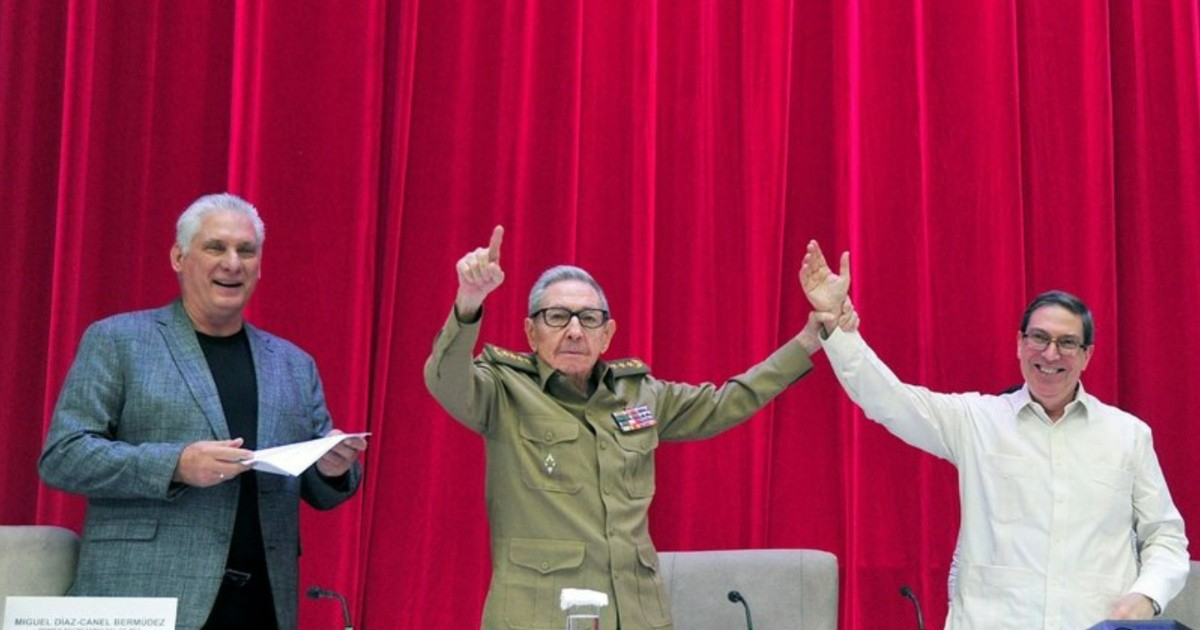
Cuban Foreign Minister Bruno Rodríguez Parrilla lashed out on Monday at the state-issued arrest warrant from Florida targeting Raúl Castro, labeling Cuban-American politicians in southern Florida as "parasites" and dismissing the action as a "futile maneuver."
In a statement shared on X, the Cuban regime's foreign minister declared, "They are a reflection of the political decay and moral collapse with which a group of parasites deceives and swindles their followers to continue funding and collecting donations. This is how the aggressive machinery, from which many have benefited for decades, thrives by exploiting the corruption inherent in the American political system."
Rodríguez Parrilla's remarks surfaced shortly after Florida Attorney General James Uthmeier announced the arrest warrant during a press conference at Florida International University (FIU) in Miami, attended by Governor Ron DeSantis.
The warrant, signed on October 16 by Judge Ariana Fajardo Orshan, head of the Eleventh Judicial Circuit of Florida, does not allow bail and charges state conspiracy to commit first-degree murder.
The case traces back to the downing of two civilian aircraft from the Brothers to the Rescue organization on February 24, 1996, over international waters in the Florida Straits, resulting in the deaths of four men: Armando Alejandre Jr., Carlos Costa, Mario de la Peña, and Pablo Morales. Their bodies were never recovered.
The regime responded in a coordinated manner. Miguel Díaz-Canel described the move as "a pathetic Miami circus with electoral undertones" lacking "any legal or practical sense," while Deputy Foreign Minister Carlos Fernández de Cossío called it a "maneuver disguised as legal action."
A significant aspect of the state charge is its protection against potential presidential pardons. Uthmeier made it clear: "If a communist sympathizer were to return to the White House, they cannot pardon, commute, or immunize these dictators from our state proceedings."
The prosecutor also warned that Castro could not travel to any country with extradition agreements with the United States without risking arrest, "not even for medical treatment."
This state action is separate from the federal indictment issued on May 20, 2026, by the Department of Justice, accusing Castro and five former Cuban military officers of seven federal charges, including conspiracy to kill American citizens and individual murder.
The regime's response pattern mirrors that of last May, when Prime Minister Manuel Marrero Cruz dismissed the federal charges as a "farce," the Council of State issued formal condemnations, and a demonstration was organized in front of the U.S. Embassy in Havana.
Florida's Attorney General's Office left the door open for further legal consequences: "The case remains active, and additional charges may be filed," according to the official statement released on Monday.
Key Questions About the Florida Arrest Warrant for Raúl Castro
What prompted the arrest warrant against Raúl Castro in Florida?
The warrant relates to the 1996 downing of two civilian planes from the Brothers to the Rescue organization over international waters, resulting in the deaths of four individuals.
Can Raúl Castro be pardoned by a future U.S. president?
No, the state charges are safeguarded against presidential pardons, ensuring that a future president cannot pardon or commute the charges against him.
What are the potential consequences for Raúl Castro if he travels abroad?
Castro risks arrest if he travels to any country with extradition agreements with the United States, even for medical treatment.