Spain's Foreign Minister, José Manuel Albares, acknowledged on Monday the difficulty in ensuring that newly nationalized Spaniards under the Grandchildren Law can vote in the upcoming general elections on November 29. His comments on Telecinco highlighted the challenge of verifying which individuals are descendants of exiles.
This comes amid heightened judicial tension as the Fourth Section of the Constitutional Court unanimously decided to escalate to the Full Court a decision on whether to accept or reject the appeal filed by the Ombudsman, Ángel Gabilondo. This appeal challenges the suspension of external voting rights for approximately 163,020 individuals who gained citizenship under this law.
The Full Court is set to meet on Tuesday to deliberate. However, a report by court lawyers, requested by Magistrate Enrique Arnaldo and reported by El Mundo, deemed the appeal "premature" since the window for submitting arguments to the Supreme Court remains open until October 22.
Albares pointed out that the Directorate-General for Consular Affairs had warned, via the Attorney General's Office, that the verification process would likely take until January to complete. Currently, only records of those who acquired citizenship in 2025 and 2026 are integrated into the DICIREG digital system; the rest must be manually entered into a digital tool linked to the Electoral Census Office.
Faced with this urgency, the minister canceled all consular leaves and sent directives urging a "diligent" response and mobilization of necessary personnel. Still, he was clear: "No one is obliged to do the impossible."
Albares also condemned what he described as a "campaign of harassment and slander," often targeting Spanish consuls globally with personal attacks, which he attributed to the PP and Vox parties. He vowed never to tolerate such actions and to consistently defend consular staff against these attacks.
The situation is particularly acute for Cuban nationals who have gained Spanish citizenship through this process. The Spanish consulate in Havana is one of the most overwhelmed globally, having received 107,338 applications in 2025 alone, with estimates suggesting over 350,000 Cubans have initiated applications since the law's introduction in October 2022.
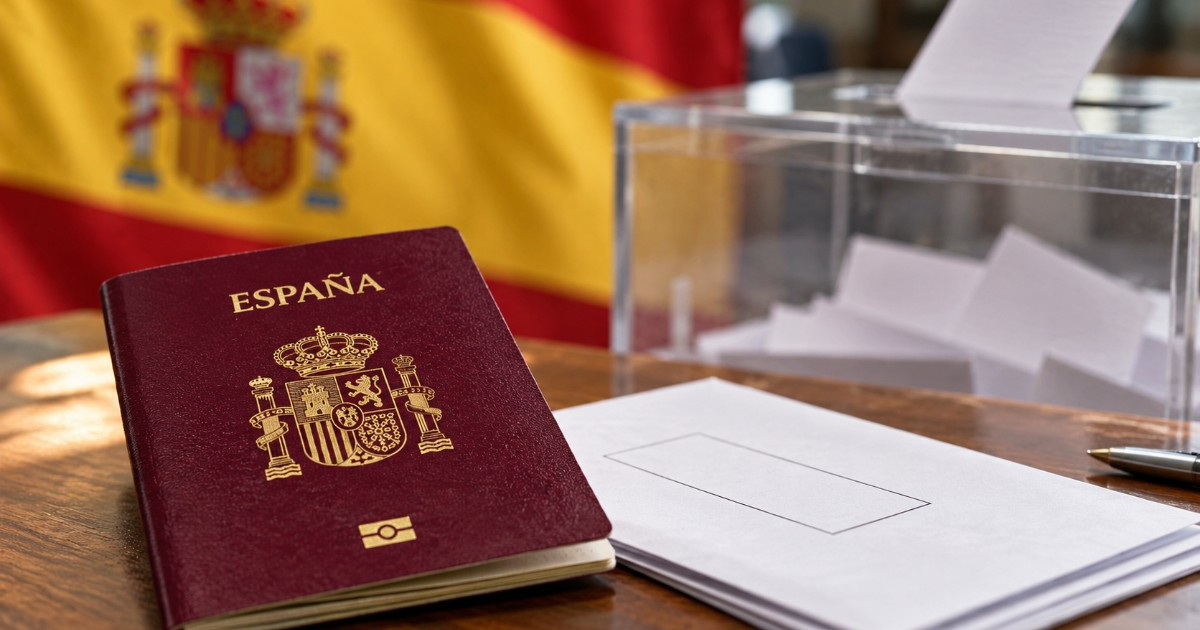
It is crucial to clarify the Supreme Court's suspension does not revoke the Spanish nationality of those affected nor their passports. It solely limits their ability to vote from abroad on November 29 via the CERA census. Naturalized Cubans living in Spain will face no restrictions in voting.
The Ombudsman's appeal argues that the measure results in unjustified discrimination. It impacts those who embraced the Democratic Memory Law and reside outside Spain but not those in similar legal standing within the country. Gabilondo urges the Constitutional Court to immediately lift the restriction through urgent precautionary measures, even though his mandate ends on November 16, before the elections.
The Constitutional Court's lawyers argue that the appeal "should be considered premature" as it was "filed while an ordinary jurisdictional decision was still possible," contradicting the subsidiary nature of such appeals.
Individuals wishing to join the Supreme Court proceedings as co-defendants have until October 22 to present with legal representation, as published in the Official State Gazette on October 15. The Constitutional Court's decision on Tuesday will determine the next steps in this dispute, with the November 29 elections fast approaching.
Key Questions on the Grandchildren Law Voting Rights
Why is it challenging to verify the new Spanish citizens under the Grandchildren Law?
Verification is difficult because the process to confirm the descent from exiles is time-consuming and only some records are digitally integrated. Most need manual entry into the electoral system.
What is the impact of the Constitutional Court's decision on voting rights?
The decision will determine if the suspension of external voting rights for those nationalized under the law is upheld or overturned, affecting their ability to vote from abroad on November 29.
How does the situation affect Cubans who became Spanish citizens?
Cubans who gained citizenship through this law are particularly impacted due to the high volume of applications at the Havana consulate, complicating the verification process.