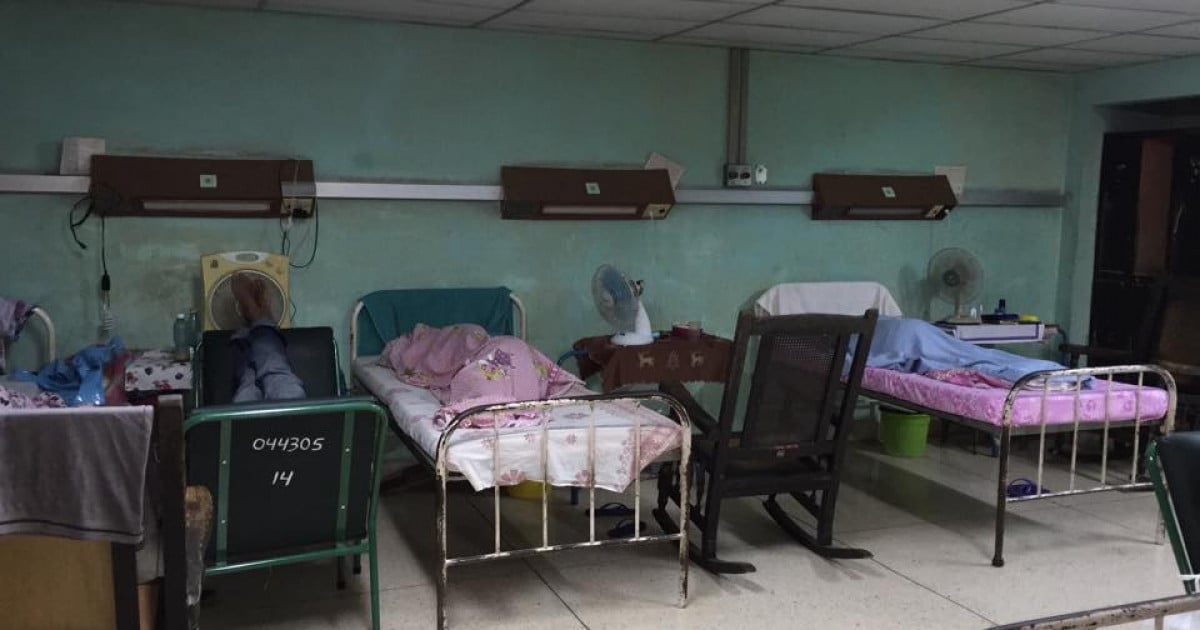
Dr. Daniel Del Toro González, a physician at the Pediatric Hospital in Las Tunas, has once again highlighted the challenging conditions faced by healthcare professionals in Cuba. He explained why many of his colleagues are choosing to leave their hospital jobs for opportunities in private enterprises, small businesses, and other ventures that offer better financial prospects.
In a Facebook post, Del Toro addressed critics who question his frequent complaints about Cuba’s healthcare system, suggesting he should leave his profession if he is so dissatisfied.
"Lately, I've seen comments criticizing me for complaining about working in healthcare. They say if I don't like it, I should quit; if I complain so much, why do I continue?" he wrote.
He expressed disappointment that such opinions not only come from supporters of the Cuban regime but also from other users who question the right of healthcare professionals to speak out about their work conditions.
"Honestly, I still don't understand that mentality," he remarked.
Healthcare as a Luxury in Cuba
Del Toro argues that the issue is not just dissatisfaction with the job, but the reality of working under severe resource constraints, economic hardship, and a shrinking professional workforce.
"Today, working in healthcare in Cuba has almost become a luxury," he stated ironically.
The doctor elaborated on the difficulties, highlighting the need to treat patients with minimal supplies, often without necessary medications, and with dwindling staff, making daily operations in hospitals increasingly challenging.
The Economic Dilemma
Many professionals, Del Toro noted, have opted to leave the healthcare sector for economic activities that, although unrelated to their medical training, offer better pay.
Some have swapped their white coats for roles in small enterprises, sales, or any other job that allows them to bring more money home.
Del Toro understands these decisions and admires those colleagues who have sought alternative employment.
"Many doctors (and I admire them for taking that step) have hung up their stethoscopes and coats to work in small businesses or any job that provides more financial support," he stated.
He points out that higher earnings outside hospitals are a significant factor, especially as state salaries have drastically lost purchasing power.
Beyond Financial Incentives
Money isn't the only concern. Del Toro also mentioned the disrespect some healthcare professionals face from patients’ families, who may react with unreasonable demands and insults.
He cited examples of families considering a child's brief fever an emergency, demanding immediate attention, and confronting medical staff aggressively.
These instances highlight the professional strain caused by insufficient resources and the pressures from those seeking medical services.
Del Toro clarified he doesn't blame patients or their families entirely, using these examples to illustrate the conflicts doctors face during their duties.
His reflection raises a question: why do some professionals continue in a system plagued by sacrifices, low wages, and resource scarcity?
"Those of us who remain continue to do the best we can with what we have, trying to uphold a profession that deserves much more than it receives," he expressed.
Commitment Amidst Adversity
Del Toro admitted the difficulty in explaining why he stays in a healthcare system he openly criticizes.
"Perhaps because we're crazy, too stubborn to accept that what we studied for years, what we put so much effort and passion into, is reduced to this," he reflected.
He concluded with a humorous yet poignant remark about his exhaustion with the working conditions.
"These days, working as a doctor in Cuba, I don't know if it's about vocation, masochism, or if it should be a diagnostic criterion for some personality disorder," he wrote, accompanied by a laughing emoji.
This isn't the first time Del Toro González has publicly explained why he continues practicing medicine despite the challenges. In June 2026, he defended his commitment to a profession that required years of education and dedication, even as the nation's economic conditions pushed him towards private sector employment.
He stated, "We work because we like it. It's our vocation, beyond economic woes and the country's reality."
His critique also underscores a financial dimension, often illustrated by comparing food prices.
In September, Del Toro used the price of a corn fritter to demonstrate how his purchasing power had declined since the implementation of economic reforms known as the Tarea Ordenamiento.
He noted that while a fritter's price had increased from one peso to thirty, his basic salary rose only from 1,400 to 8,400 Cuban pesos.
"The fritters increased thirtyfold... and my salary by about six," he summarized.
A month earlier, he had reported his monthly salary was insufficient to purchase basic groceries like a ten-pound bag of chicken, a container of oil, and a carton of eggs.
Referencing a basic salary of 8,500 pesos for a first-degree specialist, compared to a combined cost of 10,500 pesos for chicken and oil alone, he excluded eggs and other essentials from this calculation.
"The utopia was always the idea that we could live off the salary," he concluded.
Del Toro has also recounted incidents regarding the safety of healthcare workers.
In July of this year, he reported an incident where a man came to his home intending to assault him, days after he treated a child for ear discomfort.
According to Del Toro, the patient had been referred to a specialist, but the family initially ignored the advice and later appeared at his residence.
This episode prompted the pediatrician to call for greater respect and safety for those working in healthcare.
Key Issues Facing Cuban Healthcare Professionals
Why are Cuban doctors leaving the healthcare sector?
Many Cuban doctors are leaving the healthcare sector due to poor working conditions, lack of resources, and low wages. They are seeking better financial opportunities in private enterprises and other jobs.
What challenges do healthcare professionals face in Cuba?
Cuban healthcare professionals face challenges such as scarce medical supplies, minimal medications, and insufficient personnel, which complicate their daily work and lead to professional dissatisfaction.
How has the economic situation affected Cuban doctors?
The economic situation in Cuba has severely affected doctors, as state salaries have lost purchasing power, prompting many to seek higher-paying jobs outside the public healthcare system.