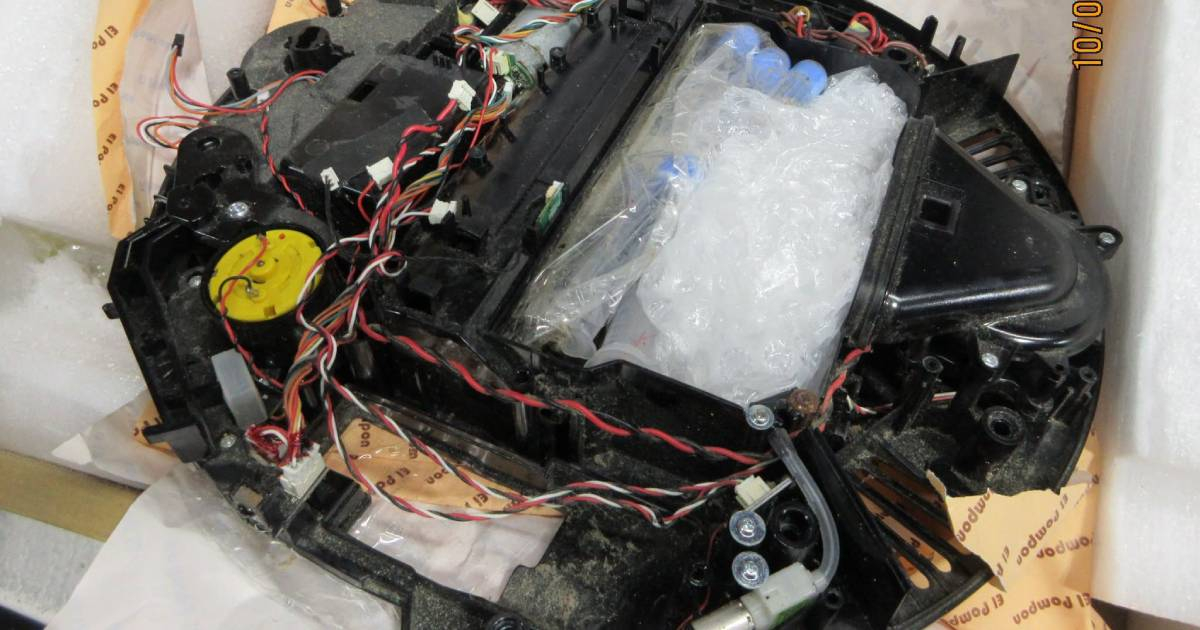
A robot vacuum shipped from Spain to the United States harbored an unexpected cargo unrelated to household cleaning: live ants were concealed within the device's components.
This peculiar discovery was made by agricultural specialists from the U.S. Customs and Border Protection (CBP) in Louisville, Kentucky, as reported by the federal agency on their official Facebook page.
Photographs released by the authorities reveal the robot vacuum completely dismantled, exposing wires, electronic parts, and compartments. Among these components, small transparent tubes containing ants were found, some of which are clearly visible in the images.
The shipment lacked the necessary permit or certification required by the U.S. Department of Agriculture (USDA), specifically through its Animal and Plant Health Inspection Service (APHIS).
Due to this violation, authorities proceeded to destroy the prohibited items in accordance with federal regulations.
The CBP did not specify the number of ants, their species, or the intended recipient of the package. Additionally, no information was provided regarding potential arrests or penalties associated with the shipment.
While this find might seem like a mere oddity, U.S. authorities warn that the unauthorized introduction of insects poses a potential threat to the nation's agriculture and ecosystems.
The Risks of Importing Ants Without Authorization
The U.S. Department of Agriculture mandates that all ant species are subject to import and interstate movement regulations.
Anyone wishing to legally introduce ants must obtain a special permit called PPQ 526, a requirement also applicable to those selling these insects across different states.
The concern is warranted. Certain ant species from other regions can become invasive, outcompeting native species, damaging crops, affecting plants, and decreasing biodiversity.
Their establishment in new ecosystems can also lead to economic losses and force authorities to allocate significant resources to control or eradicate them.
Moreover, there is a niche market for hobbyists who breed ants in artificial colonies, although this activity is restricted to prevent the spread of potentially harmful species.
Previous Incidents of Insects Concealed in Shipments
In late August 2026, CBP agricultural specialists intercepted a package in Miami labeled as a gift, which concealed 37 tubes of live ants beneath a false bottom.
According to a report by AOL in September, the insects were sent to the Department of Agriculture for evaluation, while the remainder of the shipment was destroyed.
In that case, the ant species was not publicly identified, nor were any arrests reported.
In another recent post, CBP illustrated how an agent and a detection dog inspected luggage where a prohibited wood product was found.
Under the message “Barking Up the Wrong Tree,” the agency explained that their agricultural specialists and trained dogs work to detect items that could introduce pests and invasive species capable of harming crops, livestock, and the environment.
Authorities did not specify the passenger's origin, the airport where the discovery occurred, or the exact characteristics of the confiscated wood product.
Efforts to prevent the entry of unauthorized biological materials have also involved travelers from Cuba.
In May 2026, a passenger arriving from Cuba was fined $300 after border agents discovered plant cuttings concealed within a jacket and a teapot in his luggage during an inspection in Fort Myers, Florida.
Understanding U.S. Regulations on Biological Imports
Why is it illegal to import ants without authorization?
Introducing ants without proper authorization is prohibited because some species can become invasive, disrupting local ecosystems, damaging agriculture, and posing threats to native species and biodiversity.
What is the PPQ 526 permit?
The PPQ 526 permit is a special authorization required by the USDA for the legal importation and movement of certain plants and insects, including ants, across U.S. state lines.
How does CBP prevent the entry of invasive species?
CBP utilizes trained agricultural specialists and detection dogs to inspect shipments and luggage for unauthorized biological materials that could introduce invasive species and pests.