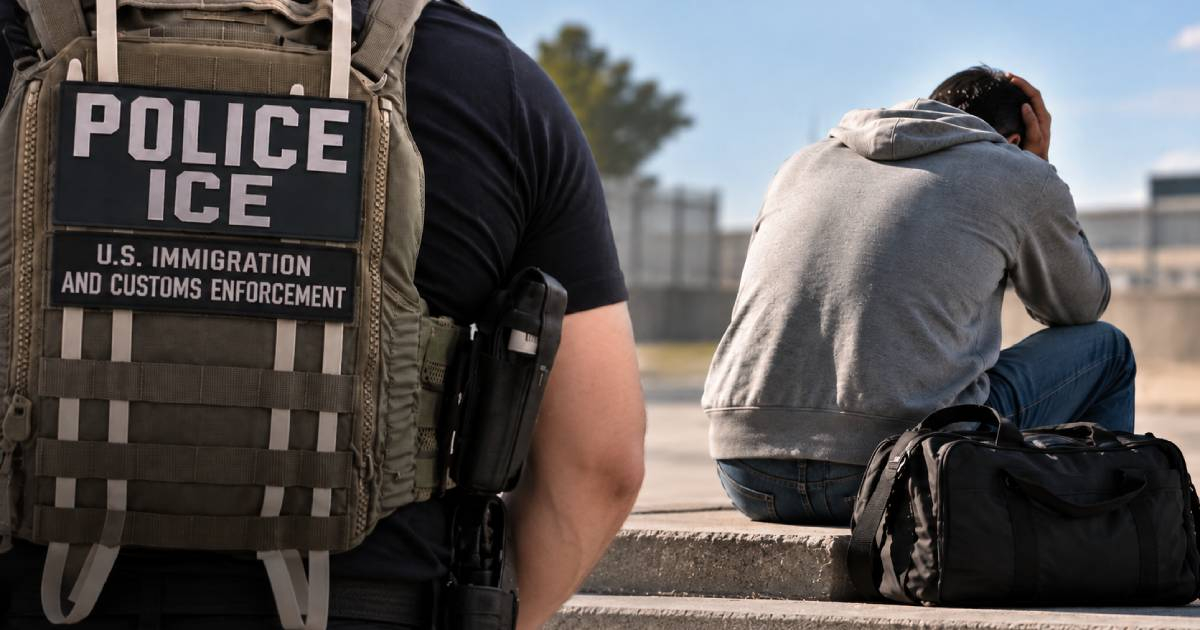
A Cuban man named Rolando Ramírez Fuentes, aged 57 and living in Tampa, Florida, has been left homeless after spending nine months in detention by U.S. Immigration and Customs Enforcement (ICE). This claim is part of a federal lawsuit accusing the agency of unlawfully holding onto his driver's license and Social Security card even after his release.
Rolando, who immigrated to the United States from Cuba in 1980 at the age of 11, is among seven immigrants who filed a proposed class-action lawsuit against ICE and the Department of Homeland Security (DHS) on October 13, in a federal court in Washington, D.C.
The lawsuit, supported by the American Civil Liberties Union (ACLU), details that Ramírez was taken into custody by immigration officers in July 2025 while outside his workplace. He remained detained until April 28, 2026, when a federal judge ordered his release upon granting a habeas corpus petition.
However, after his release, ICE did not return his Florida driver's license or Social Security card, documents essential for employment and daily activities, according to his attorneys. The lawsuit claims Ramírez's requests for the return of his belongings were ignored, and the agency failed to provide a rationale for their retention. He did not receive copies of the documents either.
The lack of proper documentation has hindered his ability to secure employment, exacerbating his struggle to manage a heart condition due to limited access to healthcare. Without enough income to pay for housing, he became homeless, a plight that continued for more than five months post-release when the lawsuit was filed.
Deportation Order from 2004
According to a court order in Florida dated April 28, 2026, Ramírez was subject to a deportation order issued on February 12, 2004, following a drug-related conviction in 2003. Despite the deportation order, he remained in the U.S. under immigration supervision for years, experiencing additional detention periods.
In July 2025, ICE revoked his supervised release and detained him again to execute the deportation. His legal team challenged the prolonged detention in a federal court. Judge John E. Steele of the Middle District of Florida ruled that a foreseeable deportation was unlikely, ordering his release within 24 hours under ongoing immigration supervision conditions. The judge's decision did not overturn his deportation order or grant a new immigration status, but it concluded that indefinite detention under those circumstances was unjustifiable.
Immigrants Challenge ICE Practices
Ramírez Fuentes's case is part of a larger legal action filed under the name Gonzalez v. Department of Homeland Security. The seven plaintiffs claim ICE systematically withholds documents and belongings without justification after releasing individuals detained for immigration reasons.
Items being sought include passports, work permits, driver's licenses, Social Security cards, cell phones, money, clothing, and even items of sentimental value. One affected individual, Vladimir Izmailov, a Russian national seeking asylum, reportedly struggles to find stable employment due to the agency's failure to return his work authorization. Izmailov also seeks the return of his wedding ring while his family relies on loans to cover rent.
Another plaintiff, Salvadoran national Joel Vigil Rodríguez, has been attempting to recover his phone, keys, and other confiscated items since his detention. Attorneys argue these cases highlight consequences extending beyond material loss; they impact the ability to work, maintain housing, access healthcare, and verify identity with authorities.
Legal Arguments Against ICE
The lawsuit argues that ICE's actions violate the Fourth Amendment of the U.S. Constitution, which protects individuals from unreasonable searches and seizures. The attorneys contend that while immigration authorities can hold belongings during detention, they should not retain them post-release without legal justification.
They also criticize ICE's adherence to its administrative rules on personal property retention and return. The plaintiffs seek court recognition of the case as a class action, request the return of retained items, and demand safeguards to prevent similar future occurrences.
The ACLU, in a statement, emphasized the prolonged economic impact these retentions can have on immigrants post-release. Michael Perloff, an attorney with the organization, highlighted that the Fourth Amendment exists to prevent government agents from seizing and keeping personal property without legitimate cause.
The allegations await judicial resolution. The Department of Homeland Security did not respond to a request for comment from El País, which reported on the Cuban man's case on October 16.
Legal Challenges and Immigrant Rights
What led to Rolando Ramírez Fuentes's homelessness?
Rolando Ramírez Fuentes became homeless after ICE detained him for nine months and subsequently released him without returning his driver's license and Social Security card, crucial for employment and daily life.
Why is the lawsuit against ICE significant?
The lawsuit challenges ICE's alleged practice of unjustifiably retaining personal documents and belongings of released detainees, arguing it violates the Fourth Amendment and requesting systemic changes.
What are the broader implications of ICE's practices according to the lawsuit?
The lawsuit suggests that ICE's practices have severe consequences for immigrants, affecting their ability to work, secure housing, access healthcare, and verify identity, beyond the immediate loss of possessions.