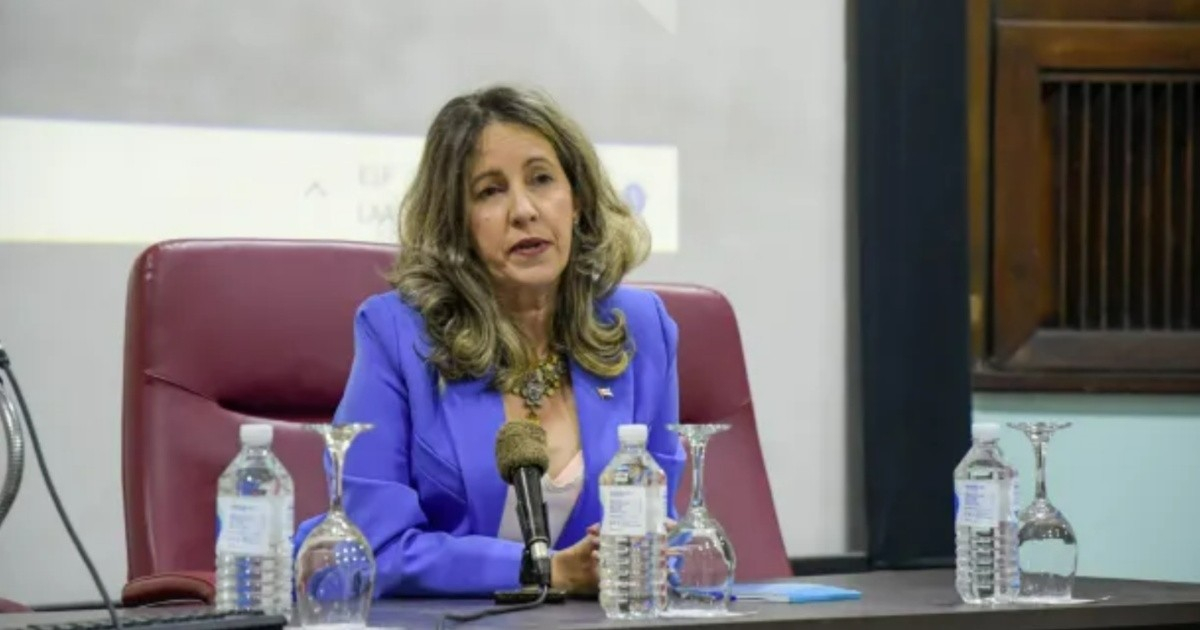
Cuba's Education Minister, Naima Trujillo, has openly acknowledged that private companies, along with small and medium-sized enterprises (SMEs), have stepped in to fill the gaps left by the state in the 2026-2027 school year. This academic year, which started on September 1st with nearly 1.5 million students, is unfolding amid an unprecedented energy and economic crisis.
Trujillo told EFE, "Given the circumstances we are in, we've received significant support through the involvement of the non-state sector," highlighting contributions such as food, footwear, and clothing donations from private businesses to the educational system as the most noticeable.
The head of the Ministry of Education (MINED) described the beginning of the academic period as "challenging," acknowledging that issues like cooking, logistics, and transportation have characterized the initial weeks of school.
Regarding transportation—a sector severely impacted by fuel shortages—Trujillo mentioned that private companies have introduced routes for students and teachers who cannot afford travel expenses due to distance and family circumstances.
SMEs have also played a role in supporting children without parental care, providing energy alternatives amid over 20-hour daily blackouts affecting large areas of the country, and assisting in the restoration of deteriorating school infrastructure.
This acknowledgment contrasts with the official narrative from August, when the Communist Party described the start of the school year as a "heroic act," and the minister herself promised a "grand celebration" on September 1st.
The documented reality was different: the school year began with only 73% of teaching positions filled, leaving around 24,000 teachers missing, and blackouts affecting up to 70% of the national territory on the first day.
By mid-October, teacher coverage had increased to 86% thanks to the return of retirees, university students in training, and professionals from other fields, yet a 14% deficit of teaching positions remained.
The minister admitted that salaries are part of the structural problem: "Certainly, income is an important issue because sometimes it's true that we face mobility challenges since salaries do not meet the needs of our professionals."
The average salary in the education sector is approximately 5,824 Cuban pesos per month, roughly equivalent to seven dollars in the informal exchange market, prompting teachers to turn to the private sector or emigration.
A new development in this academic year is the legalization of private tutors with MINED's Resolution 30/2026, published on September 2nd and effective since the 9th, which repealed the 2022 ban on active teachers offering private lessons outside the state sector.
About 11,000 students remain unable to attend school regularly, receiving virtual or sporadic lessons, although this figure is an improvement over the 33,000 in that situation at the end of the previous school year.
In May 2026, UNESCO warned that Cuban education is "at risk," with more than 2,000 schools needing urgent support and over 400,000 students experiencing reduced school hours. The public acknowledgment by the minister confirms that the Cuban state can no longer handle the educational crisis alone.
Understanding the Challenges in Cuban Education
What role has the private sector played in Cuba's education system?
The private sector, including SMEs, has contributed by providing essential supplies like food, clothing, and transportation routes, filling in gaps left by the state amid the ongoing crisis.
How has the teacher shortage in Cuba been addressed?
The teacher shortage has been partially addressed by bringing back retired educators, utilizing university students in training, and incorporating professionals from other fields, though challenges persist.
What changes have been made regarding private tutoring in Cuba?
Private tutoring has been legalized through MINED's Resolution 30/2026, allowing active teachers to offer private lessons, which were previously banned since 2022.