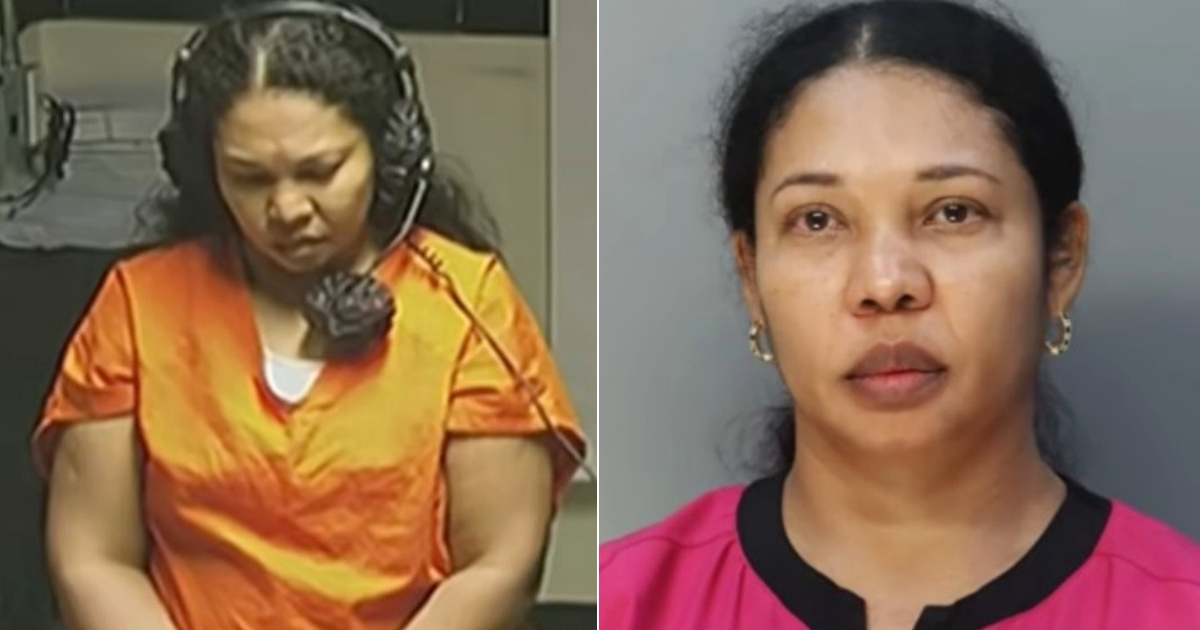
A woman named Mercedes Ramírez appeared in a bond hearing after facing charges of child abuse in Hialeah, located in Miami-Dade County.
Ramírez is accused of allegedly striking her 15-year-old adoptive daughter with a wooden hanger and a cellphone charging cable, according to a report by Univision Miami.
The situation is particularly unsettling because of the relationship between the accused and the victim: Ramírez adopted the girl when she was just three months old, establishing a bond of complete dependency and trust from infancy.
Triggering Incident: Poor Grades and School Absences
The report suggests that the alleged punishment was neither an isolated incident nor a response to immediate danger, but rather a reaction to the teenager's poor academic performance and repeated school absences.
Authorities have not publicly disclosed the amount of bail set by the court, nor have additional court documents been released concerning the case.
It's important to note that the accusations against Mercedes Ramírez are not equivalent to a conviction; she remains innocent until proven guilty in a court of law.
Florida's Child Abuse Laws Explained
Under current Florida law, child abuse is defined as the intentional infliction of physical or mental injury on a minor, or any act that is likely to cause such injury.
Parental corporal punishment is not automatically a crime if it does not cause harm; however, the use of objects like cables or hangers may be deemed excessive or unreasonable punishment, which constitutes a criminal offense.
A charge of child abuse without great bodily harm is a third-degree felony in Florida, punishable by up to five years in prison and fines up to $5,000.
If the abuse leads to significant bodily harm, permanent disability, or disfigurement, the penalty can extend to 30 years of imprisonment.
A Troubling Pattern in Hialeah
The Ramírez case is part of a troubling trend of child abuse reports in Hialeah and the Miami-Dade area throughout 2026.
Last September, a Hialeah mother was arrested for allegedly burning and tying up her 10-year-old daughter as a form of punishment, a case that shocked the community.
In August, Cuban teacher Beatriz Gómez Hurtado was detained for allegedly mistreating a two-year-old at a childcare center associated with Hialeah, with bail set at $5,000.
That same month, Meliza Campos Sánchez was arrested in southwest Miami-Dade for allegedly pouring hot wax on her three-year-old daughter and starting a fire with her children inside the home; she was ordered held without bail, and in October was declared competent to stand trial.
The Broader Context of Child Abuse in Florida
Hialeah, a city with over 95% Hispanic population according to the Census Bureau, accounts for a significant portion of these cases in Miami-Dade County.
Statewide, Florida reported 22,842 child victims of abuse or neglect in 2023, equating to 5.2 victims per 1,000 minors, as per the Child Welfare League of America.
The case against Mercedes Ramírez remains ongoing. She must answer to the charges of child abuse in court while authorities continue to investigate the precise circumstances surrounding the incident.
Understanding Child Abuse Laws in Florida
What defines child abuse under Florida law?
Florida law defines child abuse as the intentional infliction of physical or mental injury on a minor, or any act likely to result in such injury.
What are the penalties for child abuse in Florida?
A third-degree felony charge of child abuse without great bodily harm can lead to up to five years in prison and fines up to $5,000. If the abuse causes significant harm, the sentence can be as long as 30 years.
Is corporal punishment a crime in Florida?
Corporal punishment by a parent is not automatically considered a crime unless it causes harm. However, using objects like cables or hangers may be classified as excessive or unreasonable, thus criminal.