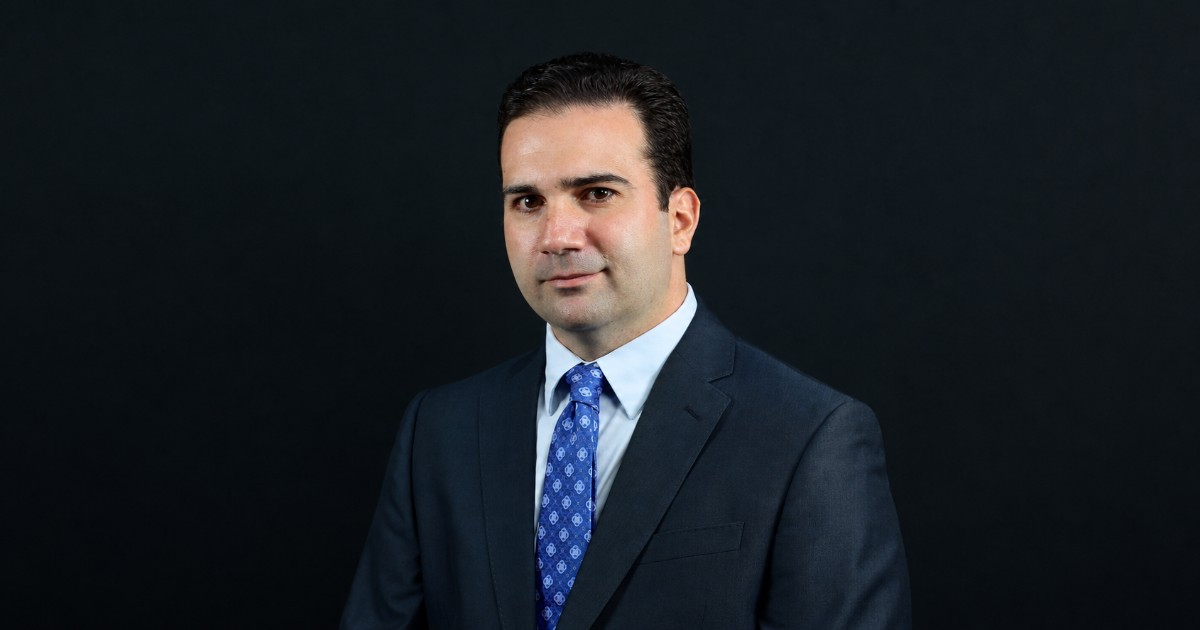
The Florida International University (FIU) in Miami has awarded Cuban-American scholar Daniel I. Pedreira the 2026 Faculty Excellence Award in Publishing and the Arts for his book, "The Disappeared under Castroism: Cuba since 1959." This work investigates over 600 cases of missing persons on the island following the triumph of the Revolution.
This accolade, announced by the Cuban Historical Memory Institute against Totalitarianism, recognizes Pedreira's significant contribution to chronicling the historical accounts of those who vanished under Cuba's oppressive regime.
Praised as a "landmark for historical analysis and the study of victims of the regime," the book's recognition by an American university highlights its profound importance, as noted by the organization.
Award ceremonies were part of FIU's academic celebrations, which acknowledged faculty contributions across diverse fields such as research, teaching, publishing, and artistic creation. Although the university announced these honors on Friday, it did not specifically mention Pedreira's award among individual accolades.
Published by Alexandria Library Publishing House in 2025, "The Disappeared under Castroism: Cuba since 1959" compiles incidents of unresolved disappearances and examines these events through historical and political lenses.
As reported by El Nuevo Herald, the book reconstructs the narratives of over 614 victims using family testimonies, previous investigations, historical records, and documentation from organizations dedicated to preserving Cuba's repressive history.
This research goes beyond listing names; it delves into the circumstances of these disappearances, the lack of answers for many families, and how these incidents are intertwined with the political control mechanisms established post-1959.
In a July 2025 interview, Pedreira emphasized that a primary goal of his work was to aid in the quest for justice by documenting these cases. He pointed out that Cuban authorities have consistently denied politically motivated disappearances, while families and independent organizations strive to uncover the fates of their loved ones.
Pedreira's study aims to preserve these accounts, making them accessible to international institutions and human rights organizations. To compile his book, he utilized resources from groups such as Archivo Cuba, the Cuban Historical Memory Institute against Totalitarianism, and the Association of Families of Cuban Disappeared (AFACUDE), alongside witness accounts and existing research.
The author has remarked on the challenges of piecing together these stories without access to Cuba's official archives, a barrier that complicates determining the circumstances of many disappearances and assigning accountability.
The book also explores this phenomenon in relation to political repression in other countries under authoritarian or totalitarian regimes, including those in Eastern Europe, the former Soviet Union, and Latin America.
Pedreira, a professor in FIU's Department of Politics and International Relations, teaches courses on comparative politics, Latin American politics, Cuba, and the U.S. political system. Born in Miami, he holds a Ph.D. and a Master’s in Political Science from FIU, a Master’s in Peace Operations from George Mason University, and a Bachelor’s in International Studies from the University of Miami.
Before joining FIU, he taught at Miami Dade College, the University of Miami, and Jacksonville University. His professional background includes work in government and civil society organizations. Between 2007 and 2013, he served as an aide to Congresswoman Ileana Ros-Lehtinen and later collaborated with the Center for a Free Cuba.
He also leads the PEN Club of Cuban Writers in Exile, an affiliate of PEN International, which promotes literature and defends freedom of expression. His earlier publications include "El último constituyente: El desarrollo político de Emilio 'Millo' Ochoa" (2013) and "An Instrument of Peace: The Full-Circled Life of Ambassador Guillermo Belt Ramírez" (2019).
Pedreira's recent book on disappearances is part of his ongoing research on Cuban history and politics, as detailed in his updated 2025 academic curriculum vitae.
This recognition comes amid ongoing efforts by independent organizations to document political repression victims in Cuba over more than six decades. In April 2026, the Archivo Cuba project released a report attributing at least 8,267 deaths and disappearances to the Cuban regime since 1959, identifying Raúl Castro as a central figure in the repressive structure.
The report includes claims of extrajudicial executions, deaths in custody, disappearances, and other acts of political violence. These are estimates compiled by the organization, not figures officially acknowledged by Cuban authorities.
In an opinion piece published in April, the importance of identifying victims and preserving their stories was underscored, arguing for the documentation of events to ensure that the victims' names do not fade from collective memory.
Key Questions About Political Disappearances in Cuba
What is the significance of Pedreira's book on Cuban disappearances?
Pedreira's book is significant because it documents over 600 cases of missing individuals in Cuba since the Revolution, providing a historical and political context to these disappearances and aiding in the pursuit of justice.
How does the book contribute to understanding Cuba's political history?
The book contributes to understanding Cuba's political history by examining the disappearances as part of the regime's control mechanisms, offering insights into the broader implications of political repression on the island.
Who are the primary sources for the book's research?
Primary sources for the book include testimonies from families of the disappeared, historical documentation, previous investigations, and records from organizations like Archivo Cuba and the Cuban Historical Memory Institute.
What challenges did Pedreira face in his research?
Pedreira faced challenges such as lack of access to Cuba's official archives, making it difficult to fully reconstruct events and establish responsibility for many disappearances.