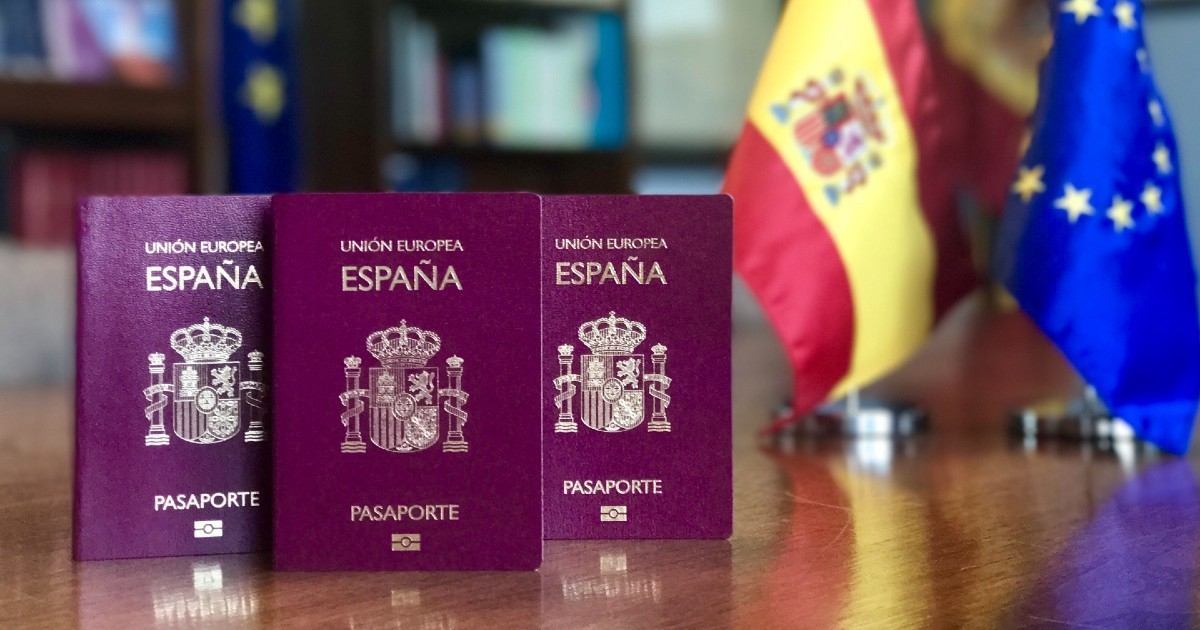
As of 2025, the Cuban community has surged to become the ninth largest foreign group in Spain, comprising 252,290 people. This is according to a Sunday report by El Debate, which analyzed data from the National Institute of Statistics (INE), the Central Electoral Office, and the Sociological Research Center (CIS).
Over the past four years, the number of Cuban residents in Spain has grown by 52%. Back in 2021, before the Democratic Memory Law was enacted, there were 166,076 Cuban residents. This remarkable increase propelled Cuba from 13th to 9th place among countries of origin for Spain's foreign population.
The Impact of the "Grandchildren Law"
The significant rise in numbers is largely attributed to the "Grandchildren Law," which was passed in October 2022. This law allows descendants of Spanish exiles to apply for original nationality. Since the law's implementation, Spain has seen an average influx of 34,000 Cubans annually—more than tripling the average of the previous decade, which hovered around 10,000 per year.
In 2024, out of the 38,179 Cubans who moved to Spain, 40% already possessed Spanish passports, exceeding the previous years' average by ten percentage points, as reported by the INE. The Spanish Consulate General in Havana processed 107,338 nationality applications in 2025 alone.
Electoral Rights and Legal Challenges
A significant 63% of the 252,290 Cuban residents in Spain have acquired Spanish nationality, granting them voting rights in the general elections set for November 29, 2026, following a parliamentary defeat for Pedro Sánchez. These individuals are unaffected by the Spanish Supreme Court's decision to suspend voting rights for thousands of newly nationalized citizens under the Grandchildren Law.
This temporary suspension, upheld by the Supreme Court on October 12 despite a state appeal, impacts only those registered in the Electoral Census of Absent Residents (CERA) who obtained nationality under the law's disputed provisions. Cuban nationals who reside and are registered in Spain are eligible to vote on November 29. Those impacted by the suspension have until October 22 to present their cases to the Supreme Court.
In September, the number of Spanish citizens registered as resident voters in Cuba decreased by 1,018, marking a unique trend among the primary countries influenced by the Grandchildren Law. According to diplomatic sources cited by El Español, this decline is due to Spanish passport-holding Cubans leaving the island for Spain or other nations.
Political Preferences of Cuban Residents
Despite the decrease, Cuba remains the fifth largest country with Spanish electors registered to vote from abroad, only trailing Argentina, France, the United States, and Mexico. A report by El Debate, analyzing CIS microdata, reveals a distinct political leaning among this community: Vox garners 27% of the Cuban vote in Spain, the highest among all foreign communities, with the Popular Party receiving 26%. Combined, they capture 53% of the vote, with only Venezuelans offering a larger majority of 59% for these right-wing parties.
The publication concludes that "Cubans, Venezuelans, and Romanians are the only major foreign communities in Spain with a majority support for right-wing political options."
FAQs on Cuban Community in Spain
What is the "Grandchildren Law" and how has it impacted Cuban migration to Spain?
The "Grandchildren Law" allows descendants of Spanish exiles to apply for Spanish nationality. It has significantly increased Cuban migration to Spain, with an average annual arrival of 34,000 Cubans since its enactment in 2022.
Why are some Cuban nationals in Spain eligible to vote while others are not?
Cubans who have acquired Spanish nationality and reside in Spain can vote in the upcoming elections. However, those registered in the Electoral Census of Absent Residents (CERA) and who obtained nationality through the Grandchildren Law are temporarily suspended from voting due to a Supreme Court ruling.
What are the political preferences of the Cuban community in Spain?
The Cuban community in Spain tends to favor right-wing political parties, with Vox receiving 27% and the Popular Party 26% of their vote, totaling 53% support for these groups.