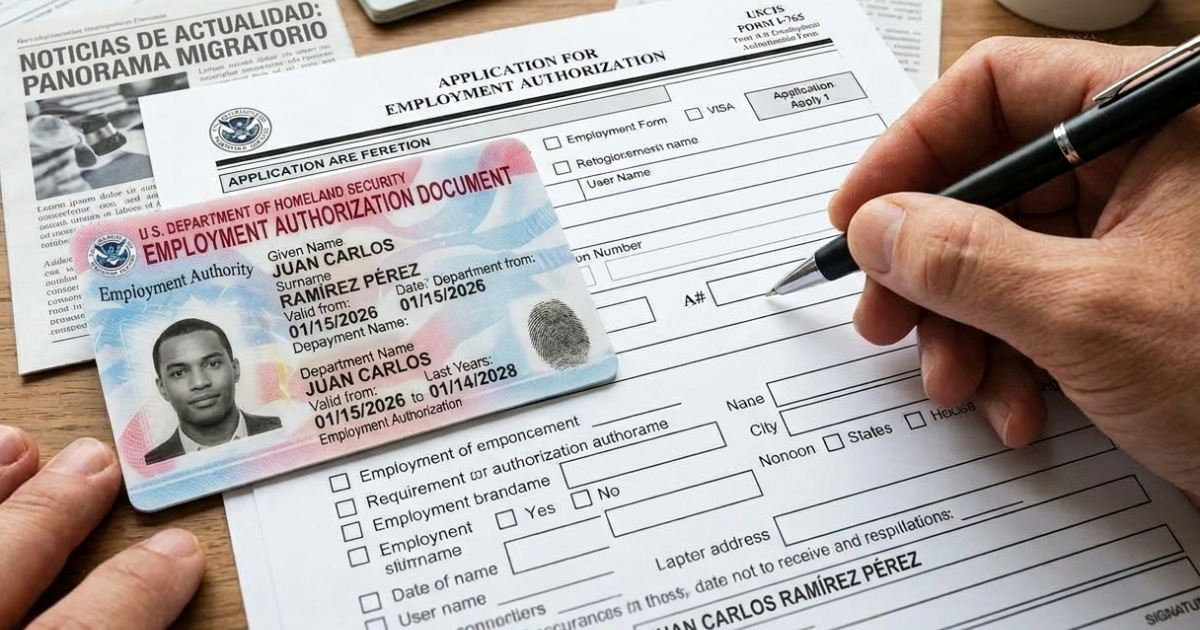
For those holding a work permit, known as an Employment Authorization Document (EAD), significant changes have been made to the renewal process. As of now, filing for renewal on time no longer guarantees continued employment once your current card expires, while waiting for a decision from USCIS.
If your current permit expires before you receive a new one, you must cease working.
On Wednesday, the Department of Homeland Security (DHS) finalized a rule in the Federal Register, ending the automatic extension of up to 540 days for renewals submitted after October 30, 2025. This rule took effect on October 14 and solidifies the provisional rule from 2025.
This change significantly impacts thousands of Cubans with pending asylum or status adjustment processes. It’s crucial to plan ahead and renew as early as possible to avoid any employment gaps. Here’s what you need to know about who is affected, when to file, and steps to take if your permit lapses.
Understanding the End of Automatic Extensions
Before 2025, those who applied for EAD renewal before expiration benefited from an automatic extension of up to 540 days, allowing them to work legally with the USCIS receipt (Form I-797C) and the expired card while awaiting the new one.
This provision has been eliminated for renewals filed on or after October 30, 2025. The final rule makes this change permanent, following 653 public comments, and emphasizes the need for thorough applicant verification before granting new work periods.
Who Is Affected and Who Is Not
The automatic extension applied only to specific categories. Common among the Cuban community were:
- C08: Asylum applicants with a pending case (Form I-589). Many Cubans work under this category.
- C09: Individuals with pending status adjustment (Form I-485), such as those applying for residency under the Cuban Adjustment Act.
- A05 and A03: Asylees and refugees.
- A10: Individuals with withheld deportation.
If your permit falls under these categories and you filed for renewal on or after October 30, 2025, you will no longer receive an extension. The category is printed on your card under "Category".
No changes apply to cases where:
- The renewal was filed before October 30, 2025. These applications retain the 540-day extension, provided they were timely and the receipt category matches the card.
- TPS (Temporary Protected Status) extensions published in the Federal Register still apply.
- Parole permits (C11). This category never included automatic extensions. Those using an EAD for parole must have the new card approved before expiration.
Timing Your Renewal Application
USCIS generally recommends applying for EAD renewal up to 180 days before your current card expires, based on the 2025 rule. The final rule warns that late applications increase the likelihood of a work authorization gap.
To stay prepared:
- Check your card’s expiration date immediately and note it down.
- Subtract six months from the expiration date and mark this on your calendar as the ideal submission start date.
- Prepare all necessary documents and fees in advance, ready to submit as soon as the window opens.
- Review USCIS processing times for Form I-765 in your category to set realistic expectations for the wait.
Official information about Form I-765 is available on the USCIS website, where you can also check if online submission is allowed for your category.
The Cost of Renewal
In addition to the Form I-765 fee, certain categories incur an additional charge mandated by law H.R. 1. This fee must be paid separately and cannot be waived or reduced.
As of October 16, these are the additional fees:
- Asylum EAD renewal: $275
- Parole EAD renewal: $280
- TPS EAD renewal: $280
If the application is submitted with incorrect payment, USCIS will reject it, resulting in lost time. We explain current costs for parole, work permits, and asylum in detail.
What If Your Permit Expires Before the New One Arrives?
If your EAD expires and your renewal is still pending, you are not authorized to work unless you have another independent legal basis. The final rule illustrates this with an example of someone with a pending adjustment who cannot work for their employer after their card expires.
Consequences include:
- Your employer must re-verify your authorization. According to the 2025 rule, when the EAD expires, the employer must update your Form I-9, and you must present a valid document by the expiration date.
- Driver's license in Florida: For non-residents, the Department of Highway Safety and Motor Vehicles (FLHSMV) issues licenses based on USCIS documentation, up to four years, with more than 30 days validity. An expired EAD affects license renewal and jobs depending on it.
- Immigration status remains unchanged. An expired work permit doesn’t nullify pending asylum or adjustment. You simply cannot work legally until receiving a new card.
DHS estimates that 20,000 to 33,000 permits might expire without timely renewal over 18 months starting May 2027.
Approaching Expiration Without a Renewal: What to Do
If you have already applied and the new permit hasn’t arrived, consider these options:
- Request an expedited process. USCIS accepts requests to expedite cases in specific situations, such as severe economic loss. Losing a job might qualify, depending on circumstances, but simply needing a work permit is insufficient. Late submission doesn’t justify expediting.
- How to request: Contact the USCIS Contact Center or use Emma, their virtual assistant, with your receipt number, and have supporting evidence ready (e.g., a letter from your employer). If you have an online USCIS account, select "expedite" in secure messages and upload documents there.
- Discuss with your employer in advance. Notify them of the expiration date and that the renewal is pending to find solutions before the last day.
DHS notes that expediting moves a case forward in line but doesn’t shorten security checks.
Potential Changes Ahead: Proposal on Parole Work Permits
On June 5, DHS proposed a rule tightening discretionary work permits, including parole (C11). It would require proving economic necessity, mandate E-Verify for employers on renewals, and exclude many with arrests or criminal records.
As of October 18, it remains a proposal; the comment period ended on August 4, and no final rule has been published. If approved, it would apply only to applications filed after its enactment.
For more on the final rule, see our coverage of the change. If your parole is expiring, explore legal options for staying.
Steps to Take Now
- Check your card: expiration date and category.
- Submit your renewal 180 days before expiration; don’t wait until the last month.
- Pay the exact amount, including the H.R. 1 additional fee if applicable.
- Keep the I-797C receipt and track your case online, although it no longer allows work post-expiration.
- If expiration approaches without a response, consider requesting an expedite with strong evidence.
- Consult a professional if you face complications: criminal records, deportation orders, or category changes.
Legal Disclaimer: This article provides general information for informational purposes only and does not constitute legal advice. U.S. immigration laws and policies frequently change. Consult a licensed immigration attorney or an accredited representative by the Department of Justice for specific case evaluations.
FAQs About Work Permit Renewals for Cubans
What happens if my work permit expires before I receive a renewal?
If your EAD expires and you have not received a renewal, you must stop working unless you have another legal basis for employment. Your employer will need to re-verify your work authorization.
How can I expedite my work permit renewal process?
To request an expedited process, contact the USCIS Contact Center or use their virtual assistant, Emma, with your receipt number. You should also prepare supporting evidence, such as a letter from your employer, to justify the expedite request.
Who is affected by the end of automatic EAD extensions?
The end of automatic extensions affects those in specific categories, such as asylum applicants with a pending case, individuals with pending status adjustment, asylees, refugees, and those with withheld deportation. Renewals filed on or after October 30, 2025, will not automatically extend.