Cuban comedian and social media personality Luis Alberto Ramírez, known as Katungo, took to Facebook to challenge the official narrative on child protection in Cuba. His post, titled "Children of the Revolution," was a direct response to a statement by Leticia Martínez Hernández, the head of Miguel Díaz-Canel's press team.
"The true revolution, the one that must eventually come to Cuba, will be the one that restores children's innocence, joy, and their right to dream without slogans or guns," Katungo wrote in his Facebook post.
The catalyst for his remarks was a statement by the official following the circulation of images depicting children sleeping in the gardens of the Gran Muthu Habana Hotel in Miramar.
Martínez had commented: "This revolution does a lot for its children, daily and across all fronts. Let that never be forgotten. But situations like that photo of children sleeping on the streets are unacceptable."
Katungo responded with a pointed question that encapsulates the irony of his critique: is it unacceptable to share the photo or to allow the situation to occur?
Examining the State's Treatment of Children
Katungo delves into the history of how children have been treated under the revolutionary regime: from the disappearance of toys from store windows to the abolition of the Three Wise Men and Christmas, and the imposition of the "new child" model, one expected to be a "pioneer for communism" and "like Che."
"A government that believes children over the age of seven do not need milk cannot claim to care for them," Katungo asserts, highlighting the rationing policy in place since the 1960s as indicative of a mindset that views children not as a vulnerable group but as ideological tools.
The Reality Behind the Image
The photo that sparked this debate showed at least six young children, aged between eight and 14, sleeping on cardboard in the hotel gardens. According to accounts at the time, these children had been in the area for over a month, having been removed by police from outside a nearby business center. The state responded by targeting the parents rather than protecting the children, as reported by state television.
To Katungo, what Martínez labels "unacceptable" is neither a new nor isolated occurrence. "Instead of providing them with protection or assistance, the authorities repress them. Many are detained and sent to 'reeducation centers,' where they learn, through force, that poverty is also a crime," he states.
Katungo, who in July 2026 published another critique dismantling a philosophical metaphor by Díaz-Canel, concludes his commentary on childhood with a compelling statement: "The true revolution, the one that must eventually come to Cuba, will be the one that restores children's innocence, joy, and their right to dream without slogans or guns."
Supporting Data Paint a Grim Picture
Data supports this portrayal. The Cuban Conflict Observatory reported 71 cases of child labor and begging in 2025. In November of that year, UNICEF reported that 9% of Cuban children under five were experiencing severe food poverty.
The Food Monitor Program warned that 90% of primary schools lacked steady access to potable water or protein. By the end of 2024, the government itself acknowledged that nearly 200,000 children and adolescents were in vulnerable or at-risk situations.
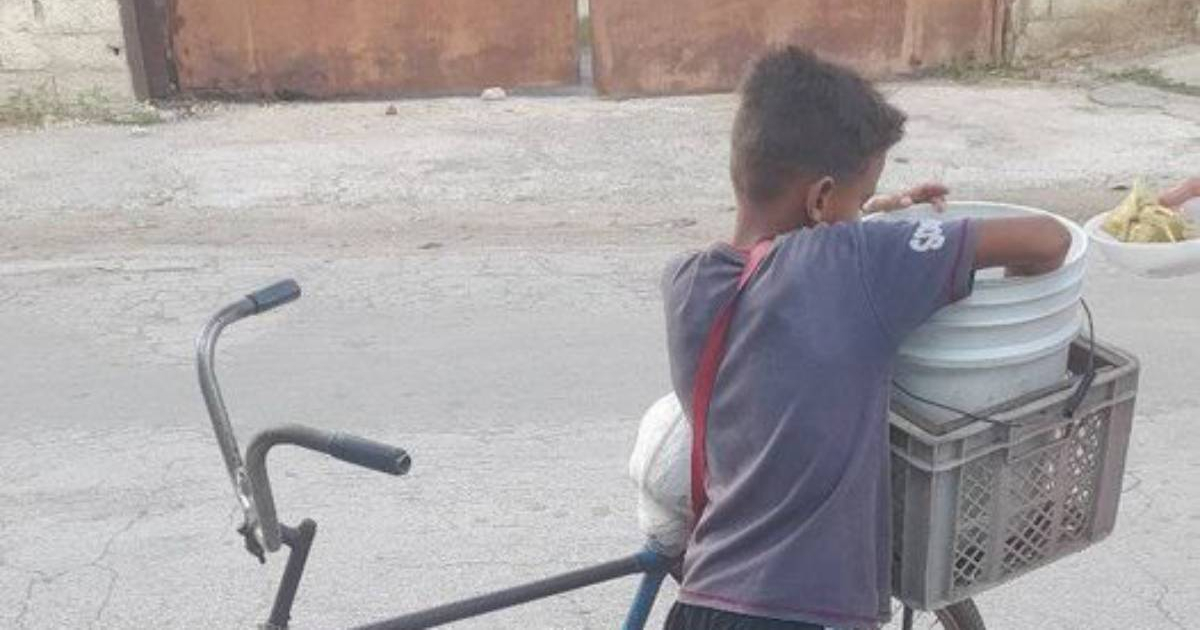
In 2026, documented cases increased: a 10-year-old selling garlic and bread without having eaten, children aged eight to ten selling bananas in Las Tunas, and two boys aged 11 and 13 selling bread on the street to help their families.
Meanwhile, the Union of Young Communists claimed that "thanks to the Revolution," child labor was not a reality in Cuba, a statement that triggered a flood of opposing testimonies on social media.
Questions and Answers about Child Welfare in Cuba
What sparked Katungo's Facebook post about Cuban children?
Katungo's post was a response to images of children sleeping in public gardens and a statement by a Cuban official that described the situation as unacceptable.
How does Katungo critique the government's policies towards children?
Katungo highlights the rationing policies and ideological use of children by the regime, arguing that the government views children as ideological assets rather than vulnerable individuals in need of protection.
What statistics are cited to support the claims about child welfare in Cuba?
Statistics from the Cuban Conflict Observatory and UNICEF indicate high levels of child labor and food poverty, while government figures acknowledge significant numbers of children in vulnerable situations.