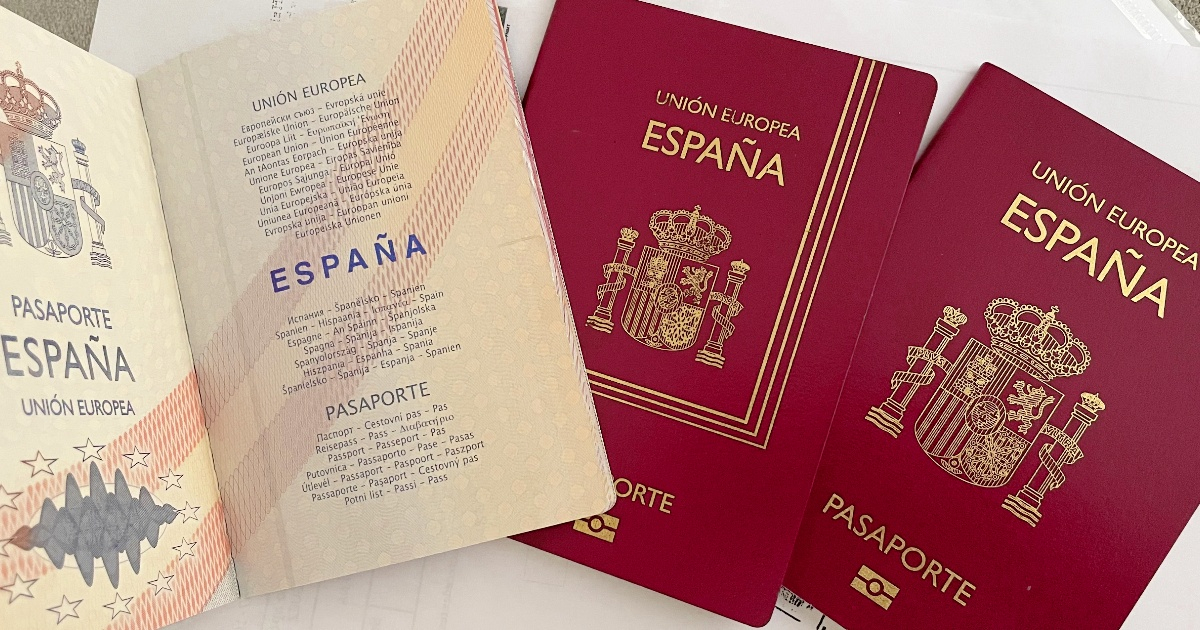
The small Spanish political party, Iustitia Europa, has filed a motion with the Supreme Court, seeking the removal of two organizations from the legal proceedings concerning the Grandchildren Law. These groups, Cubans for Democracy and Spanish Ascendants Around the World, advocate for those benefiting from this legislation.
Iustitia Europa's primary argument is that these entities lack the legal standing required to be involved in the lawsuit.
The filing submitted to the court contends that the associations "do not possess any title" regarding the powers of the Electoral Administration, nor do they hold "an individualized legal position against the contested agreement."
The party further asserts that the dispute is centered on the electoral and census implications of the Grandchildren Law—not on the acquisition of Spanish nationality. Thus, "a potential ruling in their favor would affect the oversight, review, traceability, and control obligations of the Central Electoral Board and the Electoral Census Office."
This move aims to silence two key organizations representing Cubans and other descendants of Spanish exiles impacted by the temporary suspension of voting rights, as the deadline to join the proceedings is October 22.
Iustitia Europa, alongside Vox, previously challenged a 2022 Ministry of Justice directive that presumed exile status for all Spaniards who left between 1936 and 1955 without requiring documentary proof.
As a result of these challenges, the Supreme Court provisionally halted the registration of those affected by the Grandchildren Law in the electoral roll in September.
On October 12, the Administrative Chamber rejected the State Attorney's appeal, maintaining the suspension, which potentially impacts 163,020 voters registered in the Census of Absent Residents Abroad (CERA). The Prosecutor's Office had also requested to allow voting, but the Supreme Court did not heed this request.
It is crucial to note that the suspension does not annul the granted Spanish nationalities nor repeal the Democratic Memory Law; it only temporarily restricts the electoral effects of certain CERA registrations concerning the general elections on November 29. Those who gained nationality through this law and reside in Spain are not affected.
Alongside the exclusion request, the judicial battle has intensified on multiple fronts. The Center for United Spanish Descendants (Ce.DEU) has submitted arguments to the Supreme Court, requesting the lifting of the suspension, arguing that the measure discriminates against those living outside Spain compared to others nationalized by the same law residing in the country.
The Ombudsman, Ángel Gabilondo, went further by filing a constitutional protection appeal with the Constitutional Court, requesting urgent measures to allow those affected to vote on November 29. Iustitia Europa responded on Saturday with an urgent letter to the Constitutional Court opposing this request.
Meanwhile, those affected have until October 22 to appear before the Supreme Court as a co-defendant, with legal representation, according to the resolution published in the Official State Gazette on October 15.
Iustitia Europa has identified the period from October 24 to 30 as critical, as electoral documentation is expected to be sent to those registered in the CERA.
Key Questions About the Legal Battle Over the Grandchildren Law
What is the Grandchildren Law?
The Grandchildren Law allows descendants of Spanish exiles to obtain Spanish nationality, impacting electoral and census registration.
Why is Iustitia Europa challenging the associations involved?
Iustitia Europa argues that the associations lack the legal standing to be part of the lawsuit affecting the Grandchildren Law's electoral implications.
What is the impact of the suspension on voters?
The suspension impacts 163,020 voters registered abroad, but it does not revoke their Spanish nationality or repeal the Democratic Memory Law.