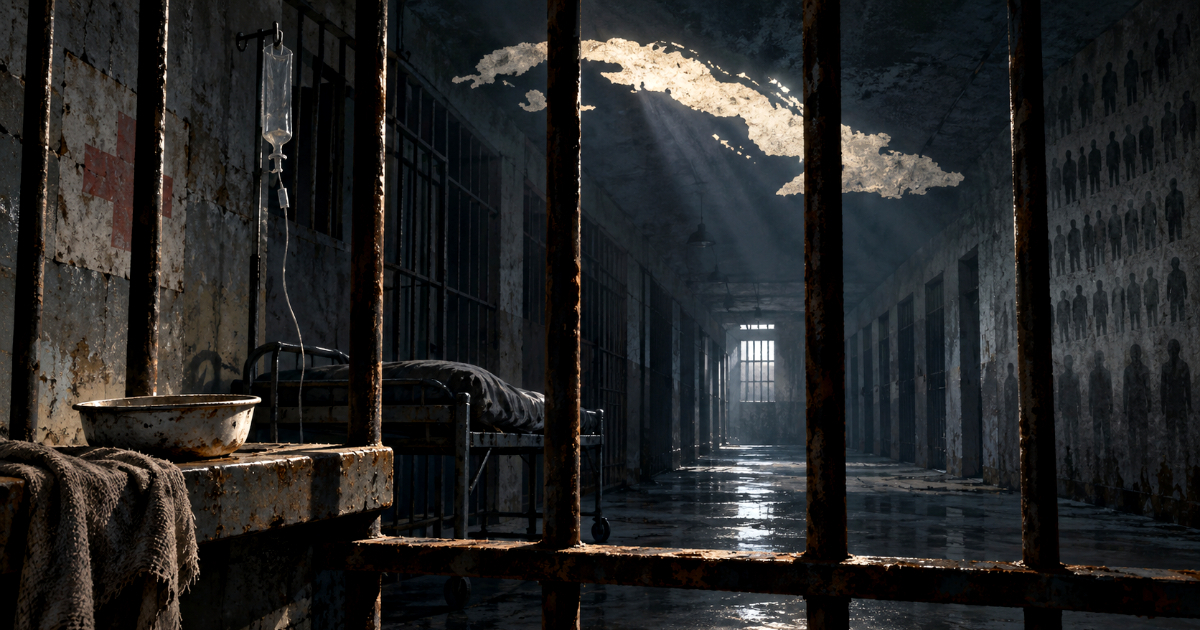
In September 2026, Cuban prisons emerged as the focal point of state repression, according to the monthly report by the human rights group Cubalex, released on October 13.
Nearly half of the 298 documented repressive incidents that month targeted individuals already incarcerated. Some prisoners resorted to hunger and thirst strikes within the penitentiaries to protest their conditions.
The regime responded to these prison protests by enforcing a communication blackout described by Cubalex as the most severe seen throughout 2026. For nearly a week, families of inmates in numerous facilities were unable to contact their loved ones, leaving them without any updates.
The 298 incidents in September marked a slight increase from the 280 recorded in August, with the number of direct victims rising from 187 to 193.
Sharp Decline in Public Protests
However, the most striking data point was the sharp decline in public demonstrations. Cubalex documented only 35 citizen protests, a 63% decrease from the 94 registered the previous month.
While the monitoring data alone cannot determine the reasons for this decrease, the report situates September within a context of "almost daily blackouts, food shortages, and unpaid wages."
Geographical Distribution of Repression
Havana accounted for 38% of the repressive actions, with approximately 113 incidents, followed by Camagüey with 15%, home to the prison with the most incidents. Santiago de Cuba saw 6% of the cases.
Both members of the independent civil society and individuals without known organizational ties were similarly affected by the repression.
Alarmingly High Custodial Deaths
The report also noted 12 deaths linked to state custody in September, the highest monthly figure since February 2026. Of these, eight occurred within prisons, two involved recently released individuals who died shortly after in critical condition, and two were 18-year-old recruits who died during mandatory military service.
These numbers bring the total prison deaths documented by Cubalex in 2026 to 49 by that point.
Among individual cases, Cubalex highlighted the severe health deterioration of Yoan Arévalo, an inmate at Jóvenes del Cotorro prison in Havana, who was vomiting and defecating blood without being transported to a hospital.
The report also detailed the situation of Saylí Navarro Álvarez, detained at La Bellotex in Matanzas, suffering from stomach issues in a facility reportedly lacking medical personnel since May 2026. Navarro Álvarez, a member of the Damas de Blanco and promoter of Cuba Decide, is serving an eight-year sentence for her involvement in the July 11, 2021 protests.
Historical Context of Custodial Deaths
The pattern of deaths in custody is not new. Between February 2024 and June 2026, Cubalex documented 115 deaths in Cuban prisons, with 70% attributed to negligence or denial of medical care. At least 21 inmates died from severe malnutrition or starvation, and 12 from tuberculosis during this period.
The socio-economic situation exacerbated the situation: on September 18, the National Electric System completely collapsed, taking approximately 32 hours to restore amid a blackout crisis that had been worsening for months.
According to Prisoners Defenders, Cuba ended September with 1,351 political prisoners, 476 of whom suffer from illnesses while still being held.
Understanding Repression in Cuban Prisons
What led to the communication blackout in Cuban prisons?
The communication blackout was a response by the Cuban regime to protests within prisons, where inmates engaged in hunger and thirst strikes.
How did the socio-economic context contribute to the repression?
The socio-economic context, characterized by daily blackouts, food shortages, and unpaid wages, intensified the repression as it created more public dissatisfaction and unrest.
What is the significance of the decline in public protests?
The significant decline in public protests may indicate increased repression and fear among citizens, or a strategic shift by the regime to focus on contained environments like prisons.