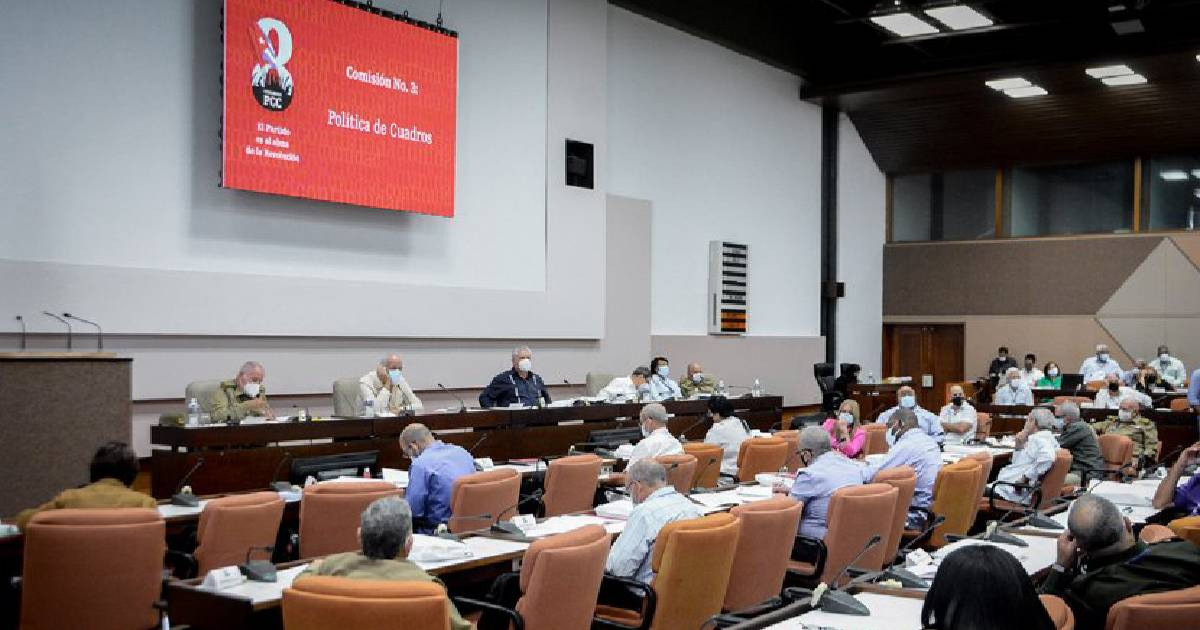
On the occasion of the 15th anniversary of the School for State and Government Leadership (Esceg), President Miguel Díaz-Canel took to X this Saturday to extend his congratulations while emphasizing the need for better "leadership methods and styles" given the "current situation in Cuba."
Established on October 18, 2011, Esceg has spent fifteen years training leaders in public administration and Cuba's business system, boasting over 15,000 graduates by January 2024.
In his message, the Cuban president addressed the faculty, staff, and students of the institution: "In Cuba's present landscape, refining leadership methods and styles is increasingly essential," he stressed.
The public reaction was swift and forthright. One commentator encapsulated widespread sentiment: "The people can't live on training speeches. If the leaders learn new techniques and life remains unchanged, it's not modernization; it's just new bureaucracy with a certificate."
Another online voice was even more straightforward, suggesting that the president should direct his congratulations to those who need it most: "Better congratulate the people of Unión de Reyes who have endured 65 hours without power or water silently; we truly deserve recognition."
A third individual demanded, without mincing words, an end to Díaz-Canel's leadership: "You must stop governing this suffering population, give a chance to others who think differently; you have failed to lead, and the people are in utter misery. Step down."
The gap between official rhetoric and everyday reality is not a new phenomenon. The regime has long touted cadre development as a strategy for political continuity, yet the economic, energy, and social crises deepen without tangible solutions.
The authorities have acknowledged their shortcomings in this area. In April 2025, the Committees for the Defense of the Revolution admitted to a shortage of leaders amid growing public disinterest, while the Communist Party executed a sweeping series of dismissals in Guantánamo in May under the guise of "liberation through renewal," without explaining the true causes.
Esceg hosted the first International Convention on Innovation and Leadership in Public and Business Administration 2026 from October 12-16 as part of its anniversary celebrations.
Díaz-Canel has repeatedly called on Cuban leaders to exhibit high ethical standards and adopt more effective leadership methods, yet this has not resulted in tangible improvements for a population grappling with shortages of food, water, and medicine, alongside an ongoing mass exodus.
Understanding Cuba's Leadership Challenges
What is the School for State and Government Leadership (Esceg)?
Esceg is an institution founded on October 18, 2011, aimed at training leaders for public administration and the Cuban business system.
Why is Díaz-Canel emphasizing improved leadership methods?
Díaz-Canel stresses the need for enhanced leadership techniques to address the current challenges facing Cuba, including economic, energy, and social crises.
How has the public reacted to Díaz-Canel's statements?
The public response has been critical, with many expressing dissatisfaction with the lack of tangible improvements in their daily lives.