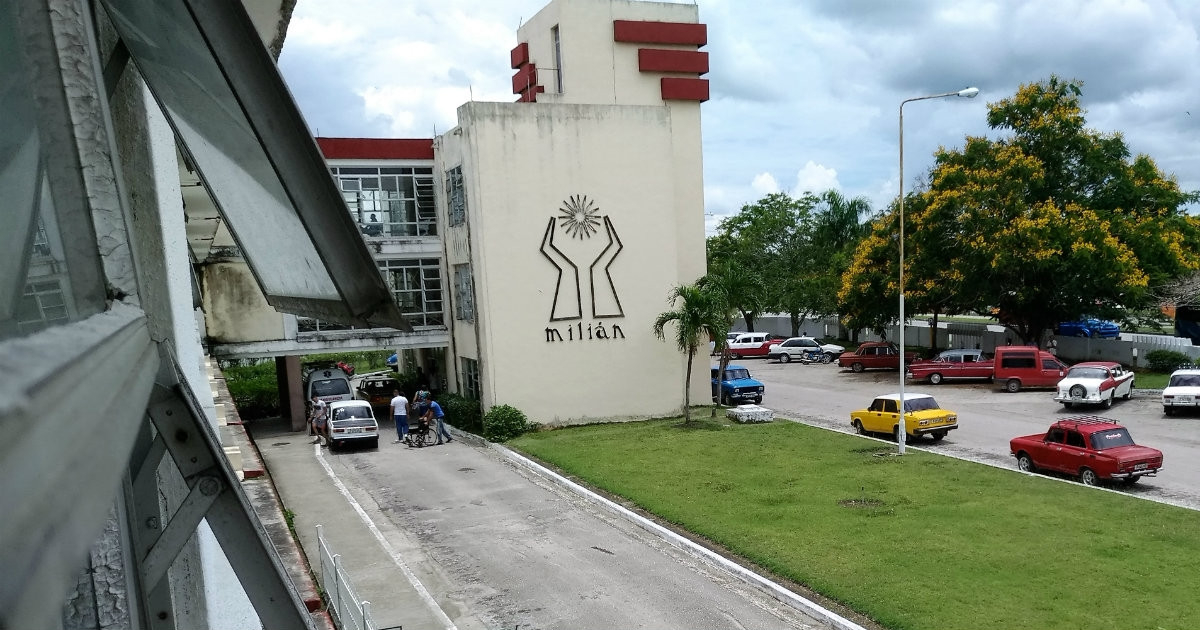
For nearly nine months, kidney patients from the Arnaldo Milián Castro Provincial Hospital in Santa Clara have been residing at the Rivierita Hotel (also known as the Riviera) without any resolution from Villa Clara authorities. This troubling situation was highlighted in a social media post on Thursday by one of the patients staying there.
In a heartfelt Facebook message, Luis Alberto Borges detailed the dire circumstances of institutional neglect faced by patients who must endure long journeys to Caibarién for dialysis treatments. These trips, according to the patients, are both exhausting and taxing.
"If my words bleed today, it’s because my soul bears deep wounds from witnessing the plight we are enduring—not just us, the kidney patients, but also our loved ones who stand by us in this fight for life," Borges expressed.
What infuriates the complainant the most is the juxtaposition of power and the misery endured. The Rivierita Hotel stands across from the homes of the first secretaries of the Communist Party of Cuba and the Provincial Assembly, and is just a block away from the State Council's Guest House.
"Ministers have visited, even the Presidency, yet no one has come to see our plight," Borges lamented, questioning whether provincial leaders have deliberately kept central authorities in the dark about the abandonment they face.
The comments on the post reflect mounting desperation. One citizen warns that "in four months, it will be a year at the Riviera, and there’s no telling when normalcy will return," suggesting the accommodation began around January this year.
Another individual highlights the "horrible exhaustion" and notes that "many have already passed away during this ordeal, and we remain without a short-term solution."
One patient criticizes the poor nutrition and health conditions at the hotel, while a working companion questions the lack of clarity regarding the "true state of contamination" at the hemodialysis unit, which allegedly prompted the transfer to the Rivierita.
"I don’t understand why they always claimed the Revolution never abandons its children," Borges concluded his testimony. "It seems that concept has gradually been forgotten."
In June, the Arnaldo Milián Castro Hospital went over 72 hours without water due to a pumping turbine failure, forcing patients to collect rainwater for basic hygiene.
In April, patients reported hepatitis outbreaks in the hemodialysis ward and alleged resource misappropriation.
In September, hemodialysis patients from Maisí endured inhumane conditions in Baracoa, lacking electricity, potable water, and sleeping on the floor.
Recently, a short circuit led to a fire in the Bayamo hemodialysis unit in Granma, partially disrupting service.
In July, patients in Santiago de Cuba reported their dialysis sessions being halved from four to two hours due to supply shortages.
Approximately 3,000 patients across Cuba rely on hemodialysis, distributed among 56 or 57 units. In February, Health Minister José Ángel Portal Miranda admitted that the Cuban healthcare system was "on the brink of collapse."
Understanding the Struggles of Kidney Patients in Cuba
Why are kidney patients in Villa Clara staying at the Rivierita Hotel?
Kidney patients from the Arnaldo Milián Castro Hospital are staying at the Rivierita Hotel due to issues at the hospital's hemodialysis unit, reportedly related to contamination concerns.
What challenges do these patients face during their hotel stay?
Patients face challenging conditions, including exhausting travel for dialysis treatments, inadequate nutrition, and a lack of transparency regarding the situation's resolution.
Has the Cuban government responded to this crisis?
Despite the severe conditions and visits from high-level officials, there has been no effective government response or solution provided to the affected patients.