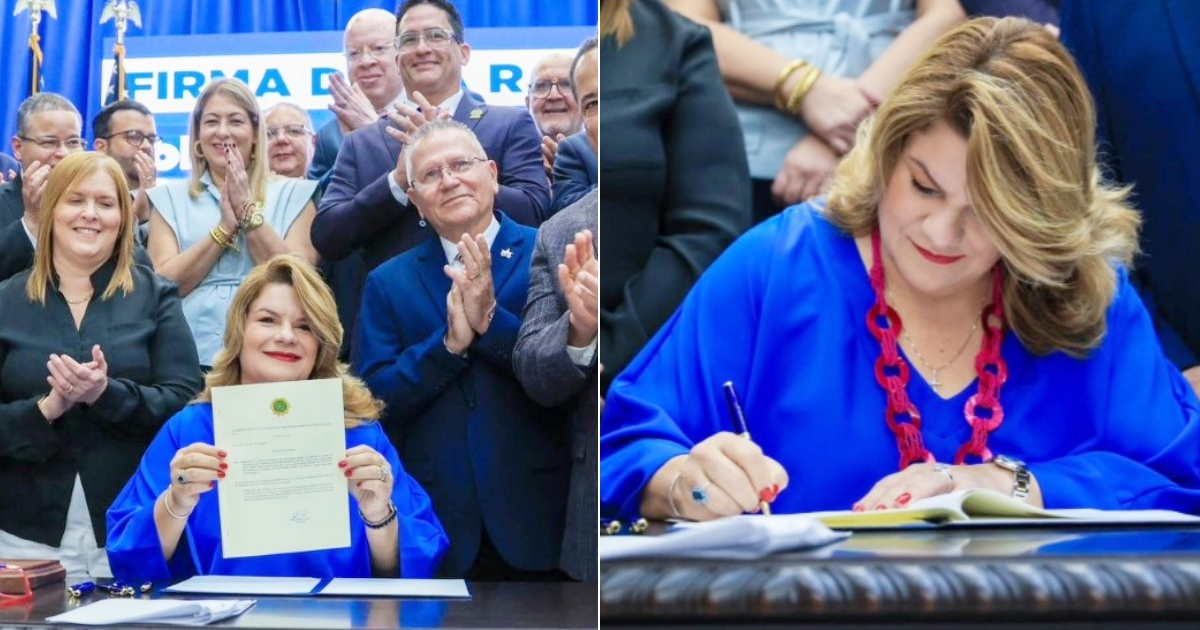
Puerto Rico's Governor, Jenniffer González Colón, made a significant move on Friday by signing Joint Resolution 66-2026. This formal appeal requests President Donald Trump and the U.S. Congress to admit Puerto Rico as the 51st state, granting it the same status as other states in the union.
The signing ceremony was attended by legislative leaders from Puerto Rico's House and Senate, cabinet members, and representatives from civil society.
"I signed Joint Resolution 66-2026, formally asking the President and Congress to admit Puerto Rico as a State of the Union, with equal conditions as the other states," González stated on social media platform X.
She emphasized that the measure fulfills an electoral promise: "With this signature, we fulfill our Government Program's commitment to prioritize statehood and honor the will of our people as expressed at the polls."
Historical Contributions and Calls for Equity
González also highlighted the significant role Puerto Ricans have played in the United States.
"Puerto Ricans have contributed to our Nation's development, defended its freedoms, and fulfilled the responsibilities of American citizenship. It is now up to Congress to respect this will and exercise its constitutional authority to admit Puerto Rico as a state," she added.
The Core of the Resolution
Known as the Concurrent Resolution of the Chamber 391, Joint Resolution 66-2026 is more than a symbolic statement. According to the governor's official release, the document "establishes with the force of law the formal request for Puerto Rico's admission as a State of the Union as public policy of the Government of Puerto Rico" and mandates the use of all governmental resources to advocate for it in any available forum.
The resolution has been sent to President Trump, the federal Senate and House leaders, and all congressional members.
Navigating the Constitutional Process
While the signing marks a crucial political step, it doesn't automatically transition Puerto Rico into statehood. The constitutional process requires that the federal Congress approves an admission law under Article IV, Section 3, Clause 1 of the U.S. Constitution. This involves drafting a bill, committee evaluations, approval in both chambers, and presidential enactment.
The most significant hurdle is Trump's stance. In May 2026, he termed Puerto Rico's statehood a "disaster," and by July, he expressed he'd be dismayed if Puerto Rico and Washington D.C. became states.
Given this scenario, González plans to wait for the 2026 midterm elections to push a new congressional proposal.
Ongoing Struggle for Statehood
This isn't the first attempt. In November 2020, Puerto Rico voted in favor of becoming the 51st state with 52.52% support, but Congress did not pass any admission law. In December 2022, the House approved bill H.R. 8393 with 233 votes, but the Senate did not ratify it.
Mixed Reactions to the Proposal
Pablo José Hernández, the resident commissioner in Washington and president of the Popular Democratic Party (PPD), argued that the resolution wouldn't change the island's political status and criticized the government's focus on statehood over urgent issues like electricity and water.
Juan Dalmau from the Puerto Rican Independence Party (PIP) labeled the measure as political and not a serious effort to address Puerto Rico's status.
Historically, there have been three main positions in the debate: statehood, advocated by González's New Progressive Party (PNP); remaining as a Commonwealth; and seeking independence. Opponents warn about the risk of losing cultural identity and fiscal sovereignty.
A Territory in Limbo Since 1898
Puerto Rico has been under U.S. authority since 1898, following the Spanish-American War. In 1917, Puerto Ricans were granted U.S. citizenship, yet they lack the right to vote in presidential elections and do not have full representation in the federal Congress.
While exempt from federal income taxes, Puerto Rico contributes to Social Security and Medicare and receives less federal funding than U.S. states.
The resolution signed by González marks the latest formal effort in a series of at least seven status referendums since 1967, none of which have led to substantial change. The next critical decision rests with a Congress and White House that have so far shown little enthusiasm for the cause.
FAQs About Puerto Rico's Statehood Bid
What is the purpose of Joint Resolution 66-2026?
The resolution formally requests the admission of Puerto Rico as the 51st state of the United States, establishing it as a public policy of the Puerto Rican government.
What challenges does Puerto Rico face in becoming a state?
The primary challenge is obtaining congressional approval for a statehood bill, especially given political opposition and President Trump's unfavorable stance on the matter.
How has Puerto Rico's political status been addressed in the past?
Since 1967, Puerto Rico has held at least seven referendums on its status, but none have resulted in a change in its political standing.