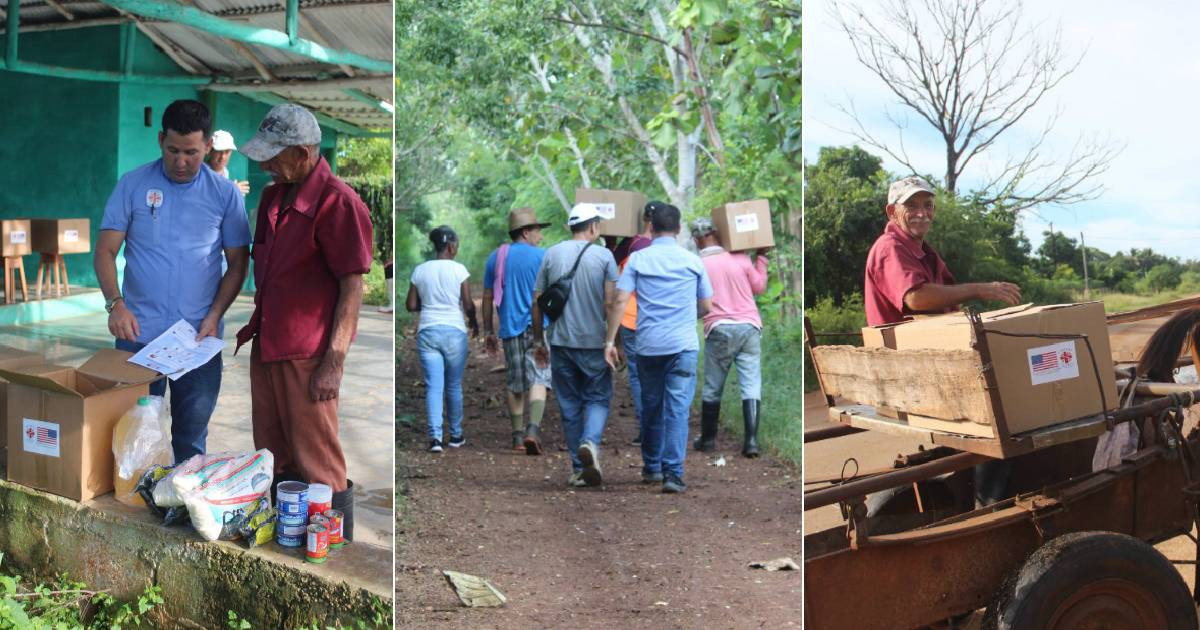
"I never imagined anyone would remember me, let alone visit me today!" exclaimed José Agustín Farray Ponce, known as "Tito," upon seeing the volunteers arrive at his home in Cuatro Caminos, Matanzas province.
Living barefoot in a place that has never had electricity, Tito resides beneath an ancient ceiba tree. The team had to trek along a dirt path to deliver the supplies to him.
This scene is part of the distribution efforts documented by Caritas Matanzas on their social media channels, following the arrival of the first humanitarian aid shipment at Juan Gualberto Gómez International Airport in Varadero on October 14.
The aid packages, generously donated by the American people, include food and hygiene products for families in dire situations.
Stories of Resilience in El Estante
In El Estante, volunteers met with Emenejilda León Padrón, who has been bedridden for years and cared for by her husband, Orlando Núñez León, for over three decades.
"She was one of the most beautiful women around here. I courted her for six months before she said yes. If I were to be born again, I would choose her once more," shared Orlando. With a shaky voice, Emenejilda expressed her gratitude for the help and wished blessings from God and the Virgin of Charity upon those who made it possible.
Another recipient of aid in the community was Alfredo Molina Pérez, a 59-year-old with severe visual impairment since birth, who is the sole caregiver for his 82-year-old mother. This was his first time receiving such assistance.
"Sometimes despair gets the best of me, but I strive to keep going. It's tough not being able to work and maintain a household," he said. Before leaving, he hefted the heaviest food package and summed up his determination with the words, "There's always a light."
Human Chain Brings Aid to Alacranes
In Alacranes, the container of supplies arrived near the San Francisco de Paula parish at 4:30 p.m., just as a brief rain passed. Father Naydel Echazabal organized a human chain to unload the modules before nightfall.
The packages bear the United States flag and the logo of Caritas Cuba, with a label declaring them a "Donation from the People of the United States of America to the Citizens of Cuba."
The food modules include rice, beans, oil, brown sugar, pasta, sardines, and tuna. Hygiene packages contain soap, detergent, toothpaste and brushes, water purification tablets, and a rechargeable lamp.
This aid is distributed independently of the Cuban government. Catholic Relief Services (CRS) procures the goods in the U.S., and Caritas delivers them directly through its parish network and home visits.
Targeted Assistance for Those in Need
Beneficiaries were pre-identified by volunteers, with priority given to those over 60, individuals with disabilities, chronic illnesses, pregnant women, and children under five.
In this initial phase, 700 of the 2,100 families selected in the Vicaría Nuestra Señora de la Caridad will receive the modules. This area includes municipalities like Alacranes, Unión de Reyes, Bolondrón, and Güira. Overall, 18,200 family units in the Matanzas diocese are part of the program.
This distribution is part of a $100 million humanitarian aid plan announced by the administration of President Donald Trump. Of this, $60 million is channeled through Caritas Cuba and Catholic Relief Services.
The documented scenes in Matanzas highlight how this assistance reaches individuals facing isolation, disability, and challenges in meeting basic needs. In communities where some beneficiaries lack even electricity, the volunteers' arrival offers direct support amid Cuba's ongoing economic crisis.
Understanding the Humanitarian Aid Program in Cuba
What kind of aid is being delivered to families in Matanzas?
Families in Matanzas are receiving food and hygiene packages, which include essentials like rice, beans, oil, soap, and water purification tablets, among other items.
Who is responsible for the distribution of the aid?
The distribution is managed by Caritas Cuba, in collaboration with Catholic Relief Services, without the involvement of the Cuban government.
How are recipients of the aid selected?
Beneficiaries are identified by volunteers, focusing on the elderly, disabled individuals, those with chronic illnesses, pregnant women, and young children.