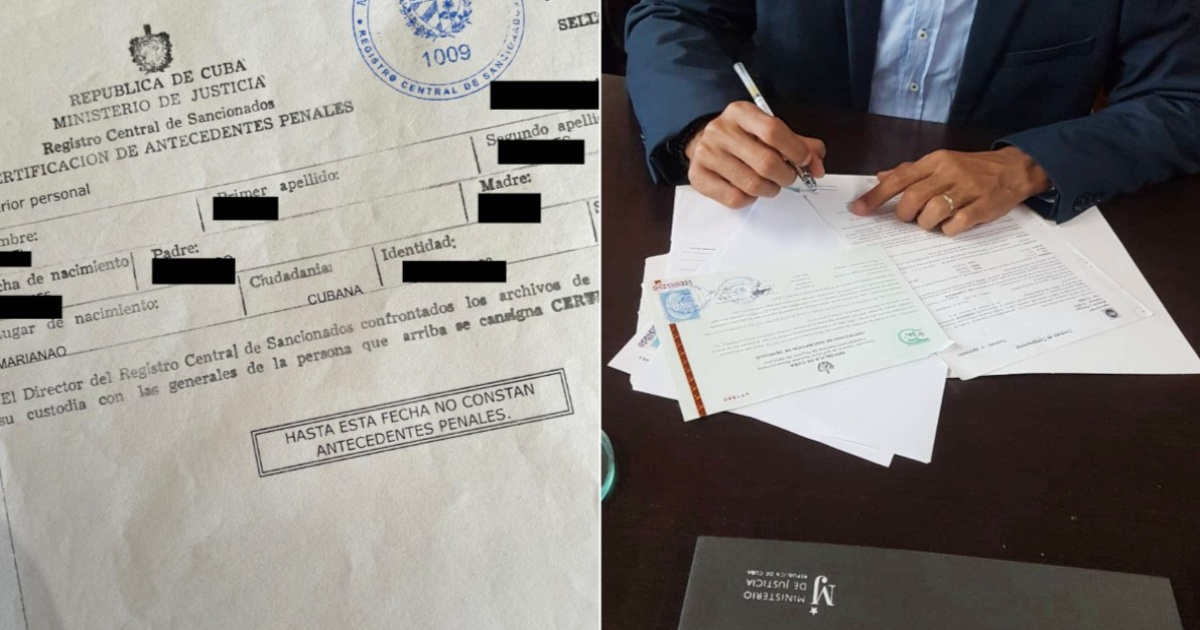
The Cuban Ministry of Justice (MINJUS) revealed on Thursday that criminal record certifications can now be processed through the Soberanía digital platform. This new feature enables Cuban citizens to initiate and track this procedure from any internet-connected device without the need to visit the Central Penal Registry in person.
The announcement, made on the ministry's official website on October 15, does not specify the digital service fee, delivery time, or the certificate's validity and acceptance abroad.
Eligibility and Requirements for the Service
Cuban citizens over the age of 16 and foreign residents with temporary or permanent status in Cuba are eligible to request the certification. A prerequisite for using this service is having a Certified Digital Identity on the Soberanía platform. Those without this must first complete the registration process, detailed in the frequently asked questions section on soberania.gob.cu. Once authenticated with this digital identity, users can access the criminal record service.
Step-by-Step Online Process
The ministry outlines a four-step process for completing the service online:
- Authenticate on Soberanía using the Certified Digital Identity.
- Select the criminal record service and fill out the online form.
- Make the necessary payment through the enabled electronic platforms.
- Receive the digital document with the certified electronic signature of the registrar.
MINJUS clarifies that the service can be accessed without consuming mobile data, which the ministry claims "promotes more equitable access." While navigating within Soberanía doesn't deduct data balance, it doesn’t eliminate the transaction fee.
Users are updated at each stage of the process through official notifications.
Verifying the Certificate's Authenticity
The digitally issued document includes the certified electronic signature of the registrar. To ensure the certificate's authenticity, the applicant must use the case code and PIN provided in the document. Verification is also possible via QR code or direct query in the MINJUS database, according to Resolution 284/2025, effective August 11, 2025, which grants digital certifications the same legal status as paper documents.
Important: If the digital document is printed, it loses its electronic status and must have a handwritten signature and physical seal to be valid in paper form.
Service Limitations and In-Person Alternatives
The ministry emphasizes that the online option "does not replace the in-person service offered by the Central Penal Registry offices but serves as a complementary alternative." The in-person route remains available, requiring an updated identity card and a five Cuban peso tax stamp, with a 72-hour delivery time.
For those facing connectivity issues or technological challenges, MINJUS mentions support from the network of Young Computer and Electronics Clubs — with over 640 centers across the country — and members of the Union of Cuban Computer Scientists.
The announcement does not address the procedure for international use. This still necessitates the in-person approach through the ONBC and legalization by MINJUS, a process that user reports suggest can take several months.
Cuba is not a signatory to the Hague Apostille Convention, so the new digital service does not resolve the challenges faced by those needing a legalized certificate outside the island.
According to MINJUS Resolution 609/2023, the criminal record certification is valid for one year from its issuance. The addition of this service brings the total number of services available on Soberanía to 19. In its first year, the platform processed approximately 40,000 civil status transactions and nearly 24,000 passport applications for individuals over 18.
Frequently Asked Questions about Soberanía's New Feature
Who can apply for a criminal record certificate through Soberanía?
Cuban citizens aged 16 and older, as well as foreign residents with temporary or permanent status in Cuba, can apply.
What is necessary to access the online service?
Users must have a Certified Digital Identity on the Soberanía platform to access the service.
How can the authenticity of the digital certificate be verified?
The authenticity can be verified using the case code and PIN provided, via QR code, or by checking the MINJUS database.