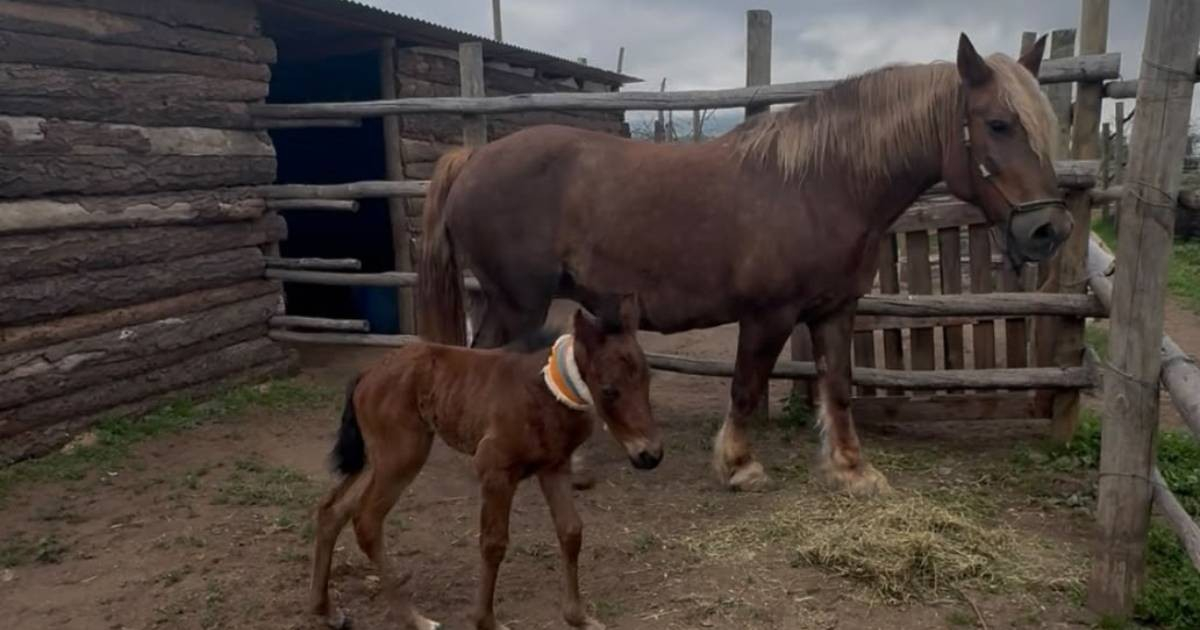
Two Cuban scientists, who began their careers on the island and have been residing in Chile for over twenty years, made history by leading the team responsible for the first successful horse cloning in the country.
Fidel Ovidio Castro Reboredo and Lleretny Rodríguez Álvarez, both affiliated with the Faculty of Veterinary Sciences at the University of Concepción and founders of the biotech company Vi-Embryos, spearheaded this groundbreaking achievement.
Their work culminated in the birth of Capacidad 01, a cloned filly derived from an Argentine polo mare, born on September 26th in Chile's O'Higgins region.
The University of Concepción acknowledged this remarkable feat, and the scientists shared insights into their research during an interview published by El País on Thursday.
From Rabbit Cloning Attempts in Cuba to Historical Success in Chile
The scientists embarked on their scientific journeys in Cuba, initially attempting to clone rabbits without achieving the desired results. These early experiments followed the global fascination with biotechnology that Dolly the sheep had sparked.
Castro Reboredo, a veterinary science doctor from Havana, worked at Cuba's Center for Genetic Engineering and Biotechnology in his early career. Rodríguez Álvarez, originally from Pinar del Río, also began her scientific path on the island.
They relocated to Chile 22 years ago, where their research continued to flourish. In 2008, they successfully cloned Victoria, the first animal born via this technique in Chile, though the cow lived only three months due to health complications.
Challenges and Triumphs on the Path to Cloning Capacidad 01
The recent project required nearly two years of effort and collaboration between Vi-Embryos and the Equine Reproduction Center Los Abedules. The journey to Capacidad 01's birth was fraught with challenges.
The team transferred eight embryos; five resulted in pregnancies, but only one reached full term. The foal was born at 3:10 AM on September 26th, after 346 days of gestation, in a veterinary clinic in San Fernando.
Pauly, the surrogate mare, carried the pregnancy and delivered a healthy foal, as observed by specialists. Rodríguez Álvarez noted that adapting cloning techniques to horses was more complex than anticipated. Despite their experience with bovines and other animals, the specific reproductive traits of horses necessitated unique procedures for egg handling, embryo production, and implantation.
Castro Reboredo was responsible for establishing and ensuring the quality of the cell lines used to replicate the genetic information of the original horse. According to the University of Concepción, this success will enable Chile to offer equine cloning services locally, which previously required breeders to seek services abroad in countries like Argentina or Brazil.
The Significance of Cloning a Horse
Capacidad 01 is a genetic replica of Capacidad, a polo mare renowned for her athletic prowess in Argentina. Cloning preserves nearly identical nuclear genetic information of the original animal, which is particularly valuable for breeders seeking to maintain the traits of exceptional specimens.
However, Castro emphasized that identical genetics do not guarantee the same athletic performance. Similar to identical twins, factors such as upbringing, environment, and training can lead to significant differences between a horse and its clone.
The researchers believe this technology could benefit Chile's equine industry by conserving high-value animals and developing new breeding lines. The University of Concepción announced plans to expand their capacity to produce between 10 and 12 clones by 2027.
Understanding the Impact of Horse Cloning in Chile
Why is horse cloning significant in Chile?
Horse cloning in Chile is significant because it allows the preservation of desirable genetic traits in equine sports and breeding, offering local services that were previously only available abroad.
What challenges did the scientists face in cloning Capacidad 01?
The scientists faced challenges such as adapting cloning techniques to horses, managing the specific reproductive traits of equines, and ensuring the success of embryo implantation and full-term pregnancy.
What future plans do the scientists have for horse cloning?
The scientists plan to expand their cloning capacity, aiming to produce 10 to 12 horse clones by 2027, enhancing the potential for conserving and developing valuable equine lines in Chile.