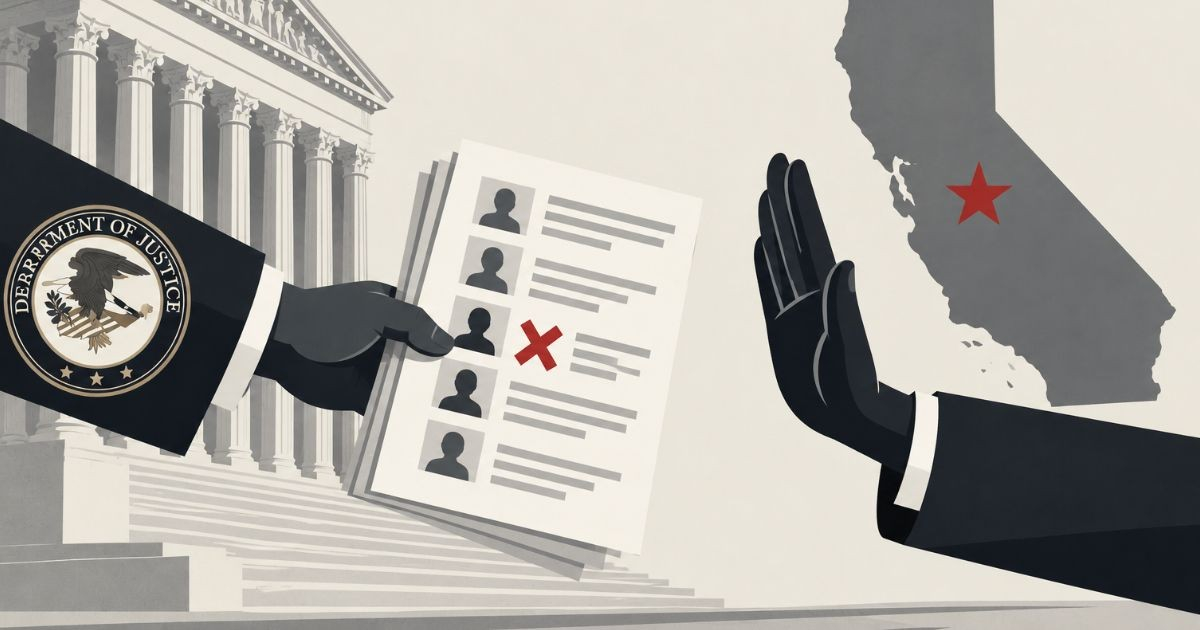
The U.S. Justice Department has called on California to scrutinize a list of individuals it suspects might be non-citizens within a 48-hour timeframe and to take action on their ballots ahead of the federal elections on November 3.
California's Secretary of State, Shirley N. Weber, has resisted this demand, questioning the federal government's attempt to enforce such measures without, in her view, providing substantial evidence or a legal foundation for the request.
The demand was outlined in a letter dated October 13, 2026, authored by R. Trent McCotter, the acting deputy attorney general, and addressed to Weber.
The letter warns that the federal government may seek a court-ordered emergency intervention if California's election officials fail to comply with the request.
This issue centers on the verification of citizenship and the handling of mail-in ballots as California prepares for the upcoming November 3 elections.
Controversy Over Citizenship Verification
A key point of contention is that the federal government's suspicion that someone might not be a citizen does not inherently prove illegal registration or electoral fraud.
The letter requests a review of individuals whose U.S. citizenship, according to the Justice Department, needs confirmation. If authorities cannot verify their status, Washington insists that their ballots be set aside—not voided—until eligibility is determined.
The request also includes specific instructions regarding mail-in voting: halt the mailing of ballots not yet sent to the named individuals, and for those already returned, refrain from signature verification or tallying until the citizenship issue is resolved.
State's Response and Concerns
California's response, delivered on October 14, questioned the 48-hour deadline to gather and analyze information that could impact ballots so close to the election.
Weber argued that the federal authorities had not supplied the necessary evidence or legal justification to support their demand, defending the state’s electoral processes which ensure only U.S. citizens can register to vote.
She expressed concerns that federal actions regarding voter registration could undermine public trust.
The Justice Department maintains that its intervention is aimed at verifying the eligibility of those identified.
Local Implications in Los Angeles
In Los Angeles County, the situation is compounded by a separate issue. Registrar Dean C. Logan acknowledged receiving a correspondence from the Justice Department on October 13, which included a USB purportedly containing the questioned records.
Logan stated that his office did not access the device, citing conflicts with privacy and cybersecurity protocols. The communication did not specify the number of individuals involved or detail the content of the records.
His office is reviewing the matter alongside the Secretary of State and California's Attorney General to decide on future actions, emphasizing that any decision affecting voter eligibility must be based on verifiable data and legal procedures.
Broader Federal Strategy and Legal Context
This dispute is part of a larger federal strategy to review voter registration records. On October 7, it was reported that ICE had analyzed millions of records for potential non-citizen voters using various data sources and processing tools.
There is also ongoing litigation concerning the federal SAVE system, used to verify citizenship information. In September, the Trump administration petitioned the Supreme Court to reactivate an expanded version of this tool after judicial rulings curtailed its use.
For Cuban-Americans, distinguishing between legal residency and U.S. citizenship remains crucial. Having a green card does not automatically entitle one to vote in federal elections, a right reserved for U.S. citizens meeting electoral requirements.
A recent case in Florida highlighted these differences when a federal judge in Miami dismissed a charge related to non-citizen voting, underlining that the decision did not permit permanent residents to vote in federal elections.
Frequently Asked Questions on Voter Eligibility and Citizenship
What actions did the Justice Department request from California?
The Justice Department asked California to review a list of suspected non-citizens and take action on their ballots before the federal elections.
How did California's Secretary of State respond?
Shirley N. Weber rejected the demand, citing a lack of evidence and legal basis for the request, and defended California's electoral processes.
What are the implications of the federal demand on mail-in ballots?
The demand included halting the mailing of ballots to named individuals and suspending the verification and counting of returned ballots until citizenship is confirmed.