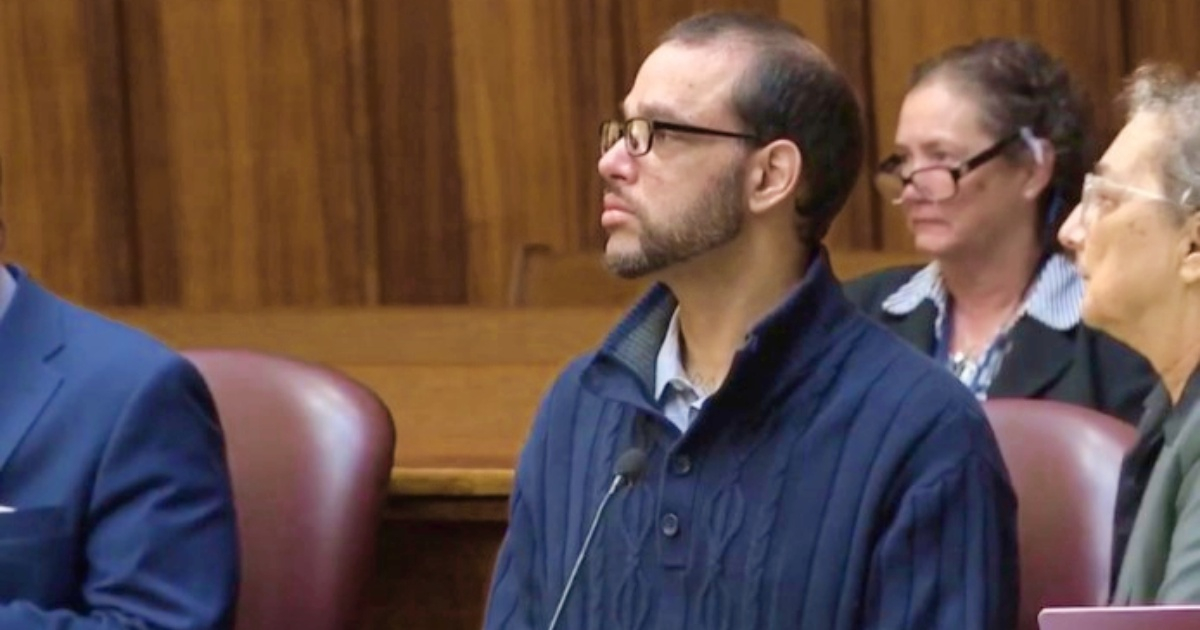
This past Wednesday, a juror was removed from the sentencing trial of 42-year-old Alberto Sierra, a Cuban national who admitted to killing his wife and her two daughters in Miami back in 2012. The juror's exclusion followed a revelation to the judge about the severe emotional and physical toll the trial was taking on them.
The incident unfolded on the case's tenth day when Judge Marisa Tinkler Mendez received a lengthy email from the juror expressing their concerns, as reported by local media.
Tinkler Mendez noted that she had never encountered such a situation in her career, not even in capital cases.
Juror's Personal Struggles Lead to Dismissal
The dismissed juror was a cancer survivor still recovering from surgery. During court proceedings, this individual admitted to the judge that they were unable to sleep and that the case's impact extended beyond the courtroom.
“My mind doesn’t rest. At two or three in the morning, I’m contemplating what the future holds after this case. It’s affecting me emotionally, and my spouse is also suffering from migraines because of it,” the juror disclosed.
Furthermore, the juror posed unprecedented questions, asking if they could bring a Bible and a copy of the Constitution into the deliberation room, which the judge explained was not allowed. They also inquired about taxpayer money spent on the trial and whether it would be appropriate to create an online fundraising page for the victims.
“Generally speaking, would it be okay to do something like that?” the juror asked, according to Local 10.
This juror explained they had never been in a courtroom before and emphasized the bond formed among the panel members. Tinkler Mendez excused them permanently, meaning they will not be part of the final group of 12 jurors who must recommend whether Sierra should receive life imprisonment or the death penalty.
Prosecution Challenges Defense's Neurological Expert
On the same day, prosecutor Lara Penn continued her cross-examination of Dr. Erin Bigler, a defense expert in brain imaging. Bigler had testified that Sierra suffered extensive brain damage—including tissue loss in the left frontal lobe—after being hit by a car on Mother's Day in 1996, just months after arriving in the United States.
Penn focused on whether Sierra's actions during the crimes—separating the children from their mother, binding Machado, and torturing her for her phone's passcode—showed planning and executive function, which contradicts the defense's key argument.
“If, after the crime, he can formulate and plan how to cover his tracks, that requires executive function, correct?” Penn asked.
“Correct,” Bigler replied.
The expert acknowledged that while those actions were “completely inappropriate, they did show planning.” However, she maintained that Sierra might have acted with an impaired executive system.
“I’m not trying to justify that behavior in any way, shape, or form. I’m just trying to explain what might be happening in his brain,” Bigler stated.
Bigler did not personally evaluate Sierra; she only reviewed his brain scans.
A Crime That Shook Miami Over a Decade Ago
Sierra confessed to killing his wife, Gladys Machado, 29, and her daughters, Julia Padrino, six, and Daniela Padrino, three, in November 2012 in the Flagami neighborhood. He suffocated them with plastic grocery bags from Sedano's. Their bodies were discovered in a closet three days later.
In August 2026, the accused pleaded guilty to three counts of first-degree murder and other charges without a plea deal with the prosecution.
The trial has been emotionally draining: the jury heard Sierra’s recorded confession, Machado's surviving son confronted him in court, and Sierra’s mother tearfully testified about his childhood in Cuba.
Under Florida law revised in 2023, eight out of 12 jurors are sufficient to recommend the death penalty. The final decision rests with the judge. Closing arguments are scheduled for next Monday.
Key Questions About the Miami-Dade Triple Murder Trial
Why was the juror dismissed from the trial?
The juror was dismissed due to the severe emotional and physical distress the trial was causing them, compounded by their status as a recovering cancer survivor.
What was the defense's argument regarding Sierra's mental state?
The defense argued that Sierra suffered extensive brain damage, which impaired his executive function, following an accident in 1996, potentially affecting his actions during the crimes.
What does Florida law say about the death penalty recommendation?
Under Florida law revised in 2023, a recommendation for the death penalty requires the agreement of eight out of 12 jurors, with the final decision left to the judge.