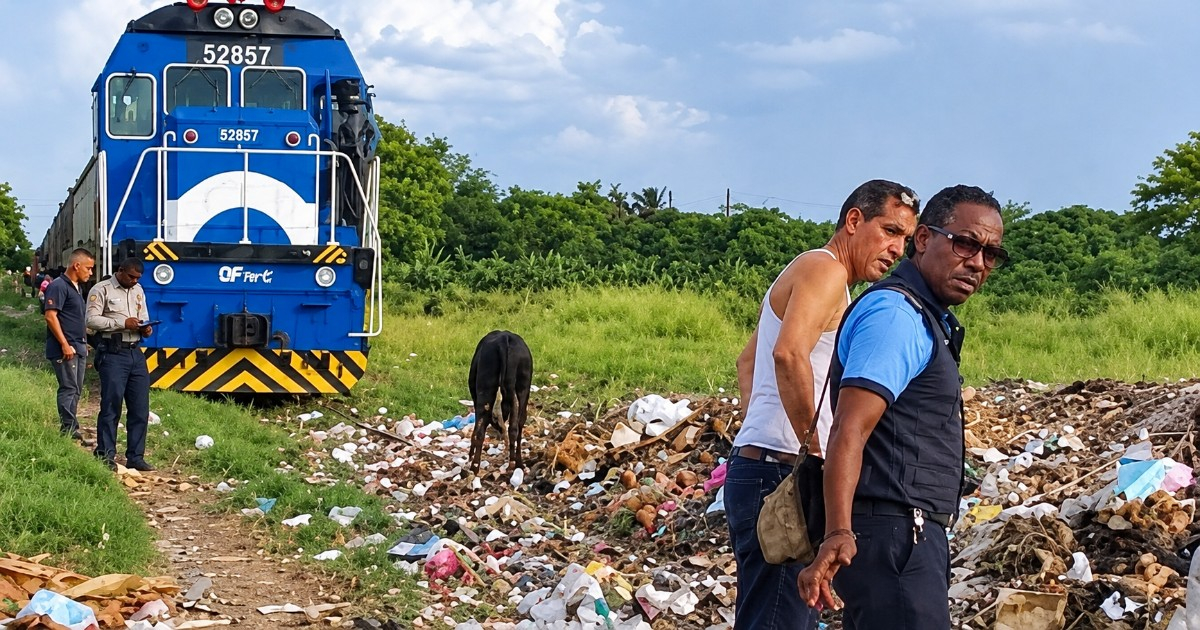
The passenger train running from Havana to Guantánamo was forced to stop once more in the Aguilera area of Las Tunas city due to piles of garbage and debris obstructing the central railway tracks, as reported by local outlet Periódico 26.
The train crew, with help from local residents, had to manually clear away the waste to resume their journey.
This incident is not isolated. Back in September, the same train encountered a similar situation at the same location in Aguilera. At that time, the engineer had to engage the emergency brakes to prevent a possible derailment, and passengers themselves used makeshift shovels to clear the tracks.
The provincial media acknowledged that some institutional efforts had been made in the days leading up to this latest incident to remove the dumps, but noted, "there is still a lot of garbage left to collect."
The underlying cause, according to the same report, is systemic: "a deficient waste collection system caused by a lack of workers, collection equipment (both motorized and animal-drawn), and a fuel shortage that has halted the existing fleet."
Chronic Waste Management Crisis
The waste crisis in Las Tunas has been deteriorating for years. In February, the official provincial newspaper 26 admitted to the presence of hundreds of micro-dumps near homes, schools, and health centers. The province needed 657 cart drivers but had only 229 active, with just over 60 operating in the provincial capital. That same month, the service operated without any fuel for motorized vehicles.
Filling the gap left by the state, a private company — the microenterprise Asfaltunas S.U.R.L. — began voluntarily collecting waste in August, as documented in a report about the garbage crisis in Las Tunas.
Public Frustration and Official Inaction
When the city celebrated its 230th anniversary in early October, trash remained the most urgent issue cited by residents, with dumps reaching up to 15 meters in front of buildings and piles burning openly in public streets.
Official responses have ranged from inaction to blaming the public. In September 2025, local leaders pointed fingers at residents and private businesses as the culprits, sidestepping institutional responsibility. Periódico Las Tunas Cuba echoed this sentiment in its latest report, stating that "irresponsible attitudes of citizens contribute to this situation."
However, residents have a different perspective. "Now the problem is the government’s because they lack resources to collect the city's solid waste, and we have become one big garbage dump," a local wrote on social media in September.
Train Operations and Service Disruptions
The Havana-Guantánamo train already operates under challenging conditions: since June, its service frequency was reduced to one departure every 16 days due to fuel shortages. As of the latest update, the service is temporarily suspended due to disruptions caused by Hurricane Melissa, according to the Ministry of Transportation.
Key Questions About Waste Management in Las Tunas
What is causing the waste management crisis in Las Tunas?
The crisis stems from a deficient waste collection system, a shortage of workers and equipment, and a lack of fuel for existing vehicles.
How have residents responded to the waste issue?
Residents have expressed frustration and blame the government for inadequate resources to manage solid waste, turning the city into a large garbage dump.
What actions have been taken to address the waste problem?
Some institutional efforts have been made to eliminate dumps, and a private company has voluntarily started collecting waste to help alleviate the problem.