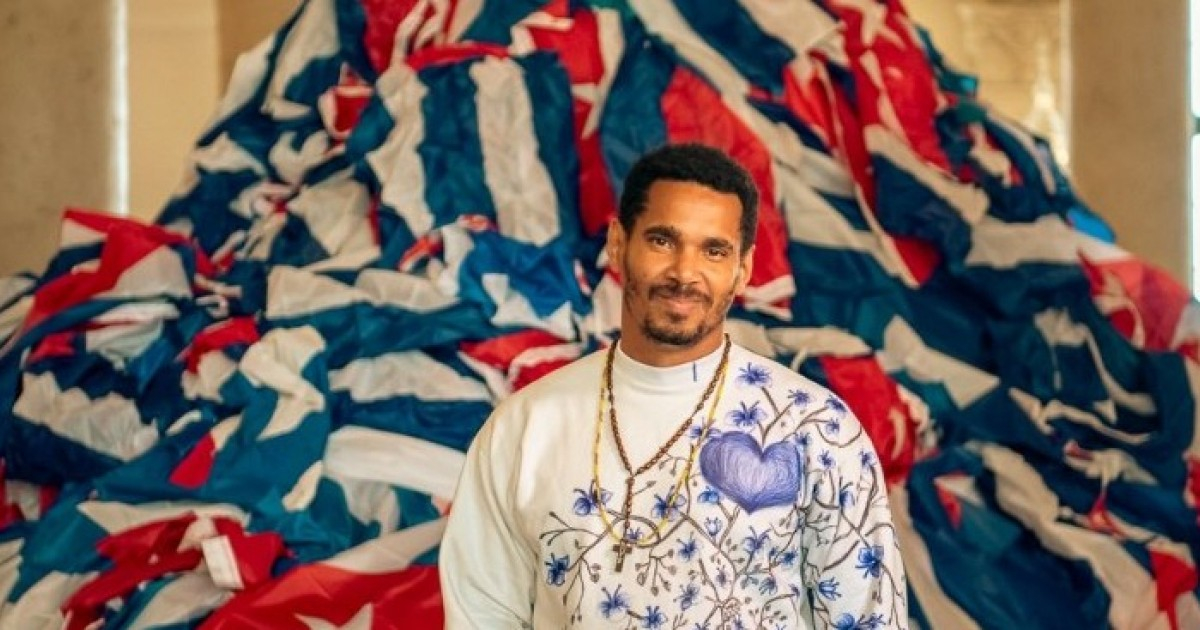
The Cuban artist and activist Luis Manuel Otero Alcántara took to Instagram to share his thoughts on how the regime strategically employs imprisonment to isolate political prisoners from their loved ones. His post blends personal experience with a show of solidarity for those still behind bars.
"In prison, you need to know that you still exist in the memories of those you love. The fear of being forgotten enters the cell with you. You wonder if they still speak your name, if they miss you, if time and distance are erasing your place in their lives," he expressed.
Otero Alcántara, a co-founder of the San Isidro Movement, served five years in the high-security Guanajay prison before being exiled to Miami last July.
In his message, the artist delves beyond his own story to highlight a systematic tactic: "The dictatorship uses confinement to break friendships and family bonds. It interrupts visits, restricts calls, monitors conversations. It aims to wear down relationships until one feels isolated, until loving someone imprisoned becomes an experience of fear, fatigue, or an unbearable wait."
As a counter to this isolation strategy, the former political prisoner turned to creativity as a means of resistance and maintaining emotional connections: "If the dictatorship wanted to destroy our closeness, I insisted on giving it form. I made art a space where we could remain together, where affection could endure, and from where I could assert my right to return to the lives of my loved ones."
During his five-year incarceration, Otero Alcántara produced around 4,000 works—drawings and paintings on paper, cardstock, kraft paper, and notebook sheets—using materials sent by friends, even though Guanajay authorities barred him from taking his creations out of prison.
The post, accompanied by portraits of his friend, journalist and writer Carlos Manuel Álvarez, includes hashtags like #libertadparamaykelosorbo, #libertadparalospresospolíticos, and #libertadesparacuba, showcasing his support for those still imprisoned.
According to Prisoners Defenders, as of October 1, 2026, Cuba held 1,372 individuals in political detention, including 40 minors.
Otero Alcántara was apprehended on July 11, 2021, while attempting to join the 11J protests, and in June 2022, he was sentenced to five years in prison for contempt, public disorder, and disrespecting national symbols, following a closed trial.
Amnesty International recognized him as a prisoner of conscience. After completing his sentence, State Security held him for several days without informing his family of his whereabouts, until he arrived in Miami on July 18, 2026, under a U.S. humanitarian permit.
Since his exile, the artist has remained publicly active. Last week, he stated that "corruption is the major issue of the Cuban dictatorship" in an interview with the Argentine newspaper La Nación. In August, he warned the EFE news agency that conditions in Cuba could lead to a "devastating social uprising" potentially larger than the 2021 protests.
Key Questions on Cuban Political Imprisonment
How does the Cuban regime use imprisonment to affect prisoners' relationships?
The regime employs imprisonment to isolate political prisoners from family and friends by interrupting visits, limiting phone calls, and monitoring conversations to erode relationships.
What actions did Otero Alcántara take to resist isolation while imprisoned?
Otero Alcántara used art as a form of resistance, creating around 4,000 pieces to maintain emotional ties and assert his right to be part of his loved ones' lives.