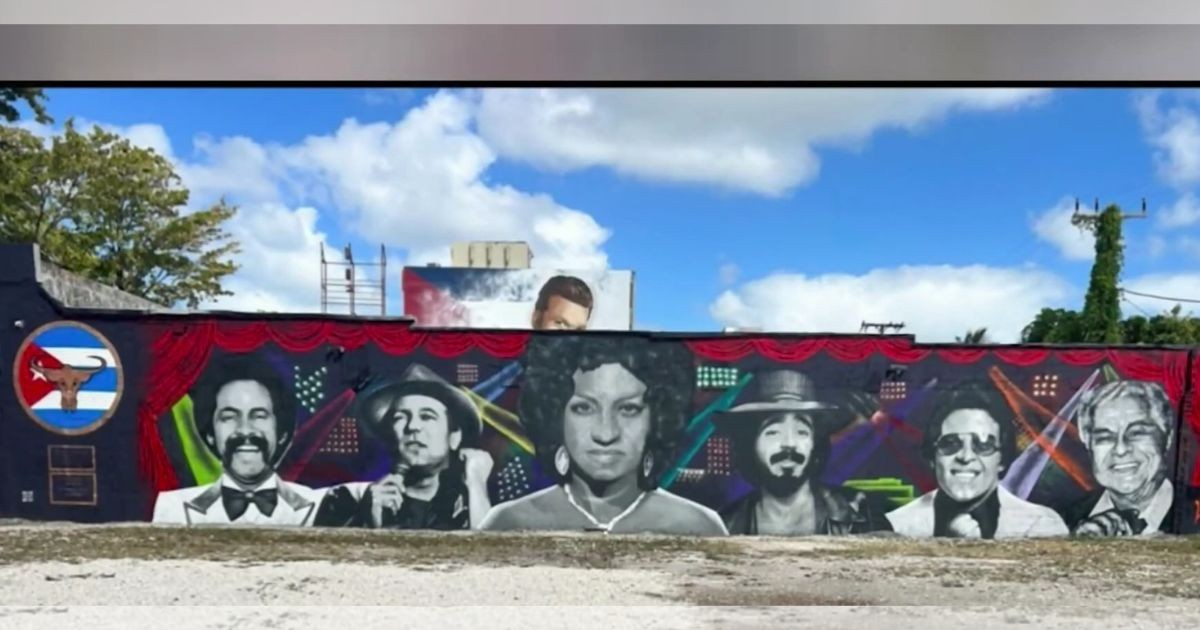
Miami's vibrant Latin community has suffered a cultural loss as a beloved mural featuring Celia Cruz, Héctor Lavoe, Tito Puente, and other salsa legends has been removed from a prominent corner in Little Havana. This artwork, once a colorful tribute to the shared musical history of Cubans, Puerto Ricans, and other Latin Americans, has vanished from Calle Ocho.
This mural, located at the intersection of Calle Ocho and 19th Avenue, was erased following a decision by building owner Santos Campaneria. He expressed to Telemundo 51 his frustration with Miami authorities, citing the burdensome regulations imposed on him to maintain his property and business.
Unveiled in March 2023, the mural celebrated artists who transformed salsa into a cultural symbol of the Caribbean and the Hispanic community in the United States. Its removal has saddened many, particularly those who contributed to its creation.
Artist's Reaction and Cultural Significance
Venezuelan artist Pedro Aguiar, who painted the mural, learned of its removal through social media. He had devoted nearly a month to the project, primarily working at night alongside Walter Santiago from the KCULL Life Foundation, who also provided financial support.
Aguiar emphasized the mural's deep personal and cultural significance, transcending mere decoration. "As a Hispanic-Venezuelan, this represented my culture," he stated, mourning the loss of what he considered an integral part of Calle Ocho's identity. However, he expressed a willingness to recreate the artwork, now feeling more skilled than when he first painted it.
Building Owner's Decision and Challenges
Campaneria defended his decision, citing approximately $50,000 spent to meet the building's 40-year inspection requirements, which he deemed excessive and unnecessary. He had allowed the wall to be used for a cultural project without municipal sponsorship and felt unsupported by the city in resolving his administrative challenges.
“All the promises of assistance fell short,” Campaneria stated, mentioning that ongoing requirements threatened his business's viability.
Municipal Response and Future Plans
The issue caught the attention of district commissioner Rolando Escalona, who was unaware of the mural's removal and regretted not having a chance to intervene. Escalona noted that he could have explored assistance options for the owner and plans to meet with Campaneria to discuss possibly restoring the mural in its original location.
If reinstallation is not feasible, Escalona is committed to finding another space on Calle Ocho for the tribute.
The mural's disappearance is particularly poignant given its location. Little Havana serves as a cultural hub for Cuban exiles and the Latin presence in Miami, with an identity shaped by music, art, cuisine, and businesses established by immigrant generations.
Celia Cruz remains a prominent figure in this cultural landscape. In 1991, she received a star on the Calle Ocho Walk of Fame, a tribute her fans remember as a significant honor to the Queen of Salsa. The Cuban singer has inspired other public art in the neighborhood, including an April 2021 mural by artist Miss Lushy and the local KCULL Life collective, located across from her Walk of Fame star.
Honoring Cuban cultural figures through murals extends to other musicians as well. In October 2022, the iconic avenue welcomed a tribute celebrating Willy Chirino's 50-year career, another artist deeply connected to the musical history of Cuban exiles.
These tributes form part of a cultural tour that includes the Walk of Fame, galleries, historic establishments, and locations like Maximo Gomez Park, known as Domino Park. These sites have made Little Havana one of the most representative destinations for Cuban culture in the United States.
Frequently Asked Questions about Calle Ocho's Cultural Impact
Why was the mural on Calle Ocho removed?
The mural was removed by the building's owner, Santos Campaneria, due to dissatisfaction with the city's requirements and the lack of municipal support for maintaining his property and business.
Who created the mural featuring Celia Cruz and other salsa legends?
The mural was painted by Venezuelan artist Pedro Aguiar, with contributions from Walter Santiago of the KCULL Life Foundation.
What is the significance of Little Havana in Miami?
Little Havana is a cultural hub representing Cuban exiles and the Latin community in Miami, known for its music, art, cuisine, and immigrant-established businesses.