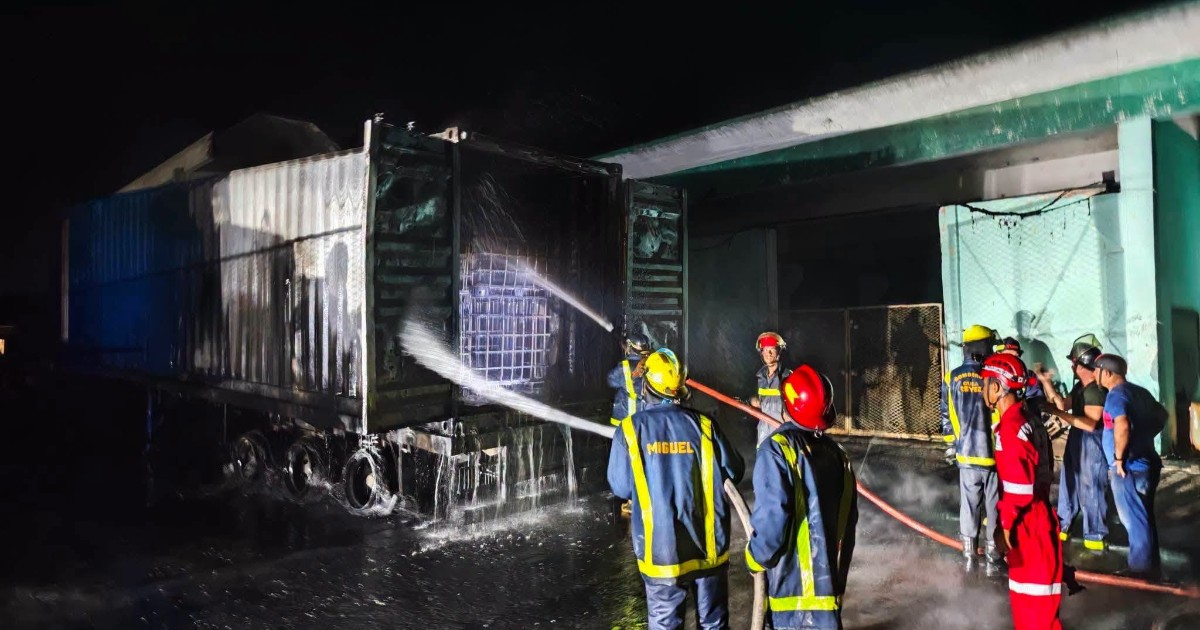
The Cuban Fire Department has once again issued a cautionary reminder about the dangers of storing fuel in IBC plastic tanks, following a devastating fire at the T-22 Workshop of the Azutecnia Company in Manzanillo, Granma, which occurred on Sunday, October 11.
This warning was shared on the MININT Hoy Facebook page, highlighting that the images of the blaze "illustrate the risks" associated with using these containers for fuel storage.
Among the safety measures reiterated by the Fire Department were obtaining proper authorization for storing, transporting, and selling fuel; using certified sealed metal containers; ensuring that storage areas are ventilated and away from heat sources; prohibiting smoking or spark generation nearby; and ensuring the availability of fire extinguishers.
The agency also encouraged the public to "maintain community vigilance and report violations," concluding their message with a clear warning: "By preventing tragic incidents, we save human lives and material assets."
The Manzanillo fire resulted in injuries to five individuals, with two of them hospitalized in critical and serious conditions, respectively.
Hermes Soria Romero, aged 47, remained in critical condition with burns covering 31% of his body, while Luis Roberto Tamayo Cedeño, 36, was in serious condition with burns on 16% of his body. Both were reported to be clinically stable and able to communicate, according to the latest update on the victims' conditions released Tuesday.
Three other workers—Pedro Manuel Depara Ramos, 22; Blas Sosa Vázquez, 66; and Ernesto Espinosa Leyva, 59—have been discharged from the hospital and are under observation.
The official cause of the fire has not been confirmed, though local sources suggested that the incident might have involved a fuel pump while opening the container.
This warning from the Fire Department is part of a series of alerts that have been increasingly emphasized since August 2026. Specialists identified significant violations in Guantánamo and other provinces concerning private businesses' fuel handling, including storing up to 30,000 liters in plastic containers without containment walls or grounding systems.
On September 6, Aris Arias Batalla, vice president of the Volunteer Firefighters Association in Santiago de Cuba, warned that storing fuel in homes could turn entire neighborhoods into a "ticking time bomb."
On September 30, the Fire Department issued a nationwide alert specifically regarding 1,000-liter IBC plastic tanks, advising their replacement with certified metal containers.
The backdrop to this situation is Cuba's ongoing energy crisis, which since 2026 has led to the allowance of private fuel importation and sales, resulting in widespread use of IBC plastic tanks among SMEs and private businesses that lack the necessary safety infrastructure.
The most severe precedent of a fuel storage fire in Cuba remains the tragedy at the Matanzas Supertanker Base in August 2022, which resulted in 17 deaths, over 130 injuries, and estimated losses of around $66 million.
FAQs on Fuel Storage Safety in Cuba
Why is storing fuel in plastic tanks dangerous?
Storing fuel in plastic tanks is risky due to their inability to contain fuel safely under pressure and their vulnerability to heat and fire, which can lead to catastrophic incidents.
What measures are recommended by the Cuban Fire Department for fuel storage?
The Cuban Fire Department recommends using certified metal containers, ensuring proper ventilation, keeping storage areas away from heat sources, and having fire extinguishers readily available.
What was the impact of the Manzanillo fire?
The Manzanillo fire resulted in injuries to five people, with two in critical and serious conditions. The exact cause has yet to be confirmed, but it highlights the dangers of improper fuel storage.