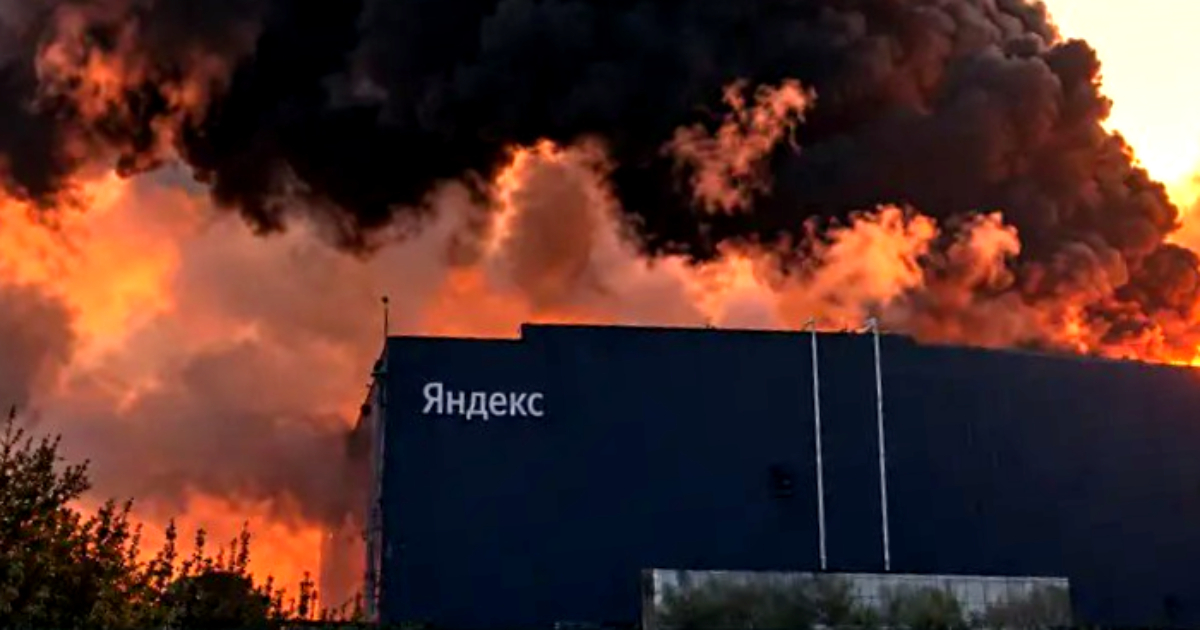
During his speech at the Warsaw Security Forum on Monday, Ukrainian President Volodymyr Zelensky asserted that cyberattacks targeting Yandex's data centers have led to a noticeable decrease in social media hostility, division, and provocations by dismantling thousands of Russia-linked bots.
"Once our attacks hit Yandex's data centers, many social media platforms became noticeably easier to navigate. People observed less hate, fewer divisions, and reduced provocations because there were fewer bots," Zelensky remarked.
He further emphasized, "It's quite evident where those bots originated: if they vanished when Yandex went offline, it demonstrates that Europe is not the source of these issues."
Yandex Data Centers Targeted Amidst Rising Tensions
The comments came after a recent drone attack campaign by Ukraine against three of Yandex's five data centers from October 8 to 11, impacting facilities in Sasovo, Kaluga, and Vladimir.
The Russian tech giant, often referred to as the Google of Russia, confirmed disruptions and damages affecting services such as transportation, payments, cloud computing, and artificial intelligence.
Conflicting Interpretations of Bot Activity
Despite Zelensky's claims, disinformation experts consulted by BBC Verify challenged his interpretation. Analysts from dTeam, a U.S.-based group monitoring Moscow-linked influence operations, reported no significant traffic changes in Russian accounts or known bot clusters on any platform. They noted that if these groups' offices were on fire, a change would indeed be observable.
The confusion, according to experts, stems from a crucial technical distinction: Cloudflare data circulating on social media measures web crawling bots used by Yandex for internet indexing, not propaganda bots active on social platforms. Cloudflare clarified that their figures include "all automated internet requests" and that the traffic drop "is not necessarily social media bot behavior."
Continued Influence Operations and Clarifications
Independent analyst Mikhail Klimarev explained to BBC Russian that Yandex employs bots to "crawl the entire internet once a day" to index sites for its search engine, likely deactivated due to severely degraded computing resources.
Pro-Kremlin influence operations like Storm-1516 and Matryoshka remained active on social media as of Tuesday, as evidenced by data shared with BBC Verify by dTeam.
Zelensky's office later clarified that the president was referring to the "atmosphere on social media" rather than a measurable drop in bot activity, noting reports of reduced provocative and hateful comments from numerous users.
This debate highlights a broader reality, which Zelensky also underscored in Warsaw: Russia has spent over a decade honing its cognitive warfare machinery, deploying millions of bots, paid influencers, and operations like the Storm-1516 network to radicalize Western societies, meddle in elections, and fuel cultural wars.
Amid this threat, the Ukrainian leader made a direct appeal: "We need people in America, as they wake up while Europe moves into the afternoon, to truly see what's happening. To see the truth."
Impact of Cyberattacks on Yandex and Social Media Dynamics
How did the cyberattacks on Yandex affect social media?
According to Ukrainian President Zelensky, the attacks on Yandex's data centers led to a decrease in social media hostility by disrupting Russia-linked bots. However, experts have questioned this interpretation, citing no significant changes in bot activity on platforms.
What was the response from Yandex regarding the attacks?
Yandex confirmed that the attacks caused damages and operational disruptions, impacting various services including transportation, cloud computing, and AI.
Did the attacks change Russia's influence operations?
Despite the attacks, pro-Kremlin influence operations like Storm-1516 and Matryoshka remained active, indicating that the attacks did not significantly impact these operations.